 EN
What Are the Main Functions of a 4520 Deep Sea Generator Controller?
2026/10/14
Learn the main 4520 deep sea controller functions, from AMF monitoring and start control to transfer, alarms, and safe selection.

2026/10/12
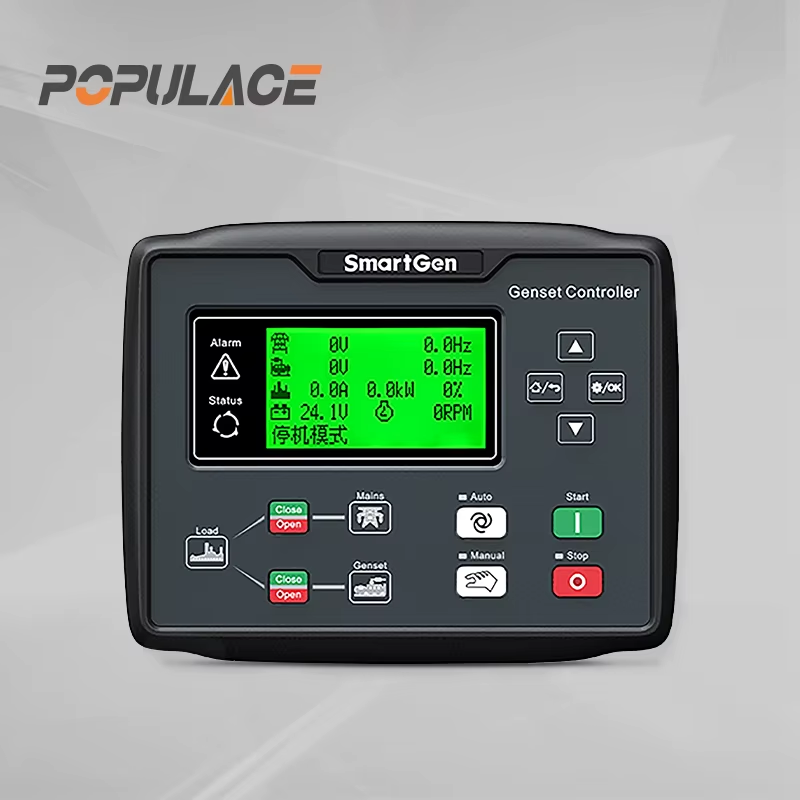
2026/10/12
A genset AMF panel is the control assembly that watches the utility supply and tells a standby generator what to do when that supply becomes unacceptable. AMF means automatic mains failure. In a typical backup-power arrangement, it detects a sustained mains failure, starts the genset, waits for stable output, commands a transfer device, and later returns the load to the utility under configured conditions.
The important distinction is that the panel does not magically create power or replace protective design. It coordinates a sequence. The switching device carries and transfers the load; the controller supplies the logic, monitoring, timers, alarms, and engine commands that make the sequence automatic.
An amf panel for genset installations normally combines an AMF controller, sensing circuits, control relays, indication, protection interfaces, and wiring to the generator and transfer equipment. It continually evaluates the normal source. Depending on the controller configuration, that may include phase loss, voltage outside limits, frequency outside limits, phase sequence, or a complete blackout.
When the fault persists longer than the programmed delay, the controller issues a start command. It then monitors generator voltage, frequency, and any required engine status inputs. Only after the generator is judged ready should it request transfer of the load. This order matters: closing onto an unstable source can create an avoidable disturbance for connected equipment.
Timing is not universal. A hospital, telecom site, workshop, and residential backup system can have very different starting, transfer, retransfer, and cool-down settings. The controller manual, generator documentation, transfer equipment ratings, and site electrical design should govern the final values.
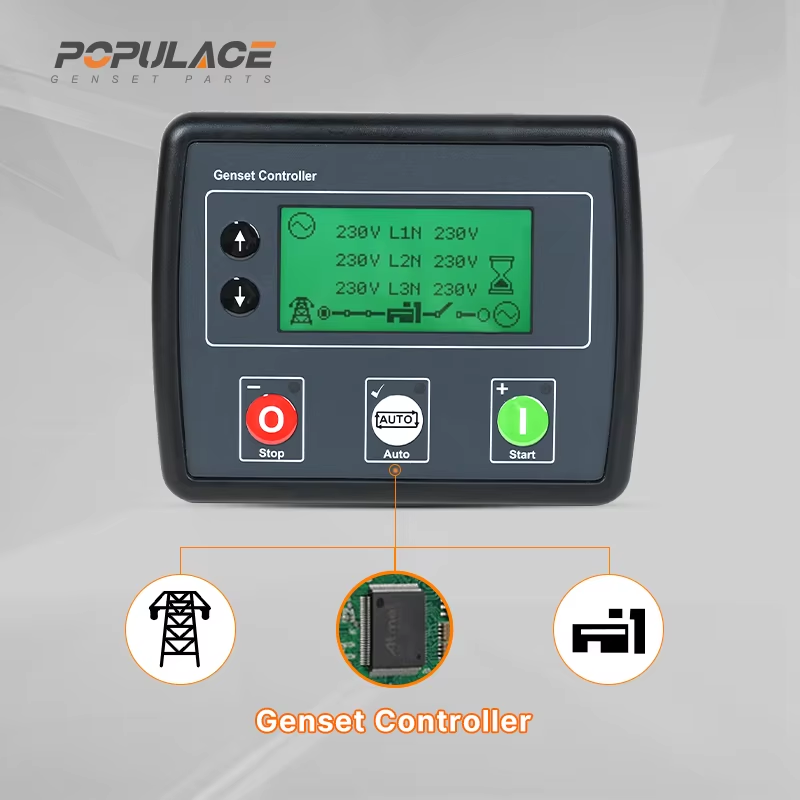 AMF control logic coordinates generator start and source transfer.
An automatic mains failure controller is the decision-maker. It senses sources, runs timers, starts and stops the engine, and issues transfer commands. An ATS, or automatic transfer switch, is the power-path equipment that moves the load between normal and emergency sources. Some packaged panels include both functions; other systems use an AMF controller wired to a separate changeover switch or ATS.
That is why “AMF panel” and “ATS panel” are often used loosely in conversation. They work together, but they are not identical. Before choosing equipment, verify whether the quoted unit includes the switching mechanism, its current rating and pole arrangement, or only the control section.
A good panel design also makes fault finding practical. Clear terminal labels, current wiring drawings, and documented settings are often more useful at commissioning than extra features that have not been configured.
Start with the one-line diagram, not the controller brand. Confirm the system voltage, frequency, number of phases and poles, neutral arrangement, generator starting method, and the transfer device’s duty rating. Then establish which generator protections and remote signals are available. A controller can only supervise the signals it receives.
Ask whether the installation is standby-only or prime power, whether remote monitoring is needed, and whether the load includes sensitive electronics, motors, or life-safety equipment. For a conventional open-transition scheme, the load is briefly disconnected during transfer. If continuity requirements are tighter, a qualified designer must determine whether a different architecture is appropriate.
For technical selection support, see KYGEN Power’s generator controller and parts resources. Confirm compatibility from wiring diagrams and the actual genset configuration rather than selecting an AMF unit from a keyword or front-panel appearance alone.
Before putting an AMF control panel into service, test it with the generator isolated from critical load where the site procedure permits. Simulate loss and restoration of mains, verify each start attempt, confirm source sensing, and observe transfer and retransfer interlocks. Check that generator voltage and frequency are within the settings expected by the transfer logic.
One overlooked point is the wiring between the controller and the changeover equipment. A correctly programmed genset AMF module cannot compensate for a missing neutral reference, incorrect auxiliary contact feedback, unsuitable contactor interlock, or an emergency-stop circuit that has been bypassed. When the application is safety-critical or subject to local electrical rules, commissioning should be performed by qualified personnel using the approved site method statement.
Not in every configuration. Some AMF panels are complete assemblies with a transfer switch, while others provide only the control logic and outputs for separately supplied switching equipment.
Yes, when it is correctly wired to the engine start circuit and configured to recognize a sustained mains fault. It should also receive the necessary engine and generator feedback signals.
The controller normally waits for stable mains during a programmed delay, transfers the load back, and keeps the generator running unloaded for a cool-down period before issuing stop.
A genset AMF panel automates the decision sequence between a failing utility source and a standby generator. Its value comes from correctly coordinated sensing, starting, source verification, transfer commands, interlocks, alarms, and return-to-mains timing. Treat the AMF controller, transfer switch, generator, and site wiring as one system, and verify the complete sequence during commissioning. For additional generator control resources, visit KYGEN Power.

2026/10/14
Learn the main 4520 deep sea controller functions, from AMF monitoring and start control to transfer, alarms, and safe selection.

2026/10/14
Compare a three phase bridge rectifier with a half-wave rectifier by ripple, diode count, neutral needs, and selection criteria.

2026/10/14
Supply speed control genset Cummins units with a practical guide to compatibility, sourcing, wiring checks, and commissioning.

2026/10/14
Source GAVR 15A AVRs with a practical wholesale checklist for compatibility, circuit checks, batch control, and supplier qualification.

2026/10/14
Match an AVR for genset by checking sensing input, excitation output, wiring, and control functions before installation.

2026/10/14
Compare types of AVR for generator portfolios and source compatible shunt, PMG, brushless, thyristor, analog, and digital options.
