
 EN
What Functions Does a Generator Controller Perform During an Outage?
When utility power disappears, a generator does not simply start and begin carrying a building. A generator controller has to interpret the start request, supervise the engine, verify that electrical output is usable, protect the set from abnormal conditions, and report what happened. In a well-designed standby system, that sequence is deliberate: transferring a load too early, or continuing to run after a serious fault, can create a second problem during the first one.
As a technical consultant working with generator control components, I look beyond a panel’s display. The useful question is whether its logic, sensing inputs, engine interface, and site operating rules fit the generator set and the loads it must support. Here is the practical outage sequence a controller manages.
First, it receives and validates the start request
In many installations, an automatic transfer switch (ATS) watches the normal utility source. If voltage or frequency is absent or outside its permitted range for the programmed delay, the ATS sends a remote-start signal. The generator controller receives that signal and begins its start logic. A manual start command, fire-alarm interface, building-management signal, or scheduled exercise can also be configured as a start source, depending on the system.
This distinction matters. The ATS normally decides when the building should leave the normal source and later transfer back; the generator control module runs and protects the generator set. In integrated panels, the functions may look like one unit, but the control roles are still separate. Before cranking, the controller checks its operating mode, emergency stop state, active shutdowns, battery supply, and any configured interlocks. If a lockout is active, it should alarm rather than repeatedly attempt an unsafe start.
It controls the engine-start sequence
Once conditions permit starting, the controller energizes the starter output and monitors engine feedback. It may look for oil-pressure rise, magnetic pickup speed, alternator charge indication, or another run-confirmation signal. If the engine does not reach the configured running condition, the controller stops cranking, waits through a rest period, and makes only the permitted number of additional attempts. That protects the starter and battery while giving the engine a realistic chance to start.
An automatic generator controller also handles timing that is easy to overlook during an outage. A short start delay can prevent a nuisance start during a momentary utility dip. A warm-up period lets speed and voltage stabilize before the system accepts load. The right values depend on the engine, the application, and the site’s emergency-power design; they should not be copied from another generator just because the ratings look similar.
It builds stable electrical output before load transfer
Starting the engine is only half the job. The generator controller monitors whether the alternator is producing acceptable voltage and frequency. It works with the speed-governing and voltage-regulation systems through their available control and feedback interfaces, then waits until the set is within programmed limits. Only then should the transfer equipment be allowed to move essential load to the generator.
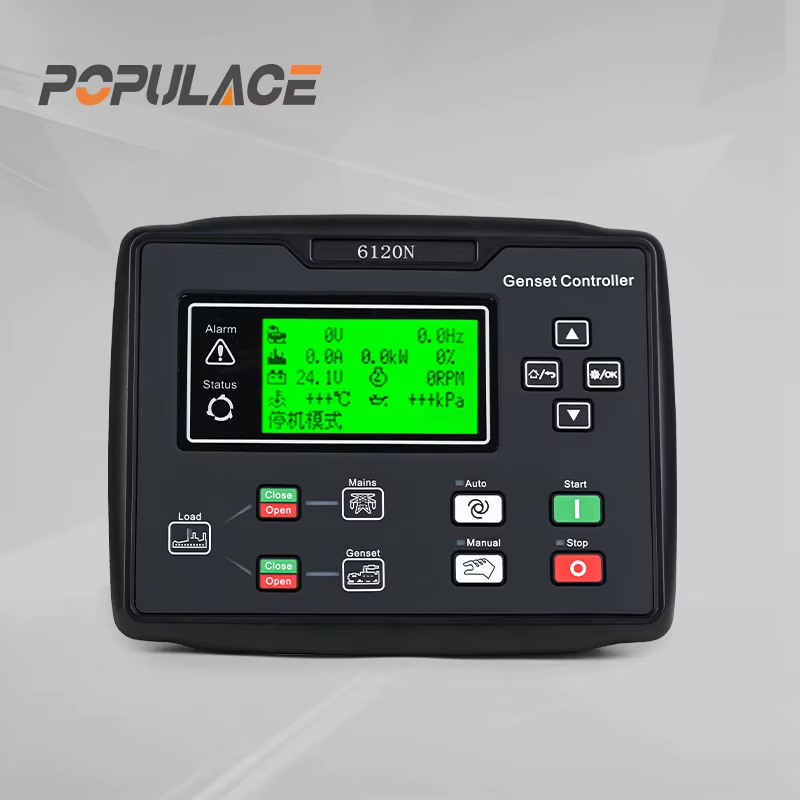
For an amf generator controller—AMF commonly refers to automatic mains-failure operation—this is the heart of the outage sequence. It recognizes the loss of normal power through the configured sensing arrangement, commands the generator to start, confirms that the emergency source is ready, and coordinates transfer permissions. It does not eliminate the need for a correctly specified ATS; rather, the controller and ATS exchange the signals that make automatic operation possible.
It watches the engine and alternator while the load is on
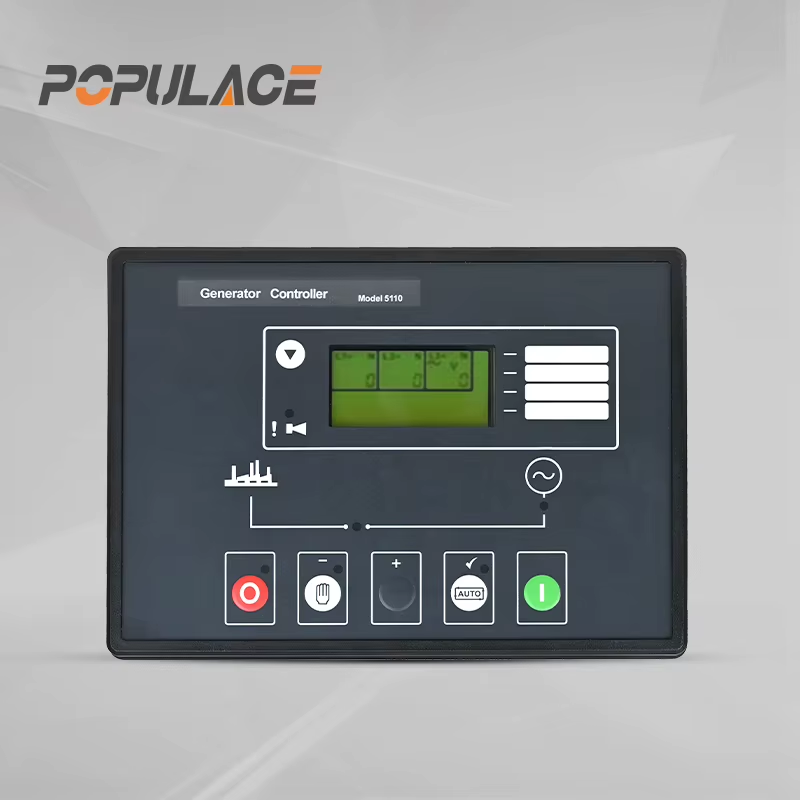
After transfer, the generator controller becomes the system’s continuous observer. Typical monitored conditions include engine speed, oil pressure, coolant temperature, battery charging condition, generator voltage, frequency, and current. Depending on the controller and sensors installed, it may also display run hours, fuel level, phase imbalance, power, or maintenance reminders.
The point is not to collect data for its own sake. A generator that has accepted a large motor load may need to recover its speed and voltage within the limits appropriate to its design. A controller can announce an overload, underfrequency condition, or sensor fault early enough for an operator to investigate. If your application has rapidly changing loads, that qualification matters: a stable running indication alone does not prove the system can support every downstream load step.
It applies alarms, warnings, and shutdown protection
A capable generator control module distinguishes between conditions that deserve attention and conditions that require immediate action. Low fuel, a service reminder, or a noncritical communication fault may create a warning. Overspeed, low oil pressure after the start-delay period, high coolant temperature, or severe electrical abnormalities can be configured as shutdowns. The exact trip logic is site-specific, so settings must be verified against the engine documentation, generator design, and emergency-power requirements.
Protection logic also produces fault information. A good event record tells the operator whether the set failed to start, stopped on a protective trip, lost its remote-start input, or ran normally until utility power returned. That record is far more useful than clearing an alarm and hoping the next outage explains it. When downtime matters, document the controller model, firmware where relevant, wiring terminals, sensor type, and the exact active alarm before replacing parts.
It supports remote start, status, and operator decisions
A generator remote start controller function lets an external device request operation without someone standing at the panel. The controller still owns the sequence: it evaluates permissives, cranks the engine, supervises running, and reports alarms. Remote control should not bypass emergency-stop circuits or protective shutdowns. For sites with a building-management system or remote monitoring, status points such as available, running, common alarm, and fault can make response faster, but communication setup should be tested under a planned outage—not discovered during one.
Here is where maintenance becomes practical. Review the display and event log during routine exercises, confirm that the remote-start path operates, and verify that the generator reaches a stable ready-to-load condition. Industry emergency-power guidance also treats controller trouble indications as meaningful inspection items. A weekly visual check will not replace load testing or the applicable local maintenance program, but it can reveal a weak battery, active fault, or disabled operating mode before a real outage.
It manages retransfer and cool-down after utility power returns
When normal power is restored, the system should not instantly stop the generator. The ATS generally verifies that the normal source is stable for its retransfer delay, then returns the load. The generator controller keeps the engine running unloaded for its programmed cool-down period, allowing temperatures to settle before stopping. It then records the run, returns to automatic standby, and remains ready for the next remote-start signal.
That sequence is why a controller should be selected and configured as part of a system, not as a generic panel accessory. Compatibility includes supply voltage, engine-start outputs, speed-sensing method, analog sender ranges, annunciation needs, and ATS interface logic. Most buyers start with the display features—well, those are useful—but the real decision is whether the controller can safely execute the complete outage sequence for the specific generator and site.
What to check if the generator does not respond correctly
- Confirm the controller is in AUTO, not OFF or MANUAL, and that no emergency-stop or shutdown is active.
- Read the first active alarm and the event history before resetting anything.
- Check whether the remote-start input actually changes state when the ATS calls for backup power.
- Verify battery condition, starter wiring, fuel availability, and the run-confirmation feedback used by the controller.
- Check the configured voltage, frequency, warm-up, transfer-permit, and cool-down settings against the generator documentation.
- Have a qualified technician review wiring or protection settings where the system serves life-safety or critical loads.
The takeaway
During an outage, a generator controller acts as the generator set’s decision-making and protection layer. It receives the start request, controls cranking, validates electrical readiness, monitors the loaded set, raises alarms or shuts down on serious faults, supports remote status, and completes the cool-down after retransfer. Understanding that full sequence makes troubleshooting more precise and helps ensure an automatic system is genuinely ready when normal power fails.






