
 EN
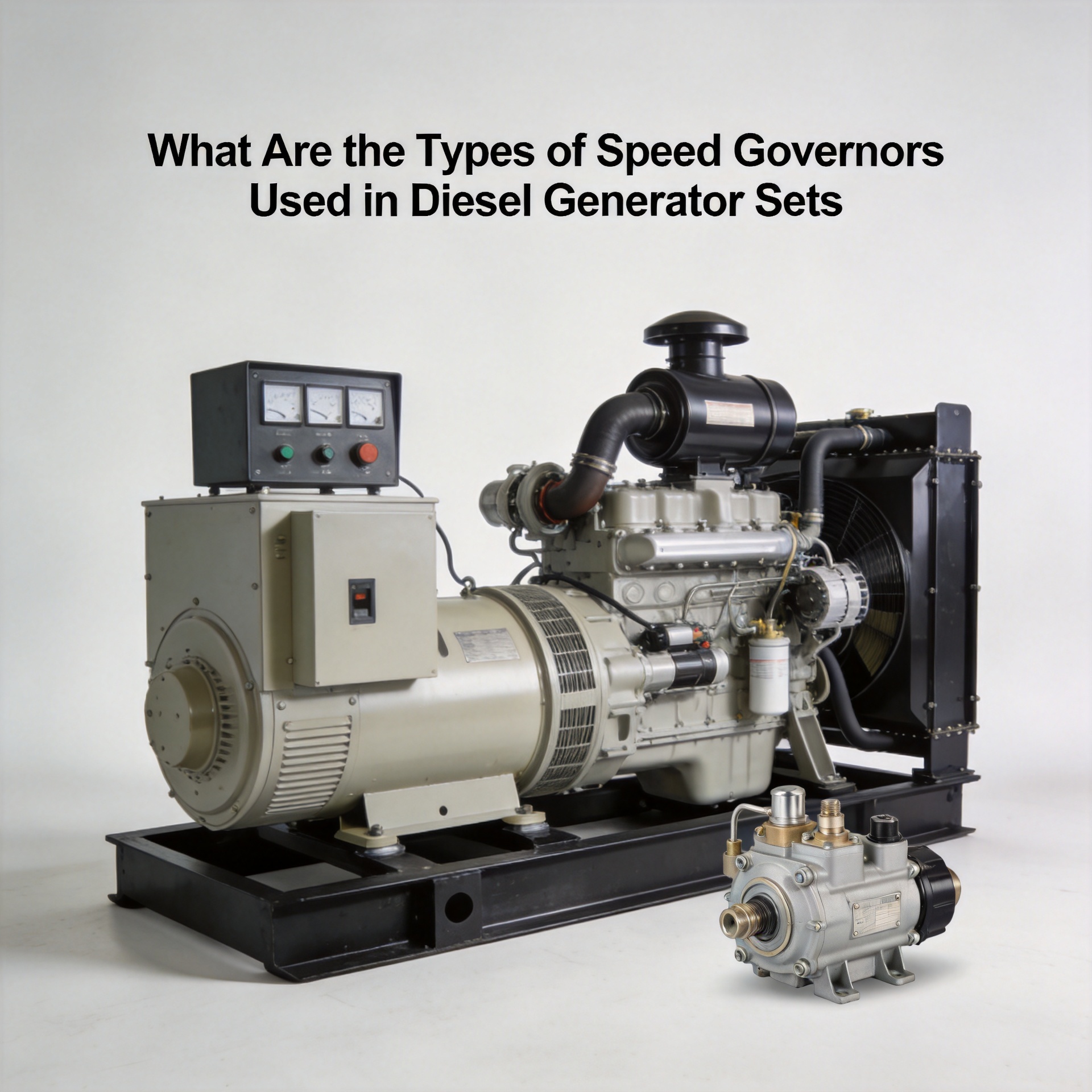
What Are the Types of Speed Governors Used in Diesel Generator Sets?
When a standby generator fails to regulate properly, the first thing most experienced technicians check is whether the speed governor is the original specification or a substitute — because mismatched governors account for a disproportionate share of field callbacks and load instability issues. Understanding the distinct types of speed governor used in diesel generator sets is not an academic exercise; it determines which replacement or upgrade option will perform as intended on a specific engine and load profile.
The following sections cover the three primary speed governor types fitted to modern diesel gensets, explains how each regulates engine RPM, and outlines when each type is the appropriate choice for your application.
What Is a Speed Governor in a Diesel Generator Set?
A speed governor is a control device that regulates engine RPM by adjusting fuel delivery in response to changes in load. When a generator set picks up additional load, the engine naturally slows; the speed governor detects this deviation and increases fuel supply to restore the target speed. When load drops, the governor reduces fuel to prevent overspeed. This feedback loop is what keeps generator output frequency stable at 50 Hz or 60 Hz, depending on the regional standard.
Without an accurately functioning speed governor, voltage and frequency output will fluctuate as load changes — which can damage connected equipment and cause the genset to trip on under- or over-frequency protection.
The Three Main Types of Speed Governors for Diesel Generator Sets
Diesel generator engines are fitted with one of three governor types, each with distinct sensing mechanisms, response characteristics, and maintenance profiles.
1. Mechanical Speed Governor
The mechanical speed governor — sometimes called a centrifugal governor — uses flyweights spinning on a rotating collar connected to the engine. As engine speed increases, centrifugal force pushes the flyweights outward, which physically moves a lever linked to the fuel injection rack, reducing fuel delivery. When speed drops, the flyweights retract and the fuel supply increases.
Because the control signal is purely mechanical, there are no electronic sensors or signal processors in the feedback loop. This makes the mechanical speed governor simpler to maintain in field conditions and highly tolerant of electrical interference, dust, and temperature variation.
Typical application: Backup power for farms, small workshops, and remote installations where loads are predictable and load swing is limited. Mechanical governors are also common on older diesel genset models that predate the adoption of electronic control systems.
Limitation: Regulation accuracy is lower compared to electronic alternatives. The speed droop — the difference between no-load speed and full-load speed — is inherent to the mechanical design and less adjustable. For applications requiring tight frequency tolerance, a mechanical speed governor may not meet the specification.
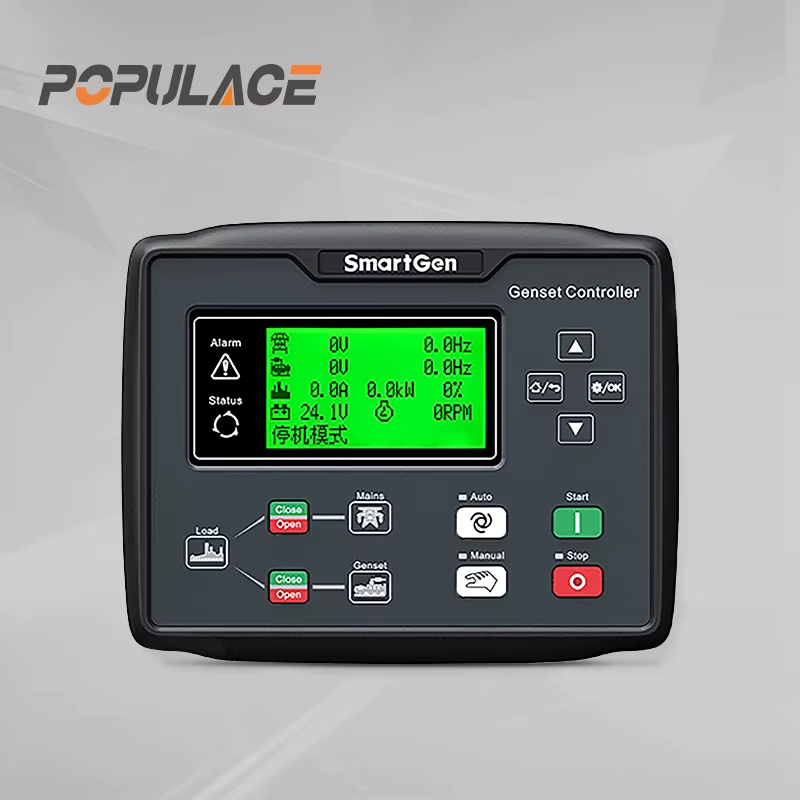
2. Electronic Speed Governor
The electronic speed governor replaces the mechanical flyweight sensing mechanism with a magnetic pickup (MPU) sensor mounted near the engine flywheel ring gear. The sensor generates a frequency signal proportional to engine RPM; a dedicated electronic control module compares this signal to a setpoint and generates a correction signal sent to an electro-hydraulic or electro-mechanical actuator that adjusts fuel delivery.
Electronic governors offer significantly higher speed regulation accuracy than mechanical types. Isochronous control — maintaining constant RPM from no-load to full-load — is achievable with a properly tuned electronic governor. Droop control mode is also available for parallel generator operation, typically set at 3–5% droop, meaning engine speed decreases slightly as load increases to enable stable load sharing between multiple gensets running in parallel.
The relationship between governor gain setting and actuator response range determines how quickly and accurately the engine speed governor corrects for load transients. A common misunderstanding is that maximizing governor response speed automatically improves performance — in practice, excessively fast electronic governor response on generator sets with significant reactive load (motor-heavy panels, for example) can cause speed overshoot and instability that a more conservative droop setting would avoid.
Typical application: Data centers, medical facilities, modern commercial buildings, and any installation requiring stable frequency output under variable or sensitive load profiles. Electronic governors are also the standard choice for parallel generator systems, where isochronous and droop settings must be coordinated across multiple engine speed governor units.
Well-known electronic governor manufacturers include Woodward, GAC (Governor America Corp), and various compatible aftermarket suppliers who produce replacement units with matching actuator interface and control signal specifications. For wholesale supply of compatible electronic governors and engine speed governor components, KYGEN Power offers sourcing support for diesel genset applications.
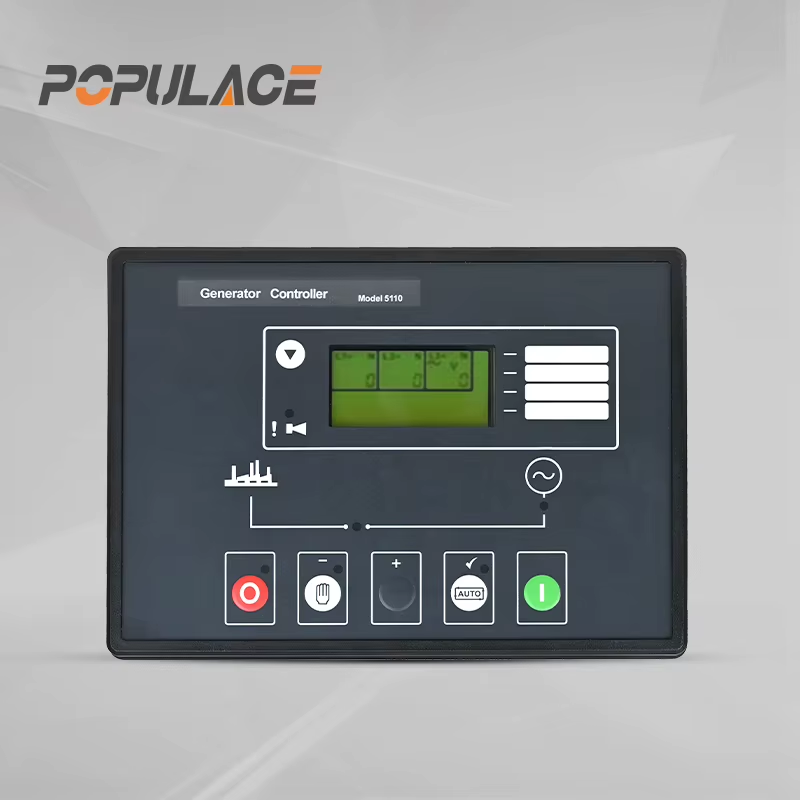
3. ECU-Based Speed Governor (Engine Control Unit)
The ECU-based governor integrates speed regulation with the broader engine management system. Rather than a standalone governor module, speed control is one function within the Engine Control Unit, which simultaneously handles fuel injection timing, protection alarms (overspeed, high temperature, low oil pressure), fault logging, and in some configurations remote monitoring and load management.
Generator speed control in ECU systems is precisely managed through common-rail or electronically controlled injection, enabling faster transient response and tighter frequency regulation than either mechanical or standalone electronic governors. The trade-off is higher system complexity and cost, and greater dependency on the engine manufacturer's proprietary software and wiring architecture.
Typical application: Industrial diesel generators for continuous or prime power duty, large commercial facilities, and modern generators from major OEM brands like Cummins, Perkins, and MTU where the ECU governs the full engine management system. Servicing an ECU-based generator speed control system typically requires manufacturer-specific diagnostic tools.
Type Comparison at a Glance
| Feature | Mechanical Governor | Electronic Governor | ECU-Based |
|---|---|---|---|
| Speed Regulation Method | Centrifugal flyweight mechanism | Magnetic pickup sensor + electronic actuator | Integrated engine management system |
| Regulation Accuracy | Lower (±3–5%) | Higher (±0.5–1%) | Highest (<0.5%) |
| Response Speed | Slower | Fast | Fast |
| Parallel Operation | Limited capability | Well supported (droop/isochronous) | Supported with OEM integration |
| Maintenance Complexity | Low — purely mechanical | Medium — sensor + module + actuator | High — OEM diagnostics required |
| Replacement Cost | Lower | Medium | Higher |
| Typical Applications | Small standby, stable loads | Commercial, parallel systems, sensitive loads | Industrial, prime power, OEM platforms |
Key Considerations When Selecting a Speed Governor Type
The shift most experienced buyers make is realizing that engine speed governor selection is not about brand loyalty — it is about matching the droop setting capability and actuator response range to the specific engine variant and load profile. A few practical points:
- Load profile: Stable, predictable loads can run effectively with a mechanical speed governor. Variable loads — particularly motor-start loads with high inrush current — benefit from the faster response of an electronic or ECU-based governor.
- Parallel operation: If two or more generator sets will share load, electronic speed governors with coordinated droop or isochronous settings are required for stable load sharing. Mechanical governors are poorly suited to parallel configuration.
- Maintenance environment: In remote sites with limited technical support, the simplicity of a mechanical governor can be an operational advantage. Electronic governor modules can fail due to vibration, moisture ingress, or power surges.
- Engine compatibility: One of the most common ordering mistakes with speed governors is specifying the engine brand alone instead of the exact engine model and serial number range — which leads to receiving a unit with an incompatible actuator interface or control signal type. Confirm the actuator shaft size, control signal voltage range, and mounting bracket configuration before ordering.
If your application runs at a stable load profile, a mechanical governor will usually hold. If the load swings frequently — especially with motor loads cycling on — you would want to verify that the electronic speed governor's droop response handles the transient without causing frequency overshoot.
Sourcing Speed Governors for Diesel Generator Sets
For wholesale buyers and distributors sourcing replacement speed governors, the quotation process should include technical specification confirmation as a standard step — confirming engine model, actuator interface type, and control signal range before pricing is agreed. This is particularly important for electronic speed governor sourcing, where model variants with similar external appearance can have meaningfully different internal specifications.
KYGEN Power supplies speed governors and engine speed control components for diesel generator sets across wholesale and brand buyer channels, serving markets in Asia, Europe, and North America. Product inquiries can be submitted via kygenpower.com.
Conclusion
The three main types of speed governor used in diesel generator sets — mechanical, electronic, and ECU-based — each serve distinct operating requirements. Mechanical governors offer simplicity and low maintenance overhead; electronic speed governors deliver higher accuracy and parallel operation capability; ECU-based systems provide full engine management integration for industrial applications. Matching the generator speed control governor type to the engine, load profile, and operational context is the core selection decision — and getting this specification right before ordering saves more rework than any other step in the procurement process.






