
 EN
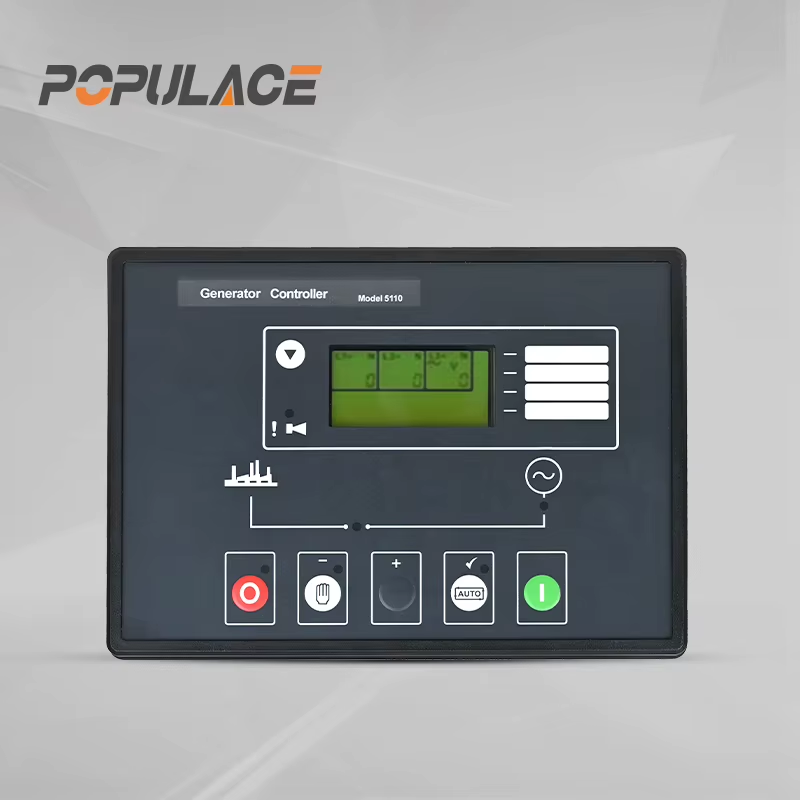
What Are the Benefits of a Microprocessor-Based Generator Controller?
A generator set is only as useful as its ability to start, stabilize, protect itself, and tell an operator what happened. That is why a modern generator controller is more than a start/stop switch. A microprocessor-based generator controller gathers signals from the engine, alternator, batteries, and connected switching equipment, then applies programmed logic to make repeatable decisions. For a facility manager, service technician, or generator builder, that can turn a hard-to-diagnose standby asset into a system that is easier to operate and maintain.
The most important benefit is not simply a screen full of numbers. It is the ability to connect measurement, alarms, timing, and protective actions in one practical control layer. A well-specified generator controller can support everyday operation while giving a technician useful context when conditions are outside the expected range.
1. Clearer, faster operating visibility
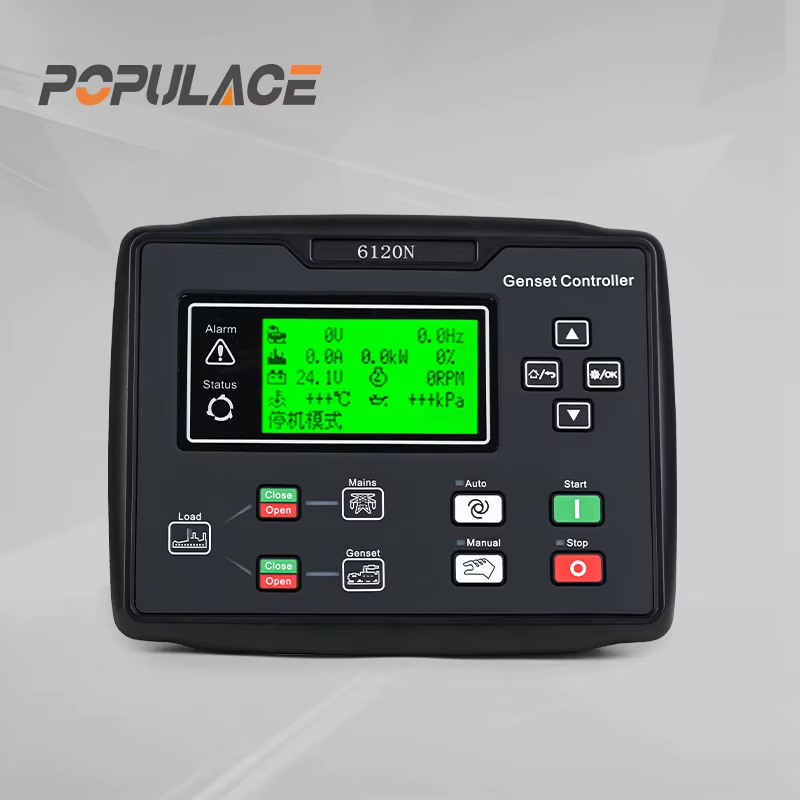
A microprocessor-based generator controller can display engine speed, oil pressure, coolant temperature, battery condition, generator voltage, frequency, current, and run hours in a single interface. Instead of checking several separate instruments, an operator can see the operating state before deciding whether intervention is needed. This is especially helpful during a weekly exercise or a site call, when a small abnormality may be easier to spot before it becomes a shutdown.
A digital generator controller also makes status information more consistent. Screen labels, alarm text, and event records can be configured around the application, reducing the need to interpret a collection of lamps or mechanical gauges. The result is not a substitute for trained judgment, but it gives that judgment better inputs.
2. More controlled automatic starting and stopping
In a standby application, an auto start generator controller can receive a remote start demand and manage a sequence: pre-start checks, cranking, warm-up, availability indication, cool-down, and stop. Configurable timers help avoid unnecessary starts from brief signals and give the engine time to stabilize before it carries load. That repeatable sequence reduces reliance on someone remembering every operating step under pressure.
The controller does not replace the automatic transfer switch; each device has its own role. In a typical emergency-power arrangement, the transfer equipment monitors the normal source and moves the load when a source failure occurs, while the generator controller manages generator readiness and engine operation. Compatibility between these components should be confirmed during design and commissioning.
3. Earlier warnings and protective shutdown logic
A conventional panel can show a fault after it occurs. A microprocessor-based generator controller can do more by comparing measurements with configured warning and shutdown limits, recording the condition, and applying a defined response. Typical inputs include low oil pressure, high coolant temperature, overspeed, under- or over-voltage, under- or over-frequency, and charging-system concerns.
This layered logic is valuable because not every deviation needs the same response. A warning may call for inspection at the next service visit, whereas a critical condition may justify a controlled shutdown to limit potential damage. The exact thresholds must follow the engine, alternator, and site requirements; they should not be copied casually from a different generator. A good generator controller makes the approved settings visible and easier to review.
4. Better troubleshooting through event history
Intermittent faults are expensive when the only evidence is an operator's recollection. A generator controller module can retain alarm, start, stop, and fault events with operating values or timestamps, depending on the model and configuration. That record helps a service team ask more useful questions: Did the unit fail to crank? Did it start and then lose speed? Was the stop triggered by a real process condition or an external input?
Event history also supports more disciplined maintenance. Run-hour counters, service reminders, and recurring alarm patterns can help prioritize inspections. A generator controller therefore contributes to maintenance planning, not only to emergency response. It cannot predict every component failure, but it can reduce the information gap that slows diagnosis.
5. Easier integration with a control panel and remote systems
A generator control panel controller can consolidate discrete inputs, relay outputs, sensors, and communications in a cleaner architecture than a panel built around many isolated devices. Depending on the selected model, it may interface with engine electronic control units, annunciators, remote monitoring platforms, load-management equipment, or transfer controls. The benefit is flexibility: the same basic logic can be adapted to a simple single-set standby unit or a more coordinated installation.
Remote visibility can be particularly useful for unmanned sites, distributed fleets, and service organizations. However, communications features should be treated as an engineering requirement, not an assumption. Confirm the protocol, port type, cybersecurity approach, network responsibility, and what alarms must still work locally if the network is unavailable. A capable generator controller should improve local operation first and remote supervision second.
6. Support for load sharing and future expansion
When a site uses multiple generator sets, controller capability becomes even more important. Some microprocessor-based systems can coordinate synchronization, load sharing, and set sequencing when designed for that purpose. These functions may help distribute load and bring sets online in a planned order. They also add engineering complexity, so a basic standalone generator controller should not be assumed to provide them.
Choosing a controller with suitable expansion capacity can avoid an early redesign. Consider spare I/O, the number of sets, required protections, paralleling requirements, and the possibility of future remote monitoring. The right choice is the one that meets the application without paying for features that cannot be commissioned or maintained.
A practical selection checklist
- Match the generator controller to the engine type, alternator sensing arrangement, and available sensors.
- Confirm voltage, frequency, phase, and current-measurement requirements.
- Check the starting sequence, fuel control, battery charging signals, and required safety inputs.
- Define the interface with the transfer switch, local annunciation, and any remote monitoring system.
- Verify which faults require warning, shutdown, lockout, or a manual reset.
- For multi-set sites, confirm synchronization and load-sharing functions before purchase.
- Plan commissioning, documentation, password control, and periodic functional testing.
The bottom line
A microprocessor-based generator controller brings monitoring, automation, protection, and diagnostic records into one configurable system. Its practical benefits are faster awareness, more repeatable starts, clearer fault response, and a stronger foundation for maintenance and expansion. For buyers and integrators, a sound outcome comes from treating the generator controller as part of the complete generator-and-transfer design: select compatible inputs and communications, document the logic, and test the finished system under realistic conditions.






