
 EN
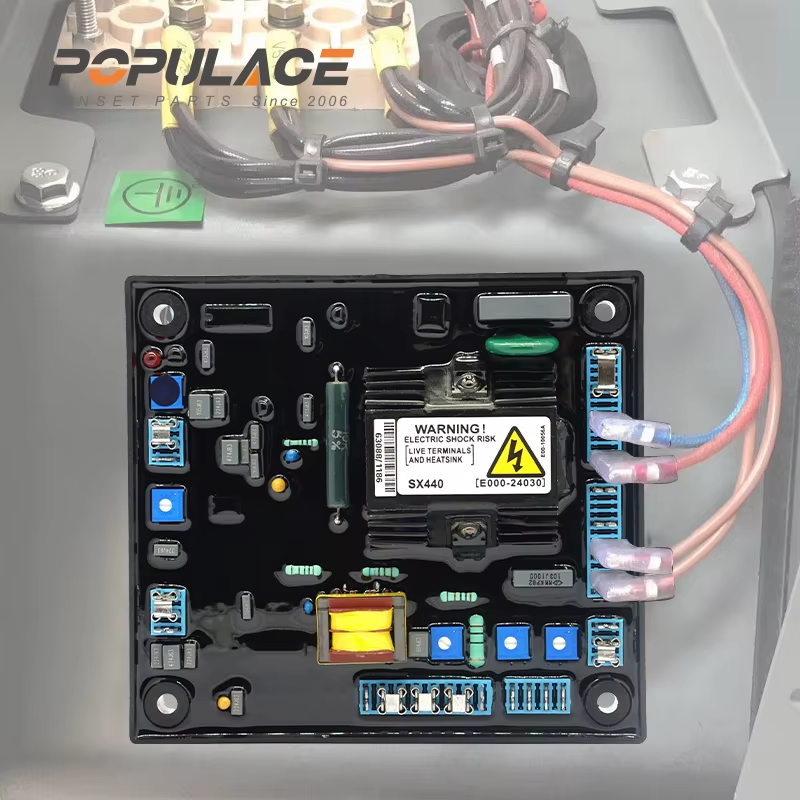
What Are the Advanced Functions of a Deep Sea Generator Controller?
A deep sea generator controller is more than a start-stop panel. In a modern genset, it is the decision layer that watches electrical values, engine condition, mains status, and operator commands, then applies a defined sequence. For a system integrator, the useful question is not simply whether a controller can start a generator, but whether its logic matches the site, switchgear, protection scheme, and service team.
The exact function set depends on the module and its configuration. A dse genset controller may be used for a simple standby set, while another model may supervise multiple sets, synchronize them, or communicate with a building-management system. The settings file and wiring diagram therefore matter as much as the controller model number.
Advanced monitoring turns readings into operating decisions
A basic controller displays voltage, frequency, oil pressure, coolant temperature, and runtime. An advanced deep sea generator controller can apply delays, thresholds, and alarm classes to those signals. For example, it can distinguish a momentary low oil-pressure reading during crank from a sustained condition that needs a shutdown. It can also record event history, so a technician can see whether an alarm occurred before, during, or after a transfer event.
That history is valuable when a generator starts correctly but later trips under load. Instead of replacing parts by guesswork, the service team can compare the sequence of frequency, voltage, engine, and protection events. A dse genset controller does not remove the need for diagnosis, but it makes the diagnosis more traceable.
Automatic mains failure and transfer-switch coordination
For standby power, the controller often performs automatic mains-failure logic. It senses a loss or unacceptable quality of utility supply, starts the engine after a configured delay, confirms that generator voltage and frequency are stable, and then commands the switching sequence. When utility power returns, it can maintain a retransfer delay before returning the load and running a cool-down period.
An automatic transfer switch controller must be configured with the switchgear interlocks and site operating rules in mind. The controller should not be treated as a universal wiring shortcut. Verify the breaker feedback contacts, close commands, emergency-stop circuit, and permissives during commissioning. In facilities with sensitive loads, the timing choices for start delay, warm-up, transfer, retransfer, and cool-down deserve a documented review.

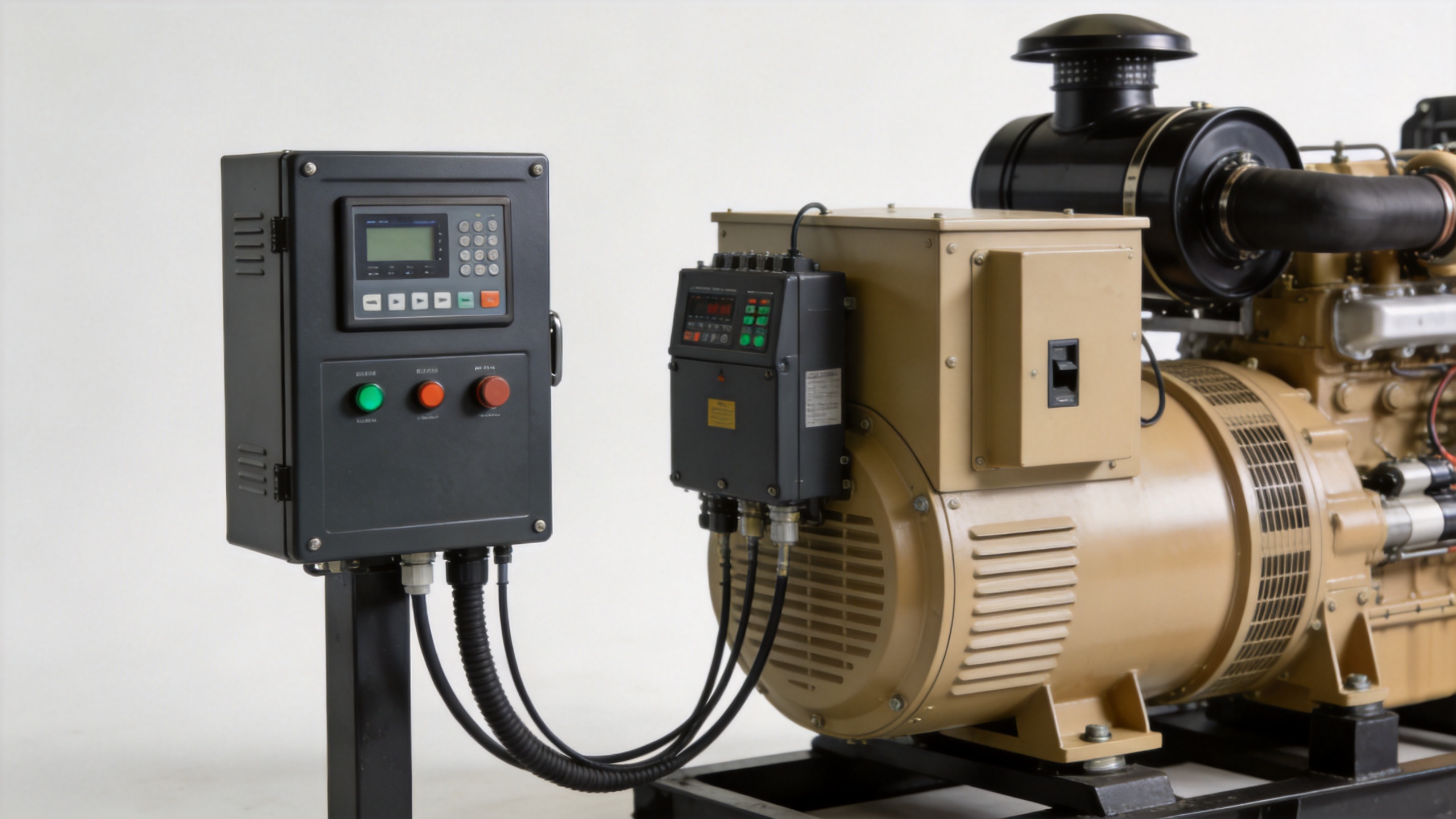
Synchronization, load sharing, and multi-set control
One of the most advanced areas of a deep sea generator controller is parallel-operation control. Before one generator is closed onto a live bus, the controller compares voltage magnitude, frequency, and phase angle. It can issue speed and voltage-bias commands so the incoming set approaches the required matching window. Closing outside the allowed window can create mechanical and electrical stress, so commissioning limits should be set and tested by qualified personnel.
Once generators are paralleled, load sharing can distribute real power and, where the system design supports it, reactive power. This helps a multi-set plant avoid one engine carrying an excessive share while another runs lightly loaded. A dse genset controller can also support staged start and stop decisions: add a set as demand rises, then remove a set when demand falls while maintaining reserve capacity. The practical benefit is operational flexibility, not a promise of identical results on every installation.
Engine protection and configurable shutdown logic
Advanced protection is a major reason to use a correctly specified deep sea generator controller. Typical inputs may cover overspeed, underspeed, overcrank, low oil pressure, high coolant temperature, low coolant level, battery voltage, and charging alternator faults. Electrical protections can include over- and under-voltage, over- and under-frequency, overcurrent, earth-fault monitoring where the installation supports it, and phase-related alarms.
Each alarm needs a consequence. Some conditions should produce a warning so an operator can investigate; others may require an immediate shutdown. The correct choice depends on the engine, alternator, load, and safety plan. Avoid copying parameters from an unrelated set. A generator deep sea controller manual is a configuration reference, not proof that a default value is appropriate for every application.
Remote communications, telemetry, and service access
Many advanced controllers communicate through interfaces such as CAN, RS485, Ethernet, or modem-based connections, depending on the model and optional hardware. That can allow remote status viewing, event retrieval, scheduled exercise management, and integration with a supervisory system. For fleet operators, remote alarm visibility can shorten the time between a fault and an informed response.
Remote access also introduces control discipline. Set user permissions, retain configuration backups, record software changes, and make sure the local panel remains understandable when communications are unavailable. A deep sea 7420 controller, for example, should be identified by its exact variant and application before a replacement or settings transfer is attempted. Similar front panels do not guarantee identical inputs, firmware behavior, or expansion requirements.
Practical checklist before configuring advanced functions
- Confirm the genset, engine interface, alternator sensing arrangement, and breaker-control scheme.
- Use the applicable generator deep sea controller manual and retain the final configuration file with the project records.
- Test alarms, shutdowns, breaker feedback, and an automatic transfer switch controller sequence under controlled conditions.
- For parallel systems, validate synchronization permissives and load-sharing response with qualified commissioning personnel.
- Train operators on alarm acknowledgement, manual mode, emergency stop, and the limits of remote control.
Frequently Asked Questions
Can a deep sea generator controller run an automatic transfer switch?
Many configurations can provide the logic and signals used with an automatic transfer switch controller, but compatibility depends on the controller model, switchgear wiring, interlocks, and commissioning settings.
Is a deep sea 7420 controller suitable for every generator?
No. A deep sea 7420 controller should be selected and configured for the specific engine, alternator, control interface, and operating duty. Review the applicable generator deep sea controller manual before installation.
Why is event logging important on a dse genset controller?
Event logging helps technicians reconstruct the order of alarms, starts, transfers, and trips. It supports troubleshooting but does not replace electrical testing or safe maintenance procedures.
Conclusion
The advanced functions of a deep sea generator controller combine monitoring, protection, transfer logic, synchronization, load management, and communications. The strongest result comes from matching the controller to the application and documenting the configuration, rather than relying on generic defaults. For distributors and service teams, specification verification and clear documentation are practical safeguards before a controller reaches site.





