
 EN
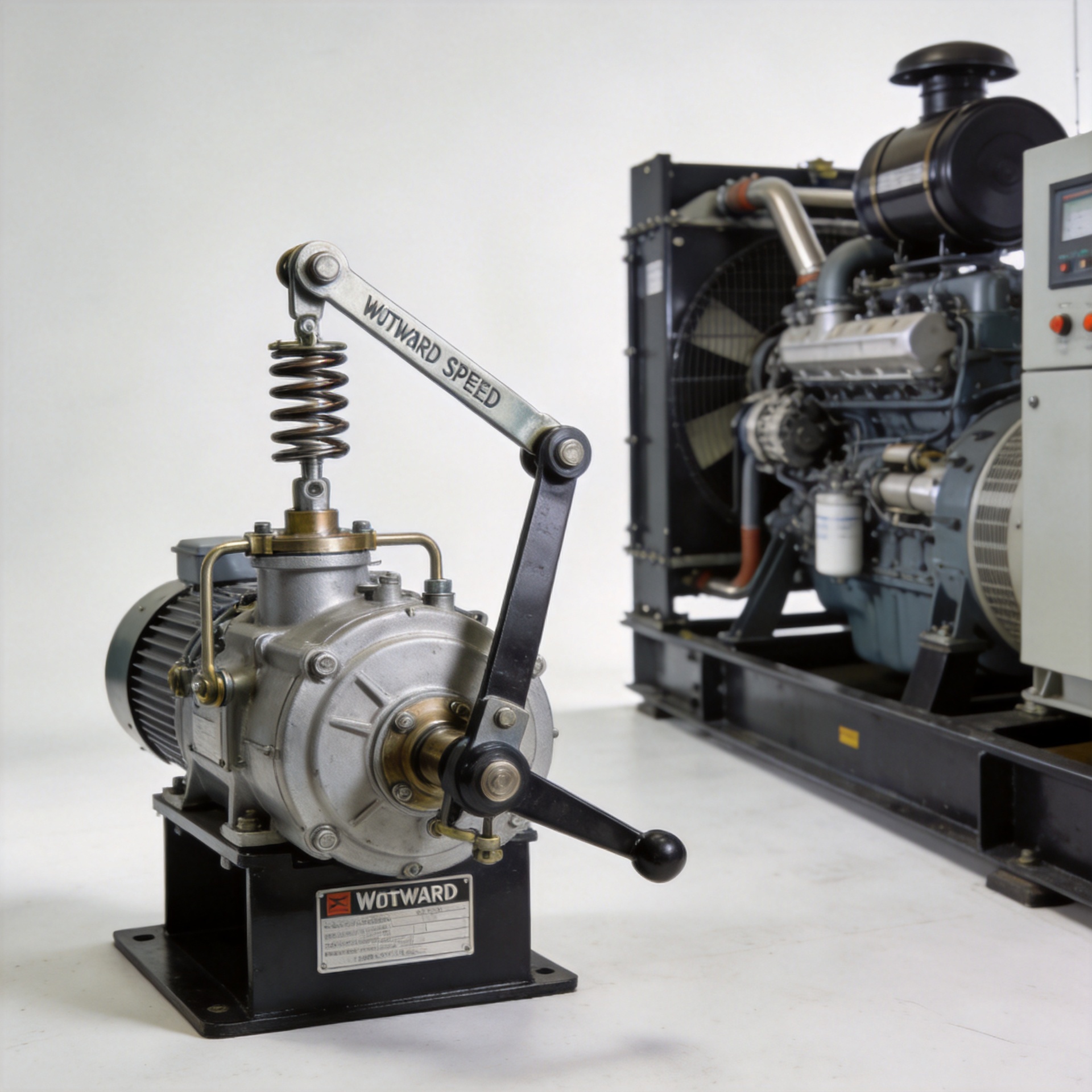
The Working Principle of a Woodward Speed Governor Explained.
If you have ever watched a diesel generator set surge or hunt under fluctuating loads, you have already seen what happens when a speed governor is not doing its job properly. As a technical consultant who regularly reviews generator control components for wholesale buyers, the first question I ask when a customer reports unstable engine speed is not "which brand is the governor?" — it is "does the governor's droop setting and actuator response range match this specific engine variant and load profile?" That distinction matters more than most buyers initially expect.
Woodward is one of the longest-established names in engine speed control. Understanding how a Woodward speed governor works, and what separates the mechanical from the electronic type, gives buyers and service engineers a clearer basis for selecting and troubleshooting these components.
What a Speed Governor Actually Does
An engine speed governor is a closed-loop control device. Its job is to maintain a target engine RPM regardless of the load applied to the engine. When load increases (for example, when a generator takes on more electrical demand), the engine tends to slow down. The governor senses this drop in speed and responds by increasing fuel delivery to restore the set RPM. When load decreases, the reverse happens: fuel delivery is reduced to prevent over-speeding.
This feedback loop — sense, compare, correct — is the fundamental working principle of every speed governor, whether mechanical or electronic. Woodward has built its product range around this principle for over a century, producing both hydraulic-mechanical and fully electronic speed governors for diesel, gas, and dual-fuel engines used in generator sets, marine propulsion, and industrial machinery.
The Mechanical Speed Governor: Centrifugal Flyweights and Hydraulic Servo
A mechanical speed governor detects speed changes through a set of rotating flyweights. As engine RPM rises, centrifugal force causes the flyweights to move outward. This outward movement repositions a pilot valve, which in turn controls hydraulic oil flow to a servo-piston. The servo-piston actuates the engine's fuel control mechanism, typically a fuel rack or throttle linkage, reducing or increasing fuel delivery accordingly.
Woodward's PG (Pressure-compensated Governor) series is a well-known example of this type. The PG line offers work capacities ranging from 12 to 500 ft-lbs, covering applications from small standby generators to large industrial prime-power engines. The mechanical design is durable and self-contained, requiring no external electrical power for basic operation — one reason it remains the standard on many legacy diesel generator sets.
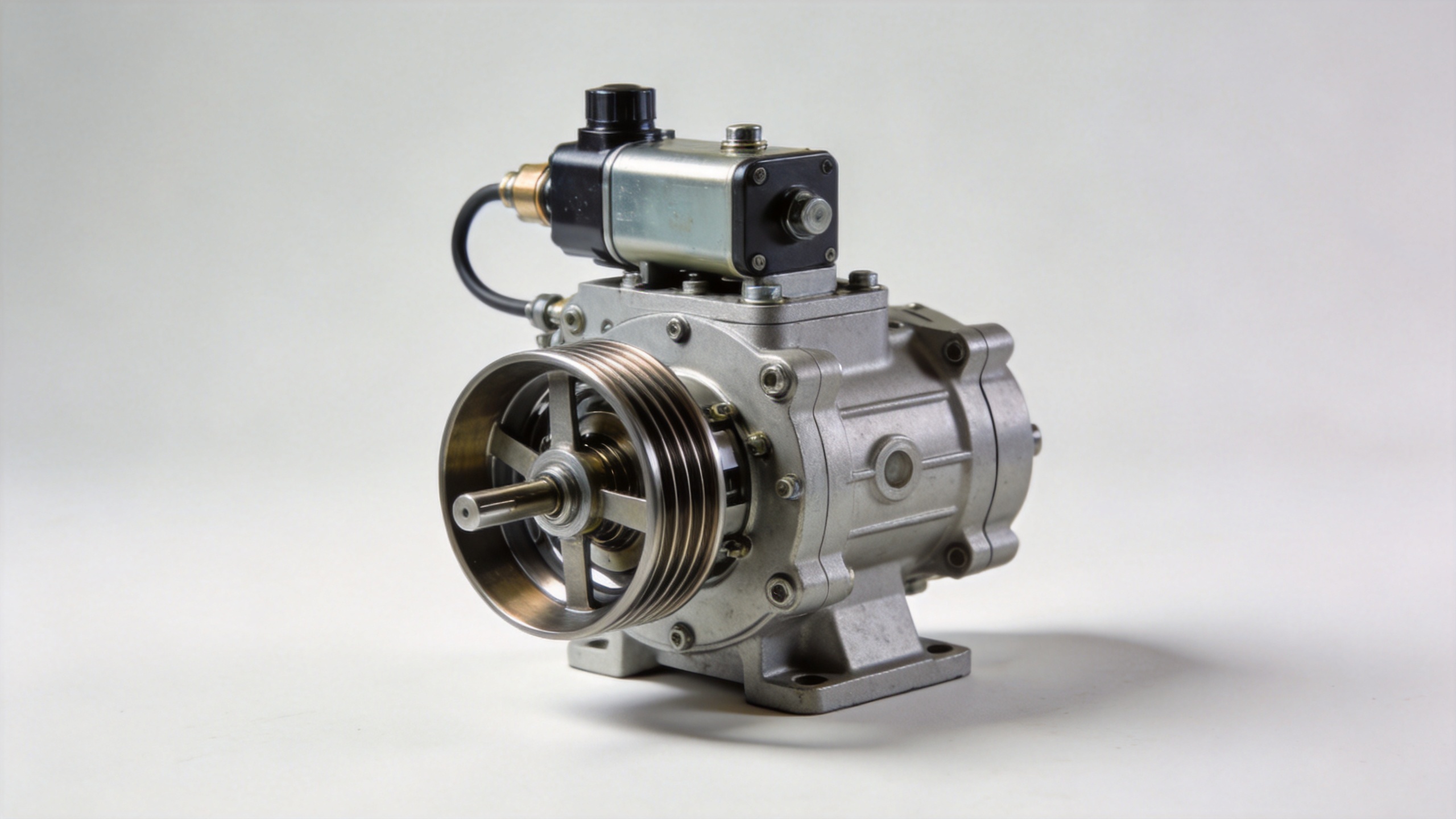
Adjustment parameters on a mechanical governor typically include speed setting, droop adjustment, and compensation (stability/damping). Droop is particularly important in parallel generator operation: it allows each unit's load to shift proportionally when a second generator is brought online, preventing one unit from trying to absorb all load changes. If your priority is stable parallel operation, the droop setting is the parameter most worth verifying against the engine specification.
The Electronic Speed Governor: Sensor, Controller, Actuator
An electronic speed governor replaces the flyweight speed sensor with a magnetic pickup sensor (MPU) mounted near the engine flywheel or ring gear. The sensor generates a frequency signal proportional to engine RPM. This signal is processed by a digital or analog controller — the "brain" of the system — which compares actual speed against the setpoint and outputs a proportional current signal to an electro-hydraulic or electronic actuator.
Woodward's EGB (Electro-Hydraulic Governor/Actuator) series is a widely used example of the electro-mechanical bridge between electronic control signals and hydraulic fuel actuation. The EGB actuator accepts a proportional 20–160 mA control signal from an electronic controller, making it compatible with both Woodward's own digital controls and third-party generator speed control governor systems. That compatibility is one reason the EGB series appears across a wide range of generator OEM configurations.
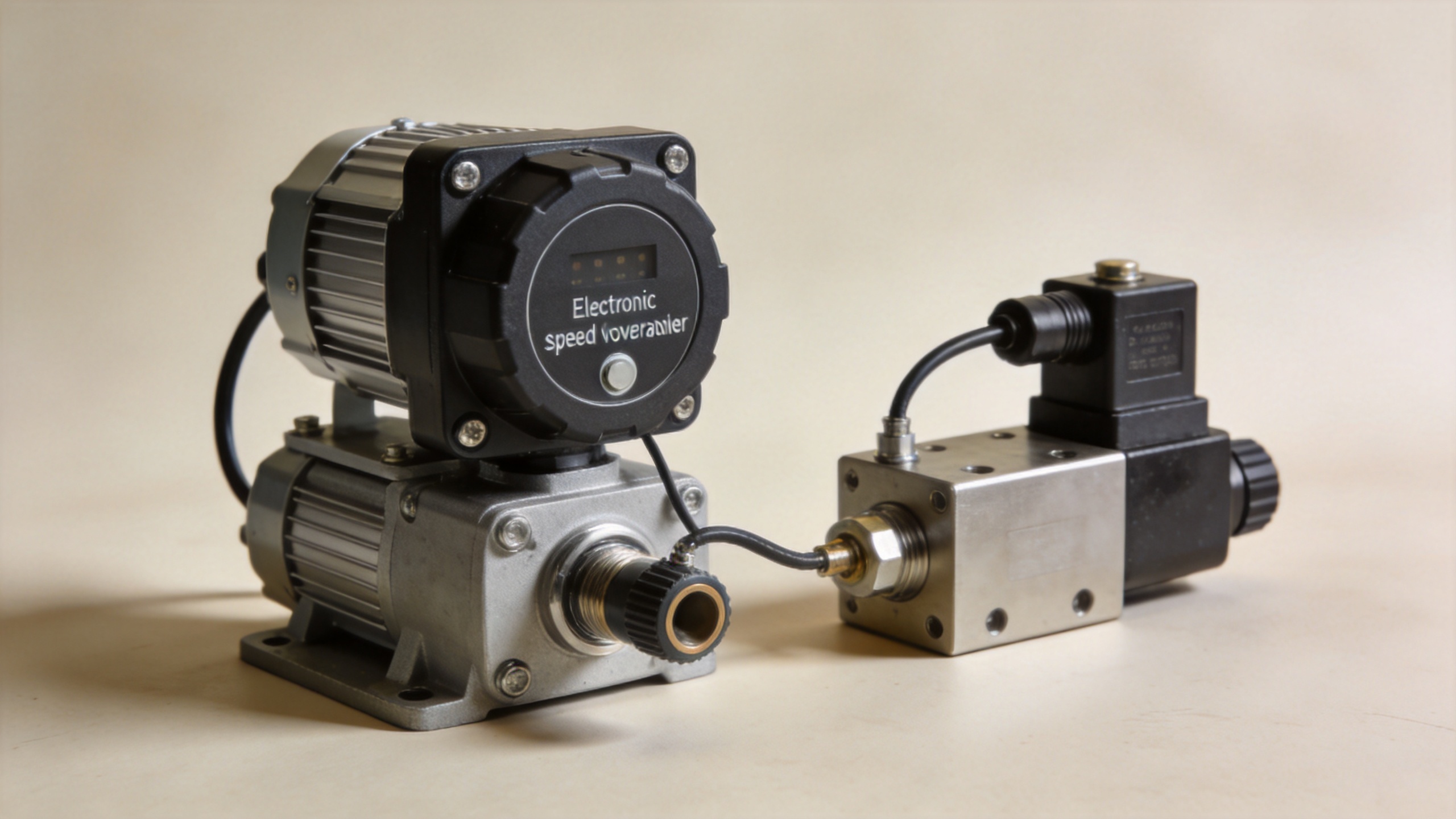
Fully digital electronic governors — such as the Woodward EasyGen series — integrate speed governing, load sharing, protection, and communication functions in a single unit. These are typical in modern genset control panels where remote monitoring, isochronous load sharing, and automatic mains failure (AMF) operation are required.
Mechanical vs. Electronic: What Changes in Practice
The working principle is the same — sense, compare, correct — but the implementation differs in ways that affect selection and maintenance:
- Speed sensing: Mechanical governors use rotating flyweights; electronic governors use magnetic pickups. Flyweight mechanisms require periodic inspection for wear; magnetic pickups are non-contact and generally lower maintenance.
- Response accuracy: Electronic governors typically achieve tighter steady-state frequency regulation (often ±0.25% or better) compared to mechanical types, which are more commonly rated at ±0.5% to ±2% droop depending on model.
- Adjustability: Electronic types allow parameter adjustment via software without physical access to the governor, useful on generators installed in enclosed or remote locations.
- Power dependency: Mechanical governors require no external power supply; electronic types require a stable 12V or 24V DC supply. In backup power applications, battery reliability becomes a factor.
One point that is often misunderstood: faster governor response is not automatically the right target. If your generator runs in island mode with variable non-linear loads, a governor tuned for maximum response speed can introduce oscillation — the very hunting behavior you were trying to eliminate. Governor response settings should match the inertia and load characteristics of the specific engine and application, rather than being set to the fastest available response by default.
Compatible Generator Set Models
Woodward speed governors appear across a broad range of engine-generator sets. Common application areas include:
- Cummins diesel engine generator sets (KTA, NTA, QSK series) — often using Woodward PG or EGB governors
- Perkins and Mitsubishi industrial engines, frequently paired with Woodward mechanical governor variants
- Marine generator sets where reliability and low-maintenance sensing are priorities
- Prime power and continuous-duty industrial generator sets where isochronous load sharing is required
When sourcing a replacement or upgrade engine speed governor for any of these applications, the key data points to confirm are: engine model and variant, existing governor model number, fuel control interface type (fuel rack vs. electronic throttle), and whether the installation requires isochronous or droop speed control mode.
Selection Criteria Summary
Selecting the right generator speed control governor comes down to a few verifiable parameters rather than brand preference:
- Engine compatibility: Confirm the governor model number matches the engine variant's governor drive specification, not just the general engine family.
- Control mode: Isochronous operation (fixed speed regardless of load) is required for standalone operation; droop is typically required for parallel generator sets.
- Work output: The governor must have sufficient actuator output force to operate the engine's fuel control mechanism under full load conditions.
- Control interface: For electronic types, confirm signal type (current mA range, voltage input) matches the generator panel controller.
- Operating environment: Temperature range, vibration rating, and IP protection level should match the installation site.
Populace Electronic Co., Ltd. (kygenpower.com) maintains a speed governor product range covering both Woodward-compatible mechanical governors and electronic actuators, with pre-sales technical compatibility support to help confirm specification fit before purchase. For wholesale buyers and brand merchants sourcing replacement or OEM governor components, pre-confirming the engine model and control interface type at the inquiry stage significantly reduces post-order compatibility issues.






