
 EN
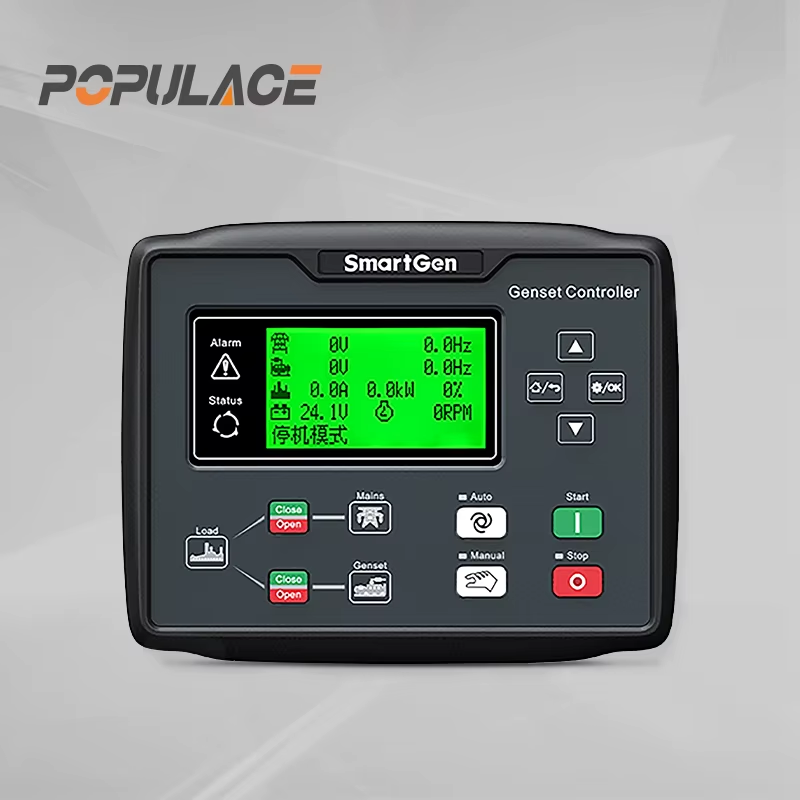
The Benefits of Using Smartgen Controllers for Generator Monitoring
A generator set is only useful when its operating condition is visible and its protective logic is set up correctly. For service teams and procurement managers, a smartgen controller can provide a practical control point for seeing engine and alternator information, responding to abnormal conditions, and documenting what happened before a shutdown. The value is not simply a display on the panel. It is the ability to turn scattered signals into a repeatable monitoring routine.
As a technical consultant working with generator control components, I start with the site rather than the controller label. A small standby unit, a rental fleet, and a remote pumping station can all need a smartgen generator controller, but the right inputs, alarm priorities, and communication plan may be very different.
Why generator monitoring needs a central controller
Engine protection, electrical measurement, start logic, and alarm handling are connected jobs. If they are treated as separate add-ons, operators can lose the sequence of events that explains a trip. A controller brings these functions together: it receives sensor and status inputs, evaluates configured limits, runs the required start or stop sequence, and presents operating data in one place.
That central view helps teams move from a reactive question—“Why will the generator not run?”—to a more useful one: “Which condition changed first, and what action did the control logic take?” In a well-commissioned installation, the event and alarm record can support troubleshooting after the immediate fault has been made safe.
Five practical benefits of a smartgen controller
1. Clearer visibility of operating conditions
A smartgen controller can consolidate the readings and states that matter during routine rounds: running status, battery-related indications, engine parameters, generator electrical values, and active alarms. The exact list depends on the selected model and wiring, so buyers should confirm the manual for their application. Still, putting the information on one interface reduces the need to infer system health from a single lamp or gauge.
2. More disciplined alarm response
Alarm protection is most helpful when thresholds, delays, and shutdown actions reflect the equipment and the site consequence. A low-level warning may call for investigation, while a confirmed critical condition may need an immediate stop. The benefit of a smartgen generator controller is that the logic can be made consistent across similar sets when it is documented and tested. This makes handover easier for rotating operators and gives maintenance personnel a defined starting point.
3. Automated start/stop sequences with traceability
Generator monitoring is not limited to watching a running engine. It also includes knowing whether the set received a start request, completed its checks, reached a stable operating state, or stopped on a protection. Relevant SmartGen documentation describes controller functions such as automatic start/stop, data measurement, alarm protection, and record checking. Treat those capabilities as a framework, not a promise for every model: verify the selected controller’s I/O, firmware, and application diagram before specifying it.
4. A practical path to remote oversight
For sites that are not staffed continuously, remote visibility can reduce the time between an alarm and a first assessment. It does not replace site safety procedures or preventive maintenance. It does allow a team to review status and decide whether a technician should travel, what tools to bring, and which records to inspect. Before enabling remote access, define the communications path, user permissions, data ownership, and the actions that must remain local.
5. Better commissioning and repeatability
The long-term benefit often appears at commissioning. A controller forces the installer to define sensor types, input states, start conditions, protection limits, and output assignments. That work exposes assumptions that may otherwise remain hidden until a real outage. A saved configuration and a test record also make future replacement or expansion less dependent on one person’s memory.

Where the Smartgen HGM series fits
The smartgen hgm series is commonly discussed in the context of genset automation and monitoring. Rather than selecting an HGM-family unit by name alone, build a requirement list first: engine interface, alternator sensing, required digital and analogue inputs, output count, mains or transfer requirements, communications, enclosure environment, and the alarm history needed by the operator. Then compare those requirements with the current model documentation.
This approach avoids a common mistake: assuming that a controller family carries the same capability across every model. Monitoring value comes from the match between the model, wiring design, configuration, and test process—not from a label on the front panel.
How to approach smartgen controller programming
Reliable smartgen controller programming starts with a controlled checklist. Record the set’s rated values and sensor information; confirm each input by simulation where it is safe; set alarm delays deliberately; test manual and automatic sequences; and capture the final configuration version. Avoid copying settings from another generator without checking sensor scaling, engine behavior, and the operating philosophy for the new site.
- Define which alarms are warnings, trips, or shutdowns.
- Verify the source of every start signal and permissive.
- Test the sequence with qualified personnel and an approved method statement.
- Store the configuration and test report with the generator records.
Comparing options without treating a smartgen deep sea alternative as interchangeable
Buyers sometimes search for a smartgen deep sea alternative when availability, existing panel design, or cost is under review. A substitution should not be based on brand similarity or connector appearance. Compare the application requirements: sensing, control mode, I/O mapping, communications protocol, configuration tools, operator interface, support documentation, and commissioning burden. If any of these differ, redesign and test the panel logic as a controlled change.
This neutral comparison protects uptime. A lower purchase price can be outweighed by extra wiring, unfamiliar programming, or incomplete alarm testing. Conversely, a compatible controller chosen with a clear specification can simplify standardization for a fleet or a panel builder.
A buyer’s monitoring checklist
- List the conditions the operator must see locally and remotely.
- Separate warning, trip, and shutdown actions according to the site’s operating procedure.
- Confirm the controller model supports the required inputs, outputs, and communications.
- Plan the commissioning tests before installation, including alarm and start/stop sequence checks.
- Keep configuration files, wiring revisions, and event records available for service staff.
Conclusion
A smartgen controller can make generator monitoring more organized, more traceable, and easier to hand over between teams. Its strongest benefits come from careful selection and commissioning: use the controller to centralize meaningful signals, apply protective logic consistently, and keep a record that supports informed maintenance decisions. For every installation, confirm the current technical manual and test the actual configuration before the generator is relied upon for critical duty.





