
 EN

Sourcing Smartgen Controllers for the Value Genset Market.
When you are buying a smartgen controller for the value end of the genset market, the decision looks straightforward enough on paper — until the first batch arrives with missing documentation, an unexpected communication protocol, or a model number one generation older than the spec sheet indicated. As someone reviewing B2B supplier proposals for generator control components, the lesson that comes up repeatedly is this: the lowest quoted landing price rarely stays the lowest-cost option once you factor in qualification time, returns, and downstream customer complaints.
Even so, sourcing a smartgen controller remains a viable option for value-segment wholesale buyers — if you know which criteria matter and which suppliers can actually deliver. This guide provides a structured sourcing checklist for the smartgen controller category, covering functional types, selection criteria, price positioning, and supplier verification steps.
Understanding the Smartgen Controller Range Before You Specify
Smartgen produces a wide lineup, and not all genset controller smartgen models are interchangeable for the value market. The core families most common in wholesale sourcing requests are:
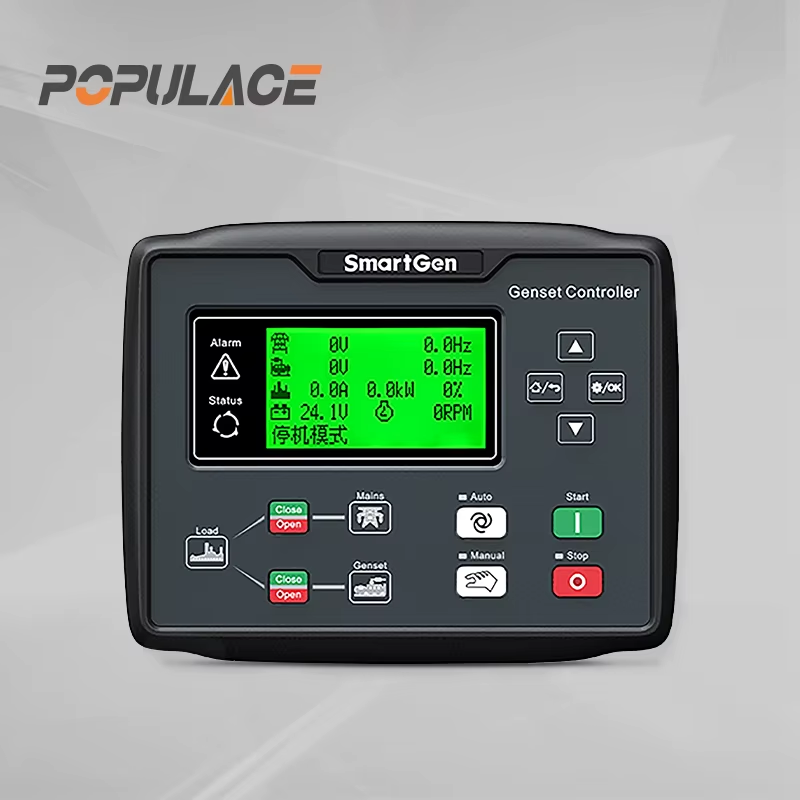
- HGM Series (AMF / Auto-Start): The HGM range covers automatic mains failure applications. A smartgen automatic controller in the HGM entry-level tier (HGM1790, HGM4010) supports auto-start/stop sequencing, engine protection alarms, and RS485 or CAN interface depending on variant. This is the most frequently specified smartgen controller for basic AMF applications in the value segment.
- HAT Series (ATS Controllers): The HAT family handles automatic transfer switch logic — sensing mains failure and switching to generator supply. HAT553 and similar models are among the most commonly sourced genset controller smartgen variants in wholesale channels for residential and light commercial applications.
- HEM / HGC Series (Advanced Genset Management): These cover data logging, remote access, and paralleling. For value-market buyers, this level of smartgen controller complexity is rarely needed, but useful to know when a customer's requirements upgrade mid-project.
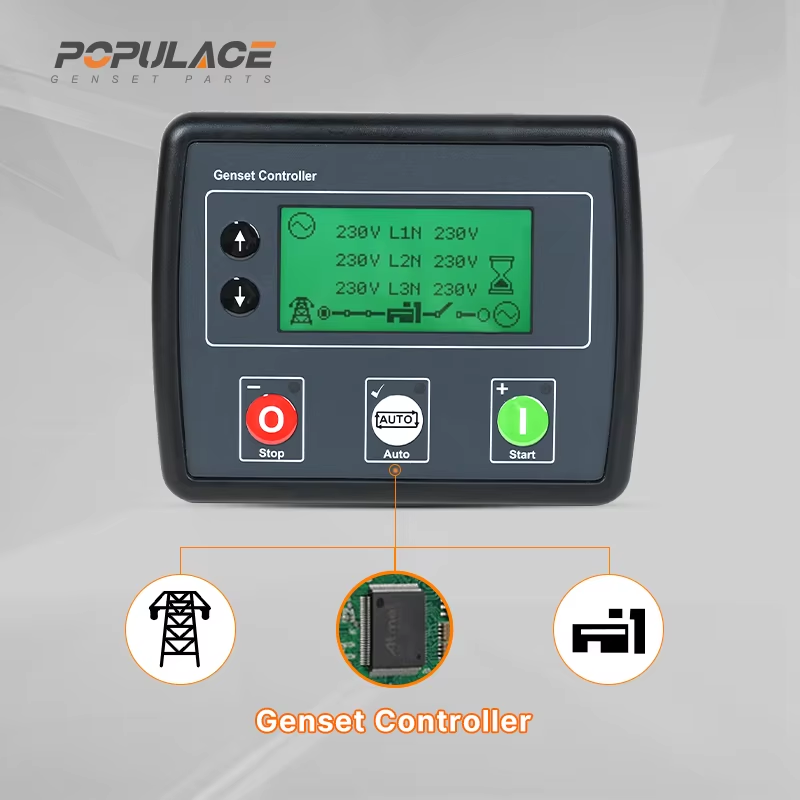
Clarifying the functional family before finalizing a specification prevents the most common compatibility mismatch: ordering the wrong genset controller smartgen variant and discovering the issue after shipment.
Selection Criteria Framework for the Smartgen Controller Category
When evaluating which smartgen controller model fits a specific requirement, this checklist works as a minimum viable specification gate:
- Control function type: AMF, manual-start, ATS-only, or parallel. This eliminates most of the smartgen controller range immediately and prevents over-specification.
- Generator and alternator interface: Speed pickup type, charge alternator input, and battery voltage (12V or 24V). Value market buyers sometimes overlook battery voltage when comparing smartgen price across supplier proposals.
- Protection relay outputs: Number of digital inputs, relay outputs, and whether the application needs fuel solenoid, crank, and pre-glow outputs. Entry-level smartgen controller models vary in the number of protected outputs included.
- Communication protocol: RS485, CAN, or none. If remote monitoring is not required, a smartgen controller without communication outputs prices lower — relevant when smartgen price is a primary driver in the value segment.
- Operating temperature range: Standard range (-20°C to +70°C) covers most value genset applications. The HGM4100Z extends to -40°C for harsher environments, though this smartgen controller variant carries a premium.
- Documentation requirements: CE marking, RoHS compliance, and English wiring diagrams. For buyers supplying Europe, documentation completeness is a disqualifying criterion, not a preference.
Working through this checklist before requesting quotes reduces specification drift and helps wholesale buyers compare smartgen controller proposals on consistent terms.
Smartgen as a Deep Sea Alternative: Where the Trade-Off Works
For buyers who have worked with Deep Sea Electronics (DSE) and are evaluating a smartgen deep sea alternative controller for cost reduction, the functional comparison at the entry and mid range is closer than the price gap might suggest.
Both Smartgen and DSE produce AMF controllers, ATS modules, and engine management units. The practical distinctions buyers report when switching to a smartgen controller from DSE are: software familiarity (DSE configuration tools are more widely documented in field service contexts), documentation quality (DSE typically provides more complete English manuals as standard), and distribution network depth in Europe and North America.
For wholesale buyers supplying markets in Asia or Africa — where value-tier gensets dominate and local teams are comfortable with the Smartgen configuration ecosystem — the trade-off often favors a smartgen deep sea alternative controller on landed cost. Where your customer base has strong DSE familiarity or strict compliance documentation requirements, the cost saving may not outweigh the support friction. That is a calculation worth making before committing to a Smartgen-based supply chain.
Smartgen Price Context: What Wholesale Buyers Should Expect
Entry-level HGM series smartgen controller units for manual genset applications can be sourced wholesale in the USD 20–60 per unit range at volume, depending on model, quantity, and supplier relationship. ATS controllers (HAT series) run higher per unit. Published retail references show HAT-series smartgen price points at USD 40–200+; wholesale from a direct manufacturer source sits below the retail channel, with the gap varying by order size.
The trap experienced procurement managers learn to avoid is optimizing on smartgen price while underestimating the total cost of supplier qualification, documentation checks, and post-delivery compatibility issues. A supplier who provides complete English wiring diagrams, a pre-shipment specification confirmation, and a clear defect handling process can justify a unit price premium over a lower-priced source that requires multiple follow-up rounds to confirm basic compatibility.
Supplier Verification Before the First Smartgen Controller Order
The genset controller market includes direct Smartgen-authorized distributors, OEM-compatible aftermarket manufacturers, and resellers who aggregate across multiple production origins. For value market sourcing, any of these can be appropriate — the key is knowing which you are dealing with.
Minimum verification steps for a new smartgen controller supplier:
- Request a sample unit and confirm the model number, firmware version, and documentation package before placing a production order.
- Confirm the defect handling process and what constitutes an accepted defect rate for batch orders of this smartgen controller type.
- Ask for English-language wiring diagrams and a compatibility confirmation for the specific engine brand and model.
- Verify export documentation capability: commercial invoice, packing list, and certificate of origin as standard.
- For European markets, confirm CE documentation covers the specific smartgen controller model ordered, not just the product family.
For distributors who need consistent downstream customer confidence, batch consistency on repeat orders is as important as first-order quality. A supplier who passed sample evaluation but cannot replicate quality at production scale is a recurring failure mode in the genset controller smartgen wholesale market.
Building a Sustainable Smartgen Controller Supply Chain
If you are sourcing a smartgen controller for the first time in volume, a structured trial order across two or three model variants gives practical data on documentation quality, packaging, lead time reliability, and compatibility before a larger supply commitment.
The value genset market is a real and durable segment. Smartgen occupies a defensible position in that market as a specification-grade genset controller smartgen product at a price point that makes wholesale procurement economics work — if the supply chain is set up correctly from the first order.





