
 EN
Sourcing Multi-Brand Generator Controllers for Panel Assembly Workshops
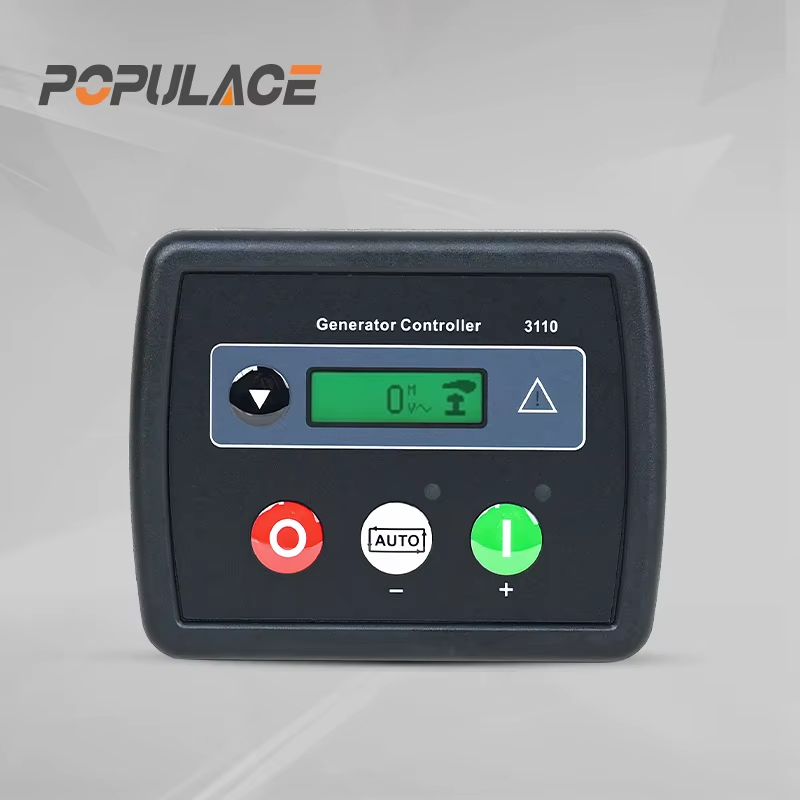
For a panel workshop, sourcing a generator controller is not a simple catalog exercise. A controller that looks right on a bench may still conflict with an engine ECU, a harness, a breaker interface, or a customer’s monitoring system. The practical goal is to buy a generator controller that can be verified, documented, installed, and supported across the panel families your team actually builds.
This guide treats the generator controller as part of a complete assembly decision: engine communication, sensing, protection, I/O, operator interface, remote supervision, spares, and commissioning records. That perspective helps workshops avoid the familiar same-connector, different-behavior problem.
Start with the application map, not the brand name
Before comparing any generator controller, classify the job: manual-start, automatic mains failure, standby, prime-power, synchronising, load sharing, or a remote-only monitoring retrofit. An automatic generator controller for a basic AMF panel may have a very different I/O count, mains sensing arrangement, and breaker-control requirement from a controller used in a parallel-generator board.
Ask one early question: are you replacing a failed device in an existing field panel, or standardising inventory for new builds? The first case prioritises pinout, configuration-file recovery, and functional equivalence. The second lets the workshop select a generator control module around its preferred terminal layout and documentation process. Those are different procurement decisions.
Build a multi-brand compatibility sheet
Every RFQ for a generator controller should include a compatibility sheet. Record the engine make and ECU type, generator voltage and frequency, number of phases, mains arrangement, actuator or ECU control path, and the exact breaker mechanism. Add the existing controller model, wiring drawing revision, terminal labels, connector part numbers, and required display language.
Do not treat “supports CAN” as proof of compatibility. CAN is the transport; the controller still needs the applicable engine message set and configuration. SAE J1939 uses CAN-bus technology, and a panel may also need Modbus for a PLC, building-management system, or SCADA layer. So the specification should state whether the generator controller must read native J1939 data, expose Modbus RTU or TCP points, or work through a gateway. A protocol name without a point list is incomplete.
An amf generator controller also needs mains and generator sensing checked separately. Confirm nominal ranges, neutral reference, phase sequence behavior, and protection expectations. A suitable module for one voltage arrangement is not automatically a safe substitute for another.
Translate features into I/O and wiring requirements
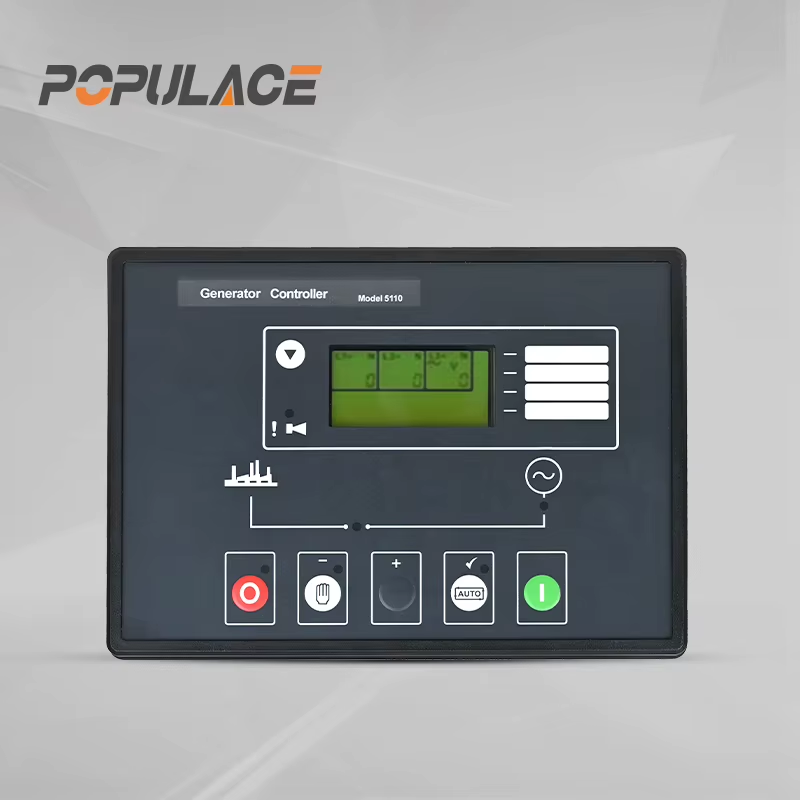
Feature lists are useful, but the workshop needs a terminal-by-terminal map. For each candidate generator controller, identify digital inputs for emergency stop, low fuel, door status, and remote commands; relay outputs for crank, fuel, preheat, alarm, and breaker control; plus analogue inputs for senders or transducers. Then reserve any inputs required by the customer’s safety chain.
A common sourcing mistake is counting available I/O without checking whether it is configurable, electrically suitable, and free after standard functions are assigned. The same applies to outputs: a relay intended for indication may not be appropriate for the coil or interposing relay used in the panel. If your generator control module has expansion capability, document the module address, power supply, and failure behavior before it becomes part of a standard design.
For a generator remote start controller, define the remote signal logic in writing: dry contact or voltage input, maintained or pulse command, stop priority, inhibit conditions, feedback point, and loss-of-communication response. Clear logic notes save far more commissioning time than an extra line in the quotation.
Choose a spares strategy that matches your build mix
Panel shops rarely need every generator controller in deep stock. Instead, group controllers into approved platforms and keep a controlled list of substitutes. Each alternative should have a documented boundary: what is interchangeable, what needs harness changes, what needs a new parameter file, and what requires customer approval.
For fast-moving AMF builds, holding a small quantity of the validated automatic generator controller platform can protect lead time. For specialised synchronising applications, a sample unit, configuration backup, and confirmed supplier lead time may be more sensible than broad inventory. Price matters, but an unavailable configuration file can cost more than the unit itself.
Good suppliers can support this process with pre-sales compatibility review, controller-and-parts consolidation, and English technical documentation. Still, ask for the exact document package for the ordered version rather than relying on a generic brochure.
Inspect incoming controllers before panel assembly
Set up a receiving inspection that is short enough to use every time. First, verify the label, firmware or hardware revision where stated, terminal count, accessories, and packaging condition against the purchase order. Next, compare the supplied drawing and user manual to the approved controller record. A generator controller that arrives with a different revision may be usable, but it should not move directly to production without an engineering check.
Bench-test the basic supply, display, input indication, configurable output operation, and communication port with a controlled test lead. For an amf generator controller, verify that simulated mains loss and restoration follow the intended sequence before connecting a live customer panel. This is risk-aware sourcing, not distrust: early checks keep a wiring issue from becoming a site-callout issue.
Make documents and installation part of the purchase
The shipment should arrive with more than a generator controller. Request the current manual, wiring diagram, terminal schedule, parameter list, protocol map, configuration software details, version notes, and a backup-file template where applicable. Keep these in the panel job folder with the drawing revision and serial-number record.
At installation, apply the approved drawing, label communication cables, separate sensitive signal wiring from noisy power paths where the design requires it, and retain the final configuration file. Commissioning records should show the start-up date, technician, no-load checks, alarms tested, remote-start test, and agreed communications points. The controller will be easier to service when the next technician can see what was actually installed.
Evaluate support before the first order
A multi-brand sourcing program works when support follows the hardware. Ask how the supplier handles model confirmation, photo review, parameter questions, replacement revisions, and fault feedback. For a generator remote start controller, confirm who can interpret the remote-command logic when the site interface is not behaving as expected.
A sound buying decision is the one that leaves your workshop with a verified generator controller, an approved alternative path, a complete document pack, and a repeatable inspection routine. That is how a panel team turns multi-brand availability into a controlled assembly system rather than a collection of one-off substitutions.






