
 EN
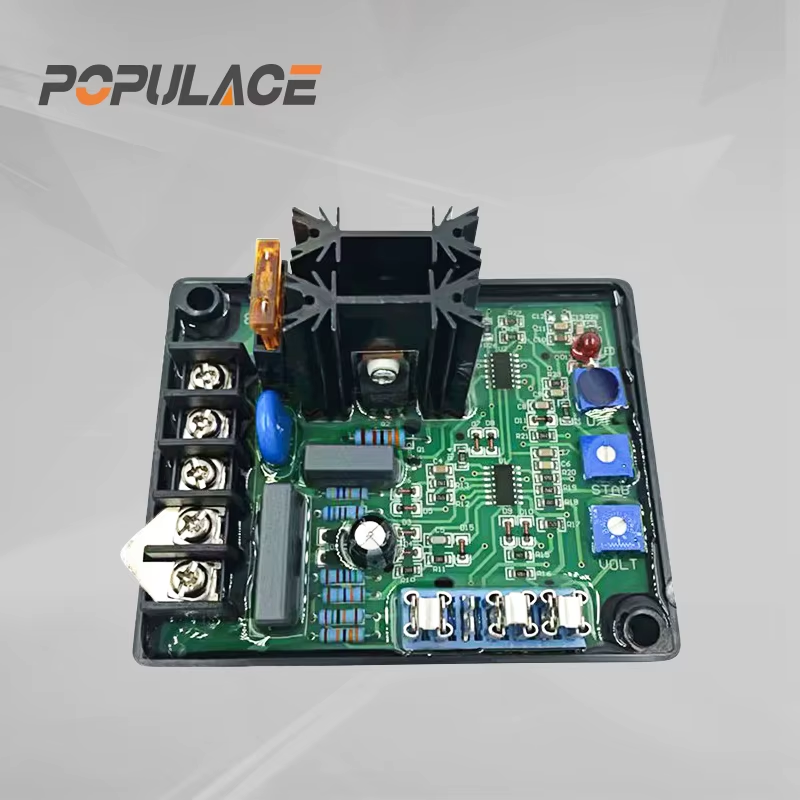
Sourcing Generator AVRs for Diesel Generator Set Manufacturers
For a diesel genset manufacturer, a Generator AVR is not a generic board to buy by appearance. It is the excitation-control component that helps an alternator hold its intended terminal voltage as load changes. A sourcing error can show up as unstable commissioning results, a late production hold, or field replacements that do not behave like the approved unit. The practical answer is to qualify each Generator AVR as part of an alternator-and-controls system, then manage it as a repeatable production item.
This guide is written from a procurement perspective: define the interface first, inspect incoming lots against it, validate the assembly under controlled load changes, and reserve the right spare configuration before a model reaches volume production. That process is more useful than relying on an automatic voltage regulator for generator label alone.
Start with the alternator, not the regulator housing
The first sourcing document should be an alternator compatibility sheet. Record the alternator make and winding arrangement, rated output voltage and frequency, excitation method, sensing connection, field resistance range, auxiliary-winding or PMG supply arrangement, and the terminal block used in the set. A Generator AVR may look interchangeable while its sensing or power-input arrangement is not.
For a brushless generator avr, confirm how the regulator receives its operating power and where it measures voltage. Ask whether the proposed design uses residual voltage build-up, an auxiliary winding, or a permanent-magnet supply. Also confirm whether voltage sensing is single-phase or three-phase, and whether the adjustment range is suitable for the intended set rating. These questions prevent a common mistake: approving a board because its connector fits before confirming that the electrical reference is the same.
- Obtain the alternator data sheet and existing approved regulator part number.
- Map every terminal, plug key, wire color, sensing lead, and ground point.
- State the required field-current and field-voltage operating envelope rather than a single nominal figure.
- Identify optional functions required by the controller, such as droop, under-frequency roll-off, stability adjustment, or remote trim.
A useful purchasing rule is simple: a Generator AVR is compatible only when its input, sensing, excitation output, adjustment functions, and physical connection have all been checked against the target alternator.
Turn electrical requirements into a controlled specification
Procurement should issue one controlled specification for every approved Generator AVR. Include rated sensing voltage, permissible sensing range, frequency, supply source, output capability, allowable ambient condition, insulation expectations, terminal identification, and the required response during a step load. A supplier quotation can then be compared on facts, not on an image or a loosely similar reference number.
Attach a simplified generator avr circuit diagram to the specification package. It does not need to disclose every internal component; it should show the alternator sensing path, the regulator supply path, the field output, the adjustment connection, protective device locations, and the controller interface. The diagram gives engineering, purchasing, incoming inspection, and service teams one shared reference.
Do not treat a claimed standard as proof of fit. IEC 60034-22 addresses principal characteristics of AC generators operating with voltage regulators in reciprocating-engine applications, so it can be a useful documentation reference for test planning. The approved requirement, however, remains the genset manufacturer’s own alternator and load-performance specification.
Build incoming inspection around traceability and measurable checks
Incoming inspection should not begin and end with the carton label. For each lot of Generator AVR units, verify the purchase-order part number, revision mark, lot or date code, terminal markings, connector orientation, enclosure condition, conformal-coating condition where specified, and included adjustment hardware. Keep a retained sample and a photo record when a revision is introduced.
Next, perform the checks that can reveal a substitution before it reaches the line. Inspect solder workmanship and terminal torque points visually; verify continuity where the approved test instruction calls for it; compare key markings with the controlled generator avr circuit diagram; and confirm that the supplied adjustment controls match the approved layout. If the supplier changes a PCB, connector, or field-output device, treat it as a change requiring revalidation rather than a routine lot.
| Inspection area | What to record | Release decision |
|---|---|---|
| Identity | Part number, revision, lot traceability | Matches approved source |
| Interface | Terminal labels, plug keying, wiring map | Matches alternator harness |
| Electrical setup | Sensing and supply configuration | Matches controlled specification |
| Workmanship | Board, terminals, coating, enclosure | No defect affecting use |
Validate the Generator AVR on a representative genset
Bench checks are helpful, but a Generator AVR should be released only after it is installed on a representative alternator and tested with the intended controller and engine-speed setting. Begin with no-load voltage build-up, then measure steady output at the chosen frequency. Apply planned load steps and observe voltage recovery, stability, abnormal heating, and the interaction between the regulator and engine governor.
The exact acceptance bands belong in your internal test instruction because alternator design, kVA rating, and application duty differ. What matters is repeatability: use calibrated instruments, record the same sequence for every qualification lot, and retain the waveform or measurement log where practical. For a brushless generator avr, include a check that the field circuit and excitation supply remain within the approved operating envelope throughout the test.
When a test fails, separate the causes. Verify sensing wiring and frequency first; then review alternator residual magnetism, field connections, engine speed, load-bank setup, and only then the regulator itself. This disciplined sequence avoids rejecting a sound Generator AVR for an installation problem.
Plan production supply and after-sales spares together
A production release should establish the approved manufacturer, part revision, inspection sample plan, lead-time signal, and change-notification requirement. Ask the supplier to identify which components or board revisions may change and require advance notice before any substitution. Consistent batch management is particularly important when a distributor or OEM must support the same genset series across several markets.
Spare planning needs a separate bill of materials. Define which Generator AVR revision is supplied with each genset model, the packaging and installation instructions for service teams, and the recommended stock profile by installed base and service lead time. Buyers seeking avr replacement parts wholesale should require traceable part numbers and a compatibility record; a low price is not useful if the spare cannot be identified after a field repair.
Maintain a controlled service kit with the approved Generator AVR, terminal map, adjustment guidance, and fault-isolation sheet. This makes it easier to distinguish a failed regulator from a wiring, alternator, or engine-speed issue and reduces avoidable return claims.
A practical supplier-approval checklist
- Match the proposed Generator AVR to the alternator electrical and physical interface.
- Approve a controlled specification and generator avr circuit diagram before ordering production quantities.
- Inspect identity, workmanship, terminals, and traceability for each incoming lot.
- Validate no-load, steady-load, and load-step behavior on a representative genset.
- Control revisions, packaging, documentation, production lead time, and after-sales spare stock.
A sound sourcing outcome is not simply an available Generator AVR. It is a documented, testable component program that keeps alternator compatibility, production continuity, and field service aligned as the genset portfolio grows.






