
 EN
Sourcing Electronic Speed Governors for Genset Assembly Plants
For a genset assembly plant, a speed governor is not a generic “engine accessory.” It is part of the frequency-control chain that links the engine, speed signal, controller, actuator, fuel system, alternator, and load profile. A part can look correct on an incoming inspection table and still cause commissioning delays if its interface, response behavior, or calibration range does not suit the engine package.
That distinction matters because general searches for a speed governor often return vehicle speed-limiters. A generator application is different: the purpose is to regulate engine RPM so the set can hold its intended electrical frequency under changing load. From a procurement viewpoint, the right choice is therefore the one that fits the complete control loop and can be supplied consistently across planned builds—not simply the lowest quoted unit.
Start with the governing architecture, not the catalog name
Before comparing suppliers, identify whether the build uses a mechanical governor for generator service or an electronic control architecture. A mechanical arrangement usually regulates fuel through a mechanical linkage and calibrated spring-and-weight system. It can be practical for established engine configurations where the original linkage, operating range, and service procedure are already known.
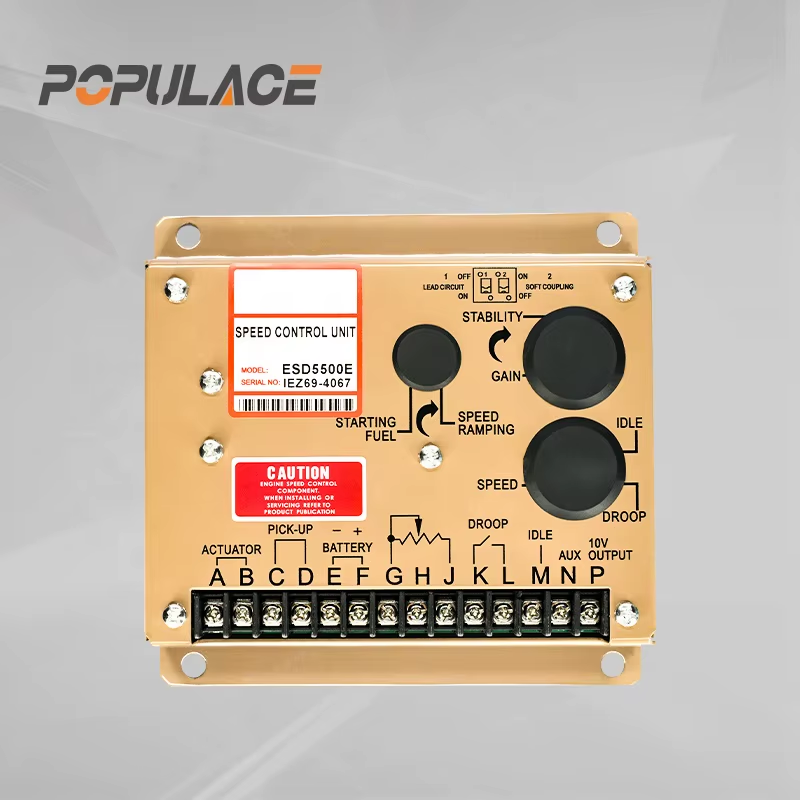
An electronic speed governor, by contrast, typically uses an engine-speed signal, an engine speed control unit, and a generator speed governor actuator to position the fuel-control mechanism. This can give assemblers more flexibility to tune response for the application, but it also creates more interfaces to verify. Digital controls are commonly used where a mechanical system needs more flexibility or precision; that does not mean every mechanical unit should be replaced. The architecture must match the engine, the intended load behavior, and the commissioning capability of the plant.
Build a compatibility sheet before requesting quotations
Experienced buyers eventually stop asking only, “Which speed governor fits this engine brand?” The better question is, “Which complete governing set matches this exact engine variant and our control-panel configuration?” Engine family alone is rarely enough for repeatable purchasing.
- Engine identification: record the full model, serial or build range when relevant, rated speed, fuel-system arrangement, and original governor reference.
- Speed feedback: confirm the required sensor type, sensing location, connector, signal range, and cable arrangement. A controller and pickup that are not intended to work together can create an unstable or unusable signal.
- Actuator and linkage: check mounting, stroke or travel, force requirement, fail position, linkage geometry, and whether the actuator is compatible with the fuel-control lever.
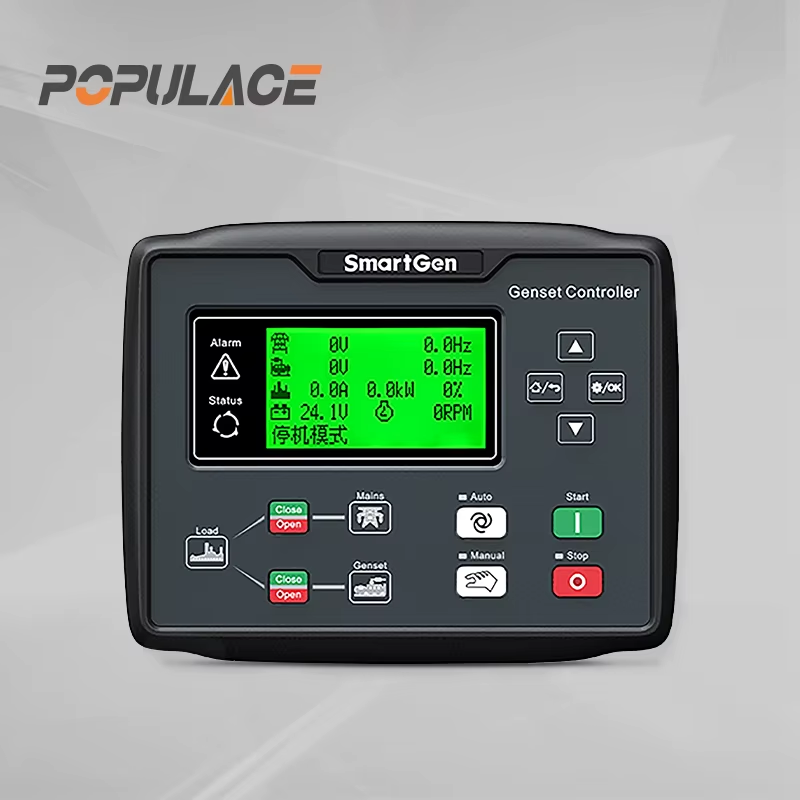
- Controller interface: verify supply voltage, wiring diagram, inputs, outputs, adjustment method, and any connection required to the genset panel.
- Operating duty: describe standby or prime-power use, expected load steps, cyclic motor loads, ambient conditions, and synchronization requirements if applicable.
This sheet should travel with the RFQ and with the purchase order. It reduces the common failure mode of receiving a governor that matches an engine name but not the actual interface or sensing arrangement.
Compare mechanical and electronic options by assembly risk
There is no universal winner between a mechanical governor for generator applications and an electronic speed governor. A plant building a stable, repeat configuration may value proven mechanical linkage compatibility and straightforward service. A plant handling variable-load duty, several control-panel variants, or a need for more adjustable behavior may prefer an electronic system.
| Decision area | Mechanical approach | Electronic approach |
|---|---|---|
| Integration focus | Linkage, drive arrangement, adjustment procedure | Sensor, controller, actuator, wiring, and calibration compatibility |
| Change control | Protect established mechanical settings and parts interchangeability | Control revisions, connector pinout, and parameter-management discipline |
| Variable-load review | Confirm the installed arrangement has suitable response for the application | Confirm the engine speed control unit and actuator can be tuned and validated for the load profile |
| Incoming inspection | Check linkage interfaces and reference markings | Check identifiers, connectors, harness compatibility, and paired component references |
If your application runs at a stable load profile, a proven arrangement may be the sensible option. If load changes frequently—especially with cycling motor loads—verify the governing response during commissioning. The specification sheet is necessary, but it cannot confirm that a particular actuator, pickup, and linkage behave correctly together on your assembled genset.
Qualify the supplier for repeatability, not just the first sample
For assembly plants, one acceptable sample does not prove that a supplier can support a production schedule. Batch consistency, traceable part identification, packaging protection, and response to technical clarification all affect the real cost of a speed governor program. Price matters—well, price is the starting point—but an unplanned line hold or rework cycle can consume the apparent saving quickly.
Use a supplier-qualification process that asks for:
- Part-number and application confirmation against the compatibility sheet.
- Clear identification of what is included: controller, actuator, speed sensor, harness, adjustment hardware, or only one component.
- Pre-shipment verification records appropriate to the agreed specification, plus batch or lot identification where available.
- Sample evaluation on the target engine and panel before volume release.
- Lead-time, packaging, replacement, and technical-escalation procedures for recurring orders.
A specialist generator-control supplier can be useful when the purchasing team needs help checking governor, actuator, and controller compatibility. Fujian Kaiyue Electronics Co., Ltd. focuses on generator control components and replacement parts for global B2B supply; buyers should still provide the exact application information so suitability can be confirmed before ordering.
Make commissioning part of the sourcing decision
Do not treat commissioning as a separate downstream activity. A sourcing plan should define who will set up the engine speed control unit, who owns the initial calibration record, and what load conditions will be used for acceptance. The relevant generating-set performance requirement may include transient frequency behavior; ISO 8528-5 is a commonly referenced framework for reciprocating-engine genset performance. The applicable project specification, engine guidance, and local requirements should determine the actual acceptance criteria.
For each approved speed governor configuration, retain a controlled build file with the component references, wiring revision, sensor and actuator pairing, baseline settings, test conditions, and observed results. That file is what turns an approved assembly into a repeatable production configuration.
A practical sourcing checklist
- Is the requirement for a mechanical governor, an electronic governor, or a complete controller-sensor-actuator set?
- Does the quotation match the exact engine variant and fuel-control interface?
- Have the speed signal, connector pinout, supply voltage, and actuator movement been verified together?
- Are standby, prime-power, and load-step conditions defined for the intended genset?
- Can the supplier identify the batch and support technical clarification after shipment?
- Has the configuration been validated on the target engine and control panel before volume purchasing?
Reliable sourcing begins with compatibility discipline. When an assembly plant specifies the whole governing chain, compares electronic and mechanical options against real operating conditions, and validates a controlled sample before release, the speed governor becomes a managed production component rather than a recurring cause of late-stage troubleshooting.






