
 EN

Sourcing Automatic Voltage Regulator Genset Components for Infrastructure Projects
For an infrastructure project, an automatic voltage regulator genset requirement is not a routine spare-parts line. The AVR influences how the alternator holds a usable voltage as load changes, so a mismatch can surface during commissioning rather than at the quotation stage. From a procurement standpoint, the goal is to buy a compatible, documented component with a delivery and inspection plan—not simply the lowest-priced board.
The practical starting point is to treat an automatic voltage regulator genset component as part of a control system. The alternator winding, sensing circuit, exciter arrangement, generator duty, panel wiring, and project acceptance process all matter. If the application runs steady, non-sensitive loads, the review may be straightforward. If it supplies pumps, communications equipment, hospital auxiliaries, or other variable and sensitive loads, the verification record deserves more attention.
Start with the project duty, not the catalog photograph
Write a one-page equipment brief before requesting an offer. Include the genset and alternator make, exact model, serial or production range where available, rated voltage and frequency, phase configuration, duty classification, operating environment, and the load profile. This turns a vague request for a genset AVR module into an engineering-controlled inquiry.
A common mistake is to match only the nominal output voltage. AVR sensing voltage can differ from alternator phase voltage, and manufacturer wiring references may show different sensing connections for different winding arrangements. In plain terms: a regulator that looks right for a 400 V generator is not automatically right unless its sensing input and connection diagram match that generator. Request the applicable wiring diagram and the supplier’s written compatibility confirmation before releasing a purchase order.
Use a compatibility matrix for every automatic voltage regulator genset line item
A short matrix makes technical review faster for procurement, engineering, and the commissioning team. It also helps compare approved alternatives without losing the original basis of design.
| Check | What to verify | Why it matters |
|---|---|---|
| Machine identity | Alternator model, genset model, serial range, and existing AVR part number | Similar machines can use different sensing or excitation arrangements. |
| Electrical interface | Sensing input, power input, field output, frequency range, and wiring terminals | These values determine whether the regulator can read and control the alternator correctly. |
| Control features | Stability adjustment, under-frequency protection, droop or parallel-operation needs, and accessory inputs | Feature needs depend on the project operating mode; do not assume every module is interchangeable. |
| Site conditions | Ambient temperature, vibration, enclosure protection, and contamination exposure | A bench-compatible part may still be a poor fit for the installed environment. |
| Documentation | Datasheet, terminal diagram, revision level, traceability, and inspection requirements | These records support commissioning, maintenance, and any project audit trail. |
Most buyers focus first on ratings. After a failed installation, the focus usually shifts to sensing input, terminal layout, and the actual wiring harness. That shift is avoidable: require the matrix with the quotation and make discrepancies visible before procurement approval.
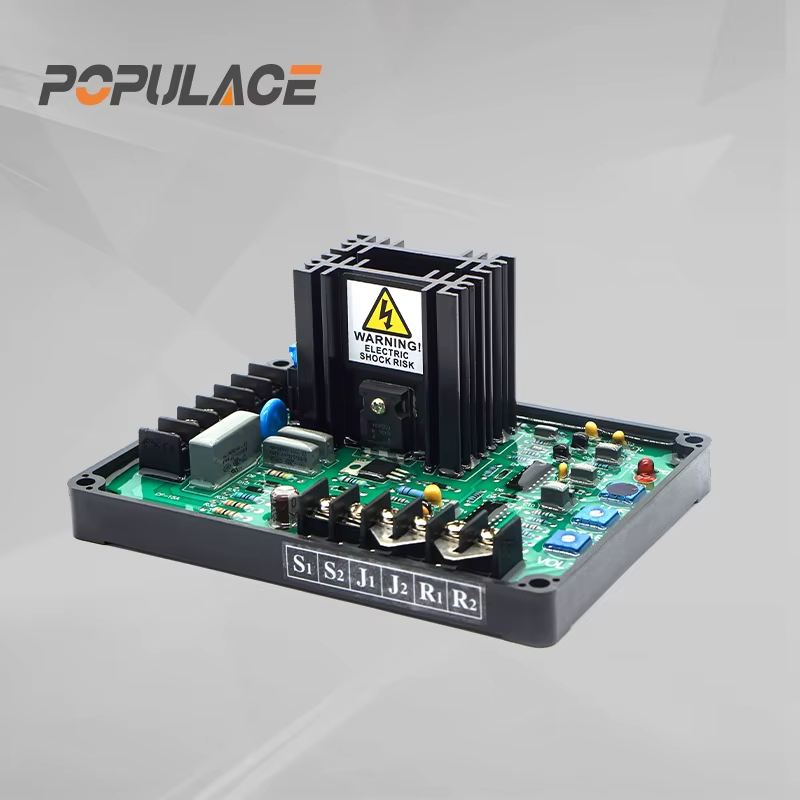
Specify the right automatic voltage stabilizer for genset duty
The phrase automatic voltage stabilizer for genset is often used broadly, but the actual requirement should describe the regulating function and duty. A standby unit that runs occasional tests may have a different operating profile from a prime-power generator serving a construction site or remote utility asset. The distinction becomes important during sustained heavy loading, repeated motor starts, or rapidly changing demand.
Ask engineering to define the acceptance conditions: permitted voltage behavior under the project’s normal load transitions, required protective functions, and whether the generator will operate alone or in a parallel arrangement. Avoid assigning universal performance numbers from a generic listing. The manufacturer’s current data sheet and the project specification should govern the decision.
Build documentation into genset voltage control procurement
For infrastructure work, documentation is part of the component. A strong genset voltage control package typically includes a clear part identification, a connection diagram, a current revision-controlled data sheet, written compatibility confirmation, packing identification, and an agreed incoming-inspection method. Where the contract requires it, add compliance declarations, origin records, and batch or lot traceability to the submittal list.
This is not paperwork for its own sake. When specifications are confirmed verbally rather than in writing, a project can receive a plausible-looking module that cannot be installed without rework. A documented submittal gives the site team something concrete to check before shipment and again at goods receipt.
- Freeze the approved technical matrix and attach it to the purchase order.
- Require photographs of the label, terminals, and packaging for first orders or critical replacements.
- Define what the receiving team checks: part number, label revision, physical condition, documents, and packaging integrity.
- Keep a record linking the delivered item to the installed genset and commissioning file.
Evaluate supplier capability without overclaiming
A dependable source for an avr for generating set should be willing to discuss interface details before payment, provide relevant technical documents, and clarify what has and has not been verified. For electronic control components, anti-static and impact-resistant export packaging are reasonable items to request because damage may not be visible on arrival. For larger programs, ask how repeat-order consistency, part revisions, and defect handling are managed.
Supplier qualification is scope-specific. Approval to provide one regulator type does not prove that every replacement is suitable for every alternator. The most useful question is simple: “Which exact machine and wiring configuration does this quotation cover, and which documents support that conclusion?” If the answer is incomplete, pause the release rather than treating a fast quote as a technical approval.
Plan samples, alternates, and schedule protection
On a critical path, a sample or pre-shipment review can be less expensive than a late-site correction. For a new source, confirm the full document set and physical interface on a representative unit before committing volume. Keep approved alternates only after they pass the same compatibility matrix; an emergency substitute should not bypass the controls that prevented the original risk.
There is also a supply-chain balance to manage. A single qualified source can simplify reorders, but it can create a single-point exposure. For high-consequence projects, maintain an approved-alternate file and record the lead-time assumptions used in the construction schedule. That approach supports resilience without pretending that any one source eliminates risk.
A practical release checklist
- Confirm the exact generator and alternator identity, including the installed AVR reference where visible.
- Match sensing, excitation, power, and terminal requirements to a current manufacturer diagram.
- Check duty, load behavior, environmental conditions, and any parallel-operation requirement.
- Obtain written compatibility confirmation, data sheet revision, and required project documentation.
- Define packaging, labeling, traceability, inspection, and defect-response expectations in the order.
- Preserve the final records with the commissioning and maintenance documentation.
Effective automatic voltage regulator genset sourcing is disciplined risk control. When procurement, engineering, and site teams use the same compatibility matrix, a genset AVR module becomes a controlled project component rather than an uncertain replacement part. That reduces the chance that voltage-regulation issues, missing documents, or a wiring mismatch become a commissioning delay.





