
 EN
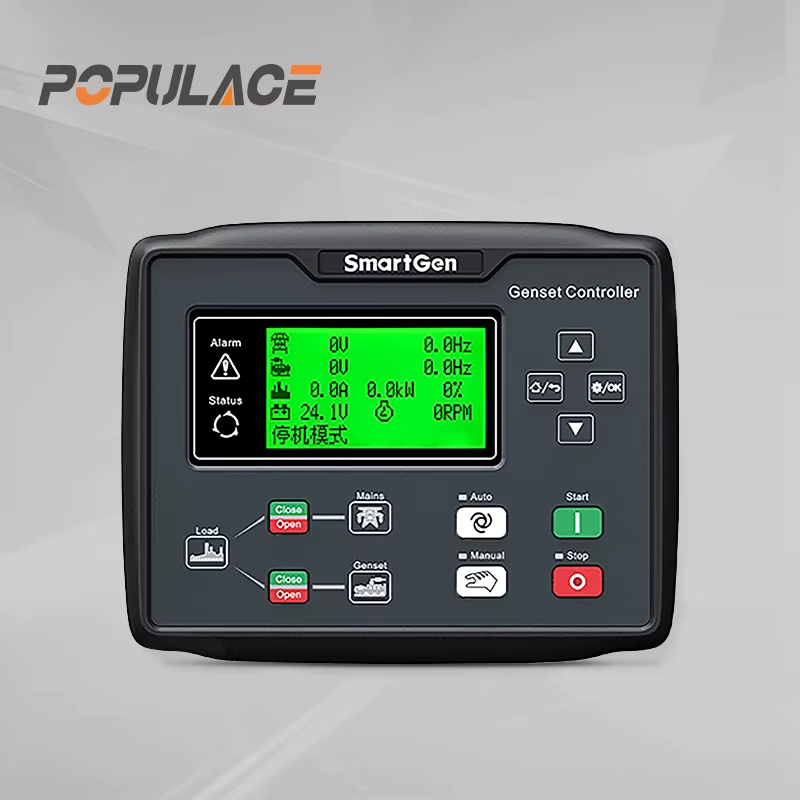
Sourcing Auto Mains Failure Controller Units for Emergency Power Systems
For a generator-packaging buyer, an auto mains failure controller is not a stand-alone answer to a power outage. It is the decision-making component that watches the normal supply, calls the generator when conditions cross the programmed limits, and coordinates the handoff logic with switching equipment. Sourcing it well means checking the whole operating chain: generator, sensing circuits, breaker or contactor arrangement, automatic transfer switch controller logic, wiring, and commissioning plan.
That distinction matters. An emergency power supply system includes more than a generator; it also depends on transfer equipment, protective devices, conductors, and controls working together. A carefully selected auto mains failure controller can make the control layer easier to test and maintain, but it must match the site design rather than be chosen from a feature list alone.
Start with the actual emergency-power sequence
Before requesting quotations, write down the sequence the site requires. A typical auto mains failure controller monitors utility voltage and frequency, confirms a genuine abnormal condition after a delay, starts the genset, waits for acceptable generator output, and sends the permitted command for load transfer. When utility power returns and stabilizes, it manages retransfer, generator cooldown, and stop. The exact timing, interlocks, and alarm response belong in the purchase specification.
Ask the engineering team whether the unit will control a single standby generator, interface with an auto mains failure panel, or participate in a more involved arrangement. The controller’s function is logic and monitoring; the load-transfer device is a separate electrical assembly. Treating those as interchangeable is a common source of scope gaps in sourcing documents.
Define the electrical compatibility checklist
A supplier cannot verify an auto mains failure controller from a model number alone. Provide the generator nominal voltage, phase arrangement, frequency, start method, available battery voltage, fuel solenoid behavior, and the number and type of breaker-control signals. State whether mains and generator sensing need neutral reference and whether the installation uses contactors, motorized breakers, or an ATS.
- Inputs: mains and generator sensing, emergency-stop circuit, remote start permissives, and configurable digital inputs.
- Outputs: crank, fuel/run, preheat where required, common alarm, breaker-close commands, and configurable relay duties.
- Protection: determine which engine and electrical alarms must be monitored, annunciated, or latched by the auto mains failure controller.
- Communications: identify the required local display, remote monitoring, and protocol needs before selecting an AMF controller.
These details also help a buyer decide whether a compact amf module for generator is sufficient or whether a broader controller with more I/O, event history, and expansion capability is justified. More channels are not automatically better if they complicate commissioning without serving a defined site function.
Separate controller requirements from transfer equipment requirements
When an RFQ refers to an automatic transfer switch controller, clarify whether the request is for the genset controller, the ATS mechanism’s controller, or a coordinated package. The first may command a breaker or provide a transfer-enable output; the second may operate the changeover device and supervise its position feedback. Both must be compatible with the system’s interlocking scheme.
For every auto mains failure controller quote, ask for a terminal diagram and an I/O list. Compare them against the one-line diagram, not just another vendor’s datasheet. Confirm how the design prevents unwanted parallel sources, how it proves breaker position, and what happens if a start signal, sensing input, or feedback contact is lost.
Evaluate the AMF controller as a commissioning tool
Operational clarity is a sourcing criterion. During site acceptance, technicians need to see why an auto mains failure controller decided to start, transfer, lock out, or remain in cooldown. Look for readable alarm text, event records, adjustable but protected timing values, and a configuration method that can be documented. A suitable interface for a remote project lets the installer verify inputs and outputs without guessing at hidden logic.
Include test functions in the requirement. Transfer equipment is commonly exercised as part of emergency-power maintenance, so the selected auto mains failure controller should support safe, documented testing consistent with the project’s applicable rules and the owner’s procedure. Do not assume a controller’s test menu alone proves the complete transfer sequence; validate it with the actual generator, switching device, and essential load arrangement.
Ask suppliers for evidence that reduces integration risk
A useful quotation package for an auto mains failure controller includes the current datasheet, installation drawing, connection diagram, programming guide, revision identification, packing information, lead-time basis, and warranty terms. For repeat procurement, request the process for firmware revisions, configuration backup, replacement-unit interchangeability, and technical support.
For wholesale and brand buyers, a specialized generator-control component supplier can be easier to evaluate when it can discuss compatibility boundaries plainly rather than promising universal fit. Fujian Kaiyue Electronics Co., Ltd. supplies generator-control components and related parts for international B2B buyers; the practical value of a direct sourcing conversation is confirming the required interface before an order is released. No controller should be represented as compatible until the application data and wiring requirement have been reviewed.
A practical purchase checklist
- Describe the normal-to-emergency sequence, delays, and retransfer behavior.
- Attach the one-line diagram and list generator, battery, sensing, and breaker details.
- Specify the required functions of the auto mains failure panel and the transfer mechanism separately.
- Request terminal drawings, I/O mapping, alarm list, and configuration documentation for the auto mains failure controller.
- Agree on a commissioning test script covering simulated mains loss, start, stable generation, transfer permission, return-to-mains, and alarms.
- Preserve configuration files and controller revision data with the site handover record.
Make the sourcing decision on fit, not labels
An AMF label tells you the intended application, but it does not confirm the required sensing, outputs, interlocks, display, or service approach. A successful auto mains failure controller purchase begins with an unambiguous sequence of operation and ends with site-level verification. By separating the controller from the transfer hardware, documenting interfaces early, and asking suppliers for usable commissioning evidence, buyers can source a control solution that supports dependable emergency-power operation.






