
 EN
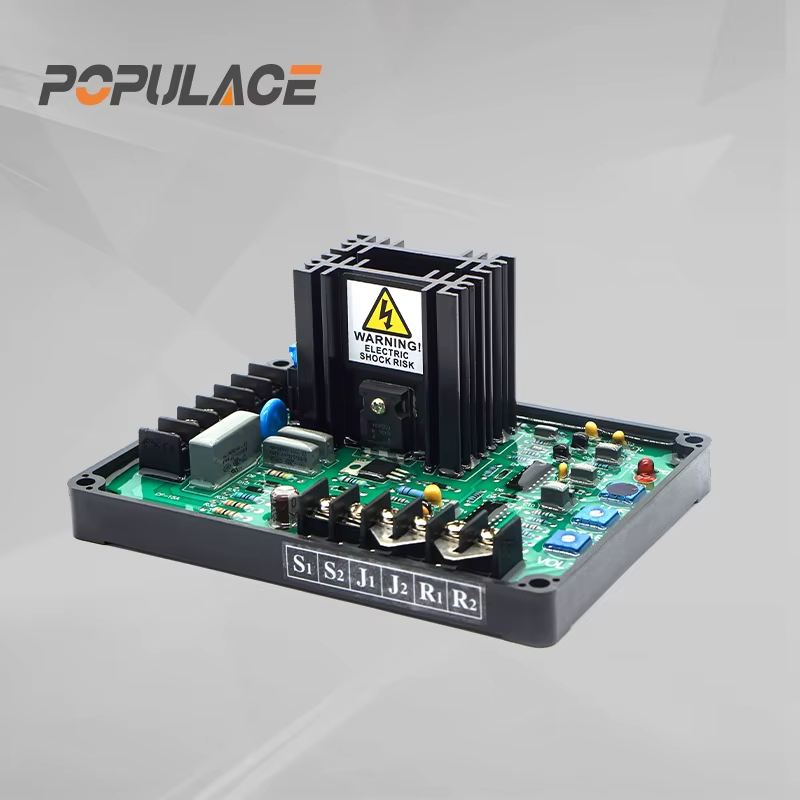
Sourcing 3-Phase AVR Generator Modules for Data Center Backup
On a standby system supporting a data center, an avr generator 3 phase purchase is not a catalogue exercise. The regulator sits between alternator excitation and the voltage seen by critical downstream equipment. A module that appears close on nominal voltage can still be unsuitable if its sensing arrangement, excitation method, protection behavior, or dynamic settings do not match the alternator and control scheme.
From a procurement standpoint, the useful question is not “which three phase generator avr offers the most acceptable total sourcing cost?” It is “which documented module can be installed, commissioned, and supported without introducing an unverified voltage-control risk?” The checklist below turns that question into an approval process.
Start with the alternator, not the AVR label
Collect the alternator nameplate, wiring diagram, original regulator part number, excitation schematic, sensing terminals, frequency, and rated line-to-line voltage before requesting quotations. Confirm whether the machine uses shunt excitation, auxiliary winding excitation, or a permanent-magnet-generator arrangement. These architectures are not interchangeable, even where the enclosure and connector look similar.
Ask the supplier to map the proposed avr 3 phase alternator module to the exact alternator series and connection diagram. The proof should identify sensing input range, field output capability, fuse or protection requirements, and terminal mapping. Published AVR families demonstrate why this matters: sensing and regulation-input ranges vary by design. Treat any published range as a compatibility question to verify, not a universal setting to copy.
Verify three-phase sensing and loss-of-sensing behavior
A data-center standby generator normally needs voltage feedback that represents the intended three-phase output. The purchase specification should state whether the regulator senses one phase, averages phases, or uses true three-phase sensing; it should also state the permitted sensing connection. A 3 phase automatic voltage regulator that is wired for the wrong reference can regulate an incomplete picture of generator output.
Ask for a wiring diagram showing phase order, neutral requirements, sensing fuses, and the response to an open sensing lead. Include an acceptance test for phase loss or incorrect sensing connection where site procedures allow it. The aim is not to create a fault in production, but to verify that the commissioning plan recognizes the failure mode and protection action.

Specify transient response in the language of the load
Data-center backup loads are rarely a smooth, static block. Transfer events, UPS rectifier behavior, fan and pump motors, and staged electrical distribution can produce steps and distortion. Do not accept a vague claim that a three phase generator avr has “fast response.” Request the supplier’s test method, load-step size, starting point, measured voltage dip or rise, recovery criterion, frequency condition, and measurement location.
Setpoints such as stability, voltage trim, under-frequency roll-off, droop, and over-excitation protection must be compatible with the alternator and governor behavior. If generators will operate in parallel, confirm the selected AVR supports the required reactive-load-sharing or droop arrangement. A 3 phase voltage stabilizer for generator applications is not a substitute for validating the generator’s own excitation-control loop.
Build redundancy into the sourcing plan
For critical standby duty, decide whether the strategy is an installed spare, a validated shelf spare, or a rapid replacement agreement. A shelf spare is only useful when its firmware version, parameter file, connector kit, and commissioning instructions are controlled. Record storage conditions and a periodic inspection interval, especially for boards that may sit unused while a generator remains in service.
Most buyers start with unit price. After one emergency substitution, lead-time reliability becomes the more important filter. Ask for lot traceability, re-order lead time, change-notification policy, and the process for obtaining the same revision on a future order. For multi-site fleets, a controlled approved-vendor list and a small number of validated module variants can reduce field confusion.
Require a documentation pack before purchase approval
- Exact part number, revision, and alternator compatibility statement.
- Electrical schematic, terminal legend, dimensional drawing, and installation instructions.
- Sensing voltage and frequency limits; field-output and excitation requirements.
- Parameter list, factory default record, and guidance for authorized commissioning adjustments.
- Production-lot identification, inspection record, warranty terms, and change-control contact.
- Test report format covering functional regulation and the agreed load-transition checks.
A supplier that cannot provide this pack may still offer a physically similar module, but the purchasing team has no reliable basis for approving it for critical backup duty. This is particularly important when comparing an OEM reference with an aftermarket option: the fit depends on documented compatibility, support, availability, and acceptable qualification evidence, not on a universal label.
Use a staged qualification and receiving test
Before deploying an avr generator 3 phase module across a fleet, qualify one sample against a controlled alternator or a representative test set. Verify terminal identity, insulation and mechanical condition, excitation connection, no-load voltage adjustment, rated-load operation, and agreed transient checks. Capture settings before and after the test. If a module has digital configuration, archive the supplied configuration file and the tool version used to read it.
At receiving inspection, compare the delivered revision and markings with the approved quotation. Then preserve the supplier’s report with the purchase record. Batch consistency deserves attention: a part that passes a bench check is not automatically evidence that later deliveries will have the same components, calibration, or protection behavior. A defined sample plan and change-notification requirement give procurement a way to manage that risk.
Supplier qualification questions that expose gaps early
- Can you identify the alternator model and excitation architecture for which this AVR is approved?
- Which phases are sensed, and what happens if sensing is lost or incorrectly connected?
- What factory test records accompany this exact revision and lot?
- Which settings are adjustable, and who authorizes changes during commissioning?
- Can you support a witnessed functional test and provide repeat-order revision control?
- What is the escalation path if field voltage behavior differs from the agreed test result?
Final procurement checklist
Approve the order only when the alternator match, three-phase sensing scheme, excitation capability, transient-test method, parallel-operation requirements, documentation pack, spare strategy, and supplier traceability are all clear. A properly sourced avr generator 3 phase module is not merely a replacement board. It is a verified part of the standby-power control system, with evidence that lets engineering, operations, and procurement make the same decision with confidence.





