
 EN
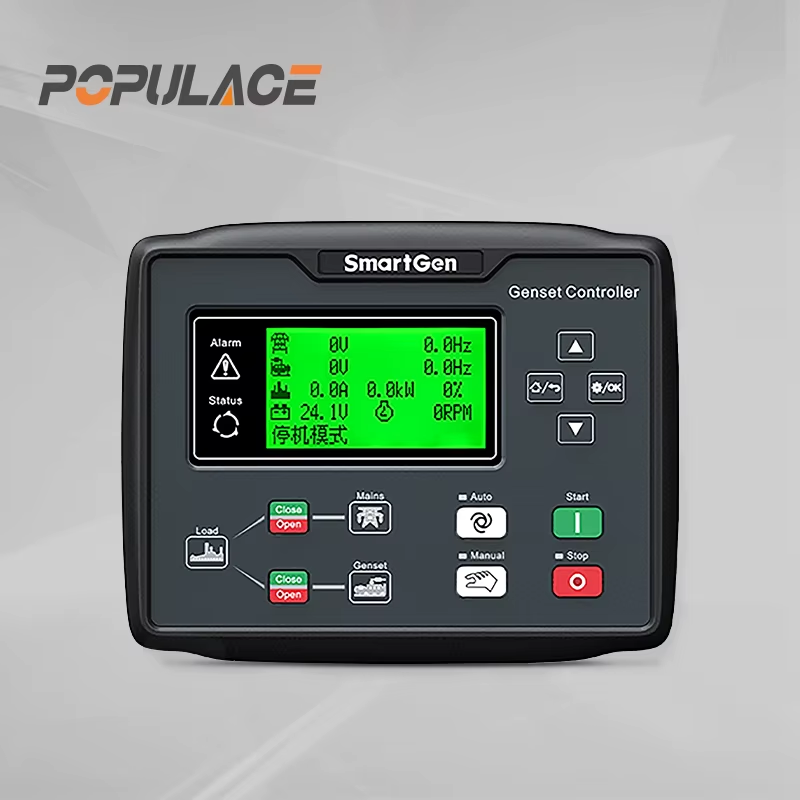
Key Features of DSE Controllers for Diesel Generator Protection
When a diesel generator set fails unexpectedly, the consequences range from costly downtime to irreversible engine damage. A well-specified DSE controller is the primary line of defense — and in most well-maintained installations, it is the reason the generator shuts down safely rather than failing catastrophically. This article covers the core protection features you should understand before sourcing or specifying a Deep Sea Electronics genset controller for your application.
What Does a DSE Controller Actually Protect?
A DSE genset controller manages protection across two distinct domains: the engine itself and the generator output. Most buyers focus on generator-side protection (voltage and current), but engine-side faults are statistically the more common source of field failures in diesel gensets. Understanding both categories is essential for specifying the right module.
Put simply: the controller monitors, it detects faults, and it decides whether to trigger an alarm, a controlled shutdown, or an immediate trip. The response hierarchy matters as much as the detection capability.
Engine Protection Features
Engine protection functions are standard across the DSE product range, from entry-level modules to advanced paralleling controllers. These functions protect the engine from conditions that, if left unchecked, cause rapid mechanical wear or catastrophic failure.
Low Oil Pressure Shutdown
DSE controllers continuously monitor oil pressure via a sensor signal. When pressure drops below a configurable threshold (typically defined in bar or PSI depending on the engine specification), the controller triggers a pre-alarm warning first, then initiates a shutdown sequence if the condition persists. In most configurations, this is a hard shutdown: the controller cuts fuel and ignition regardless of the connected load state.
High Coolant Temperature Protection
Engine overheating is a leading cause of diesel genset failure in high-ambient or inadequately ventilated installations. DSE controllers accept a resistive coolant temperature sender input and compare readings against user-defined alarm and shutdown setpoints. For a typical diesel genset, alarm thresholds commonly sit around 95–100°C with shutdown triggered above 105–110°C, though these values are application-specific to each installation and should be confirmed against the engine manufacturer's limits.
Overspeed Shutdown
Engine overspeed is a safety-critical condition. DSE controllers derive engine speed from the flywheel magnetic pickup signal and compare it against a configurable overspeed threshold, often set at 110–115% of nominal speed. When overspeed is detected, the controller initiates an immediate fuel cutoff with no delay, regardless of other operating conditions. This is one function where faster governor response is generally preferable; an overspeed that reaches 120% of rated speed in a matter of seconds leaves no margin for a delayed response.
Generator Output Protection
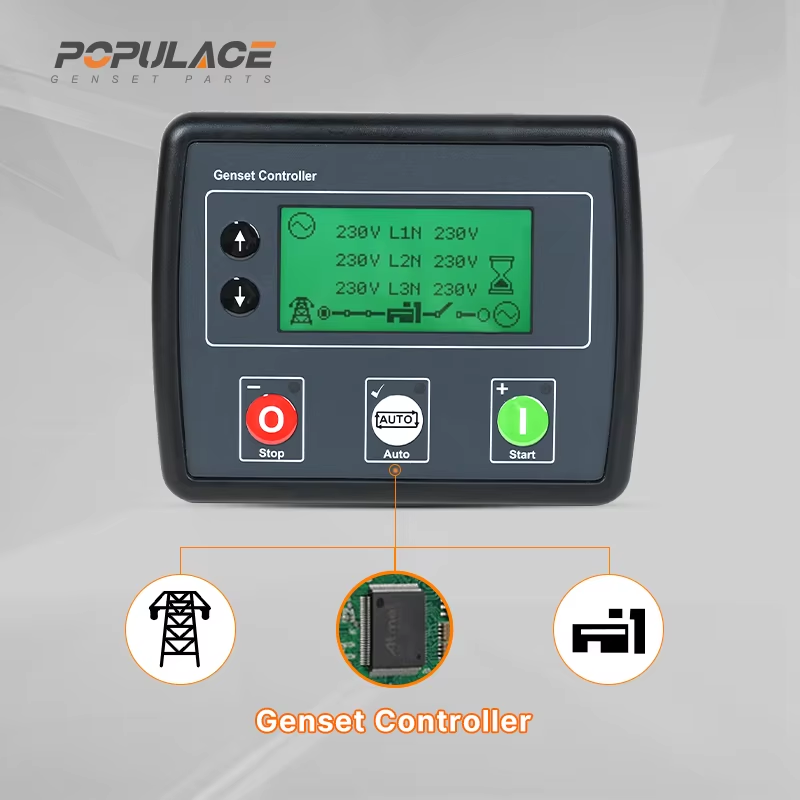
Generator-side protection covers the electrical output of the alternator. A well-configured DSE 7320 controller or DSE 6020 controller monitors multiple electrical parameters simultaneously and responds with independent alarm/shutdown responses for each fault type.
Overcurrent and Overload Protection
The DSE 5520 module, as documented in manufacturer technical materials, provides overcurrent monitoring alongside KW, KVA, and KVAr metering. Overcurrent protection compares measured current against rated capacity. Overload conditions, typically defined as sustained output above the generator's rated kW for a specified time, trigger warnings that allow operators to shed load before a shutdown is forced. That distinction between overcurrent (instantaneous fault) and overload (time-dependent condition) is a practical point worth confirming when configuring protection setpoints.
Overvoltage and Undervoltage Protection
Voltage protection is configured as both an upper and lower band around nominal output voltage. DSE controllers on three-phase applications monitor all three phases independently. A single-phase overvoltage condition, such as one caused by an AVR fault or a sudden load rejection, can be caught and responded to without needing to wait for all three phases to show the fault. For buyers sourcing DSE controllers for markets with variable grid quality, the undervoltage response behavior at the utility side (for auto-mains-failure modules like the DSE 7320) is equally important to review.
Reverse Power and Earth Fault Protection
In paralleling applications — where two or more generators share a busbar — reverse power protection prevents a generator from motoring off the bus when its output falls below the bus voltage. This is a standard feature in modules like the DSE 7320 MKII, which is designed explicitly for auto-mains-failure and parallel operation scenarios. Earth fault protection detects current flowing in the neutral-to-earth path and triggers an alarm or shutdown depending on the fault level. These are functions that buyers sometimes overlook at the specification stage, particularly for single-generator standby installations where they are less commonly triggered. They remain relevant for any site that may eventually add a second generator.
Monitoring and Metering Capabilities
Beyond protection, DSE controllers provide continuous metering of electrical and engine parameters. The DSE 7320 includes three-phase generator and mains sensing with protection, supporting comprehensive real-time monitoring of voltage, current, frequency, and power factor on both the generator and utility sides. The graphical display interface — standard on higher-specification DSE modules — allows operators to view all measured parameters without external metering equipment.
Metering data is also logged internally in most DSE modules, providing a fault history that maintenance teams can review after an event. This is practically useful: when a generator shuts down unexpectedly, the logged pre-fault values give technicians the starting point for root cause analysis rather than guesswork.
DSE 6020 vs DSE 7320: Protection Tier Differences
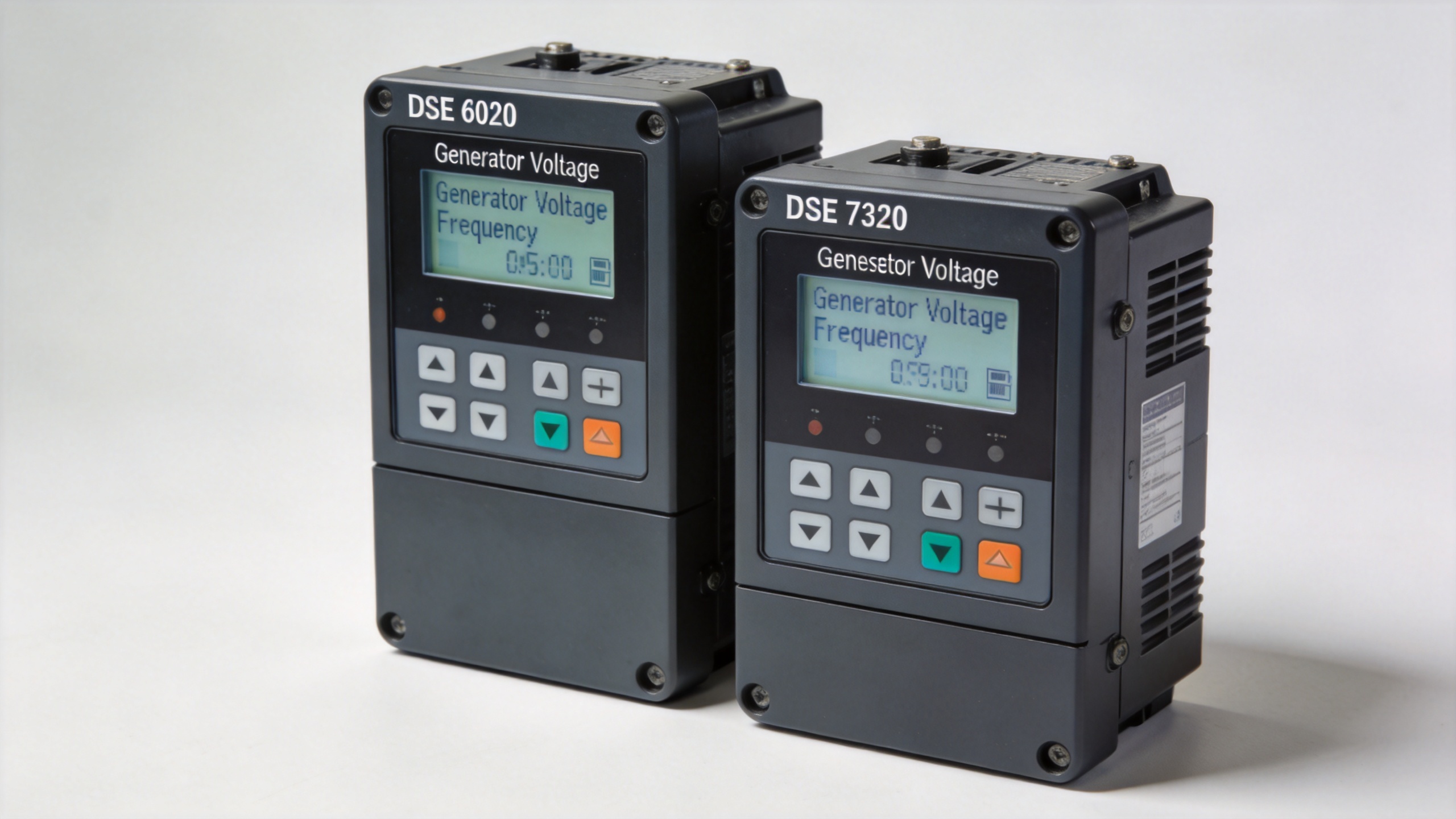
The DSE product range is tiered, and the protection feature set expands with the module tier. The DSE 6020 controller operates as a genset controller for standard auto-start applications, with engine protection, basic generator protection, and manual/auto operating modes. It includes Auto Load Sensing and Breaker Control, which are relevant for sites with automatic transfer switching.
The DSE 7320 MKII adds three-phase mains sensing and utility-side protection, making it the appropriate choice for auto-mains-failure applications where the controller must monitor both the generator and the incoming utility supply simultaneously. It also supports Check Sync and Active Synchronising for transition management. These functions are irrelevant for single-source standby installations but critical for any site requiring a controlled power transfer sequence.
The practical implication: for a straightforward standby installation where the generator simply takes over on mains failure, a DSE 6020 may be sufficient. For installations requiring voltage and frequency synchronisation between the generator and grid before transfer, or for sites running parallel generator sets, the DSE 7320 MKII is the correct specification.
Specification Considerations That Are Easy to Overlook
Even a correctly specified DSE controller can underperform if installation variables are not accounted for. A few points worth confirming before finalising any DSE genset controller order:
- Voltage rating alignment: DSE controllers are available in variants for different nominal voltages: 12V or 24V DC supply, and varying generator nominal output voltage configurations. Mismatching the controller voltage rating to the engine battery system or the generator output is a sourcing error that delays commissioning. Confirm both supply voltage and sensing voltage ranges before ordering.
- Installation environment: DSE modules are rated for specific operating temperature ranges and ingress protection levels. Panel installations in hot climates or outdoor enclosures with limited ventilation should be specified against the module's thermal ratings. Controllers that have passed bench testing in temperate conditions may behave differently when panel ambient temperatures exceed 50°C during summer operation.
- Certification versus field performance: A DSE controller carries CE and other certifications that confirm it meets defined test standards. Certification alone does not confirm that the module has been correctly wired, that protection setpoints have been configured to match the specific engine and alternator, or that the sensor inputs have been calibrated. On any new installation, commissioning tests that deliberately trigger each protection function — low oil pressure simulation, overspeed test via magnetic pickup — are the only way to confirm end-to-end protection is functioning as intended.
Conclusion
A DSE controller is not a commodity component. The difference between a correctly specified module and an incorrectly specified one is the difference between a generator that shuts down safely under fault conditions and one that sustains expensive damage. Understanding the distinction between engine protection functions and generator protection functions, knowing the feature differences between model tiers like the DSE 6020 and DSE 7320, and verifying installation-specific variables before commissioning — these are the steps that translate a correctly ordered part into a correctly functioning system.
For wholesale buyers and distributors sourcing DSE controllers in volume, working with a supplier that provides technical compatibility support alongside the parts — not just the part number — reduces the risk of specification errors before they reach the field.






