
 EN

How to Supply Generator Auto Start Controller Modules to Panel Builders?
Panel builders do not buy a generator auto start controller as an isolated black box. They buy a control function that must work with an engine harness, a starter battery, sensors, a remote command, protection logic, and the layout of a finished genset panel. For a distributor, OEM, or controller supplier, the practical job is to turn that dependency chain into a clean quotation and commissioning package.
This guide explains how to supply a generator auto start controller to panel builders with fewer late-stage questions. It focuses on what should be confirmed before a purchase order, what documents should travel with each batch, and how to frame compatibility without promising features that have not been verified on the target genset.
Start with the panel builder’s application, not the module label
The same generator auto start controller can be used in a simple standby panel, a rental set, a pump package, or a hybrid power system, but the acceptance criteria change. Ask the buyer to describe the generator, engine type, nominal battery system, start circuit, required inputs, required outputs, and intended operating sequence. A request for an auto start module for generator use is incomplete until these points are known.
At quotation stage, separate the functions the buyer needs into three groups: engine control, electrical measurement, and panel integration. A generator auto start controller commonly supports start and stop sequencing, input monitoring, alarms, and shutdown handling. The exact channels, ratings, display items, and communications options must be checked against the selected model’s documentation.
Collect a concise compatibility sheet
- Genset make, engine model, and the existing engine harness or terminal diagram.
- Starter battery voltage and whether the panel expects negative or positive switching.
- Start/stop interface type: maintained remote contact, pulse command, or another manufacturer-defined method.
- Required sensing: oil pressure, coolant temperature, speed, charger status, mains status, or generator AC values.
- Output loads and interface devices, including relays, fuel solenoids, preheat circuits, breakers, and annunciators.
- Whether the generator remote start controller must communicate with an ATS, inverter, BMS, or site monitoring system.
This sheet helps a supplier avoid a common mistake: treating all remote-start terminals as interchangeable. Some installations use a potential-free contact held closed to request run; others require separated start and stop pulses. The panel builder should verify the generator manufacturer’s remote-start diagram before wiring. A controller should not be treated as permission to wire directly to a starter motor or fuel solenoid; retain the genset’s own protection logic.
Build the supply package around a controlled bill of materials
Panel builders value repeatability. Instead of supplying only a generator auto start controller, provide a controlled bill of materials that identifies the controller model, connector or terminal accessories, mounting information, harness option, and required external relays or fuses. If a customer asks for an auto start kit, define what is included and what remains panel-builder scope.
A useful quotation line distinguishes the generator auto start controller from installation materials. That keeps the module specification clear while allowing the buyer to source enclosure hardware, terminal blocks, cable glands, or custom harness lengths to suit their panel standard. It also makes revisions traceable when a buyer changes from one engine family to another.
What to include in a technical submittal
| Item | Why the panel builder needs it |
|---|---|
| Model identification and revision | Prevents a drawing from being approved against a different hardware or firmware variant. |
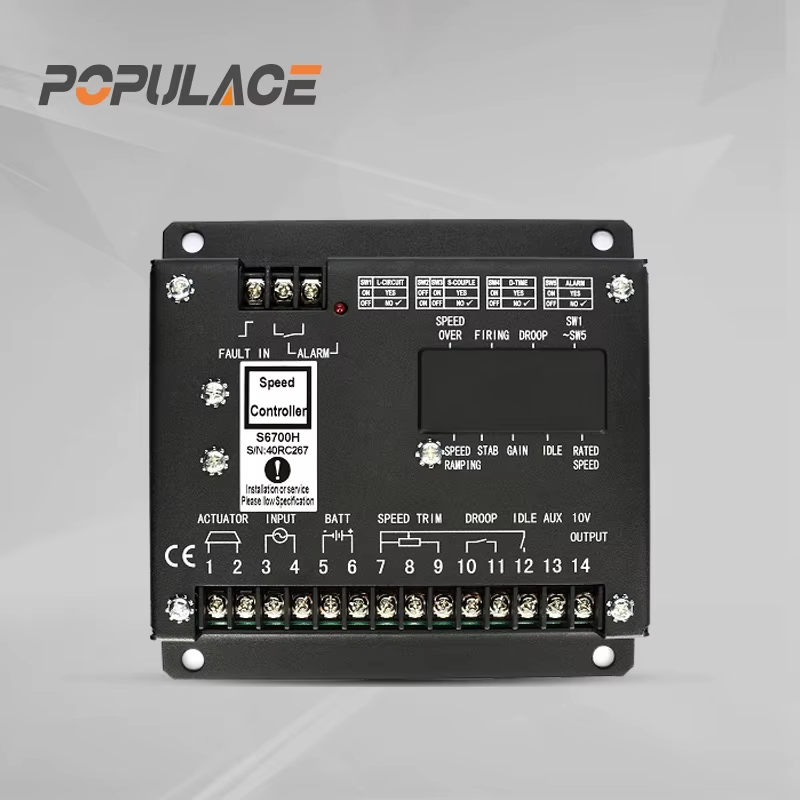
| Terminal and I/O map | Lets the electrical designer assign wires, interposing relays, and protective devices. |
| Power and input requirements | Supports battery-circuit design and sensor/interface checking. |
| Sequence and alarm matrix | Lets the project team agree on crank, warm-up, running, cooldown, and shutdown behavior. |
| Parameter list and configuration record | Creates a repeatable handoff from bench test to field commissioning. |
| Packaging, label, and batch details | Supports receiving inspection and later service traceability. |
For wholesalers and brand owners, this documentation-first approach is often more useful than a long list of unverified features. Fujian Kaiyue Electronics Co., Ltd. supplies generator control components, generator parts, AVRs, governors, and actuators for international B2B buyers; a panel project still needs model-specific confirmation before a component is assigned to a final design.
Specify the operating sequence before the first sample is approved
A panel builder needs to know what happens before, during, and after a start request. Write the sequence in plain language, then map it to the selected generator auto start controller. For example: receive a remote command, check permissives, energize preheat if configured, crank for the approved time, confirm running, monitor faults, allow load transfer under the panel’s logic, and run a cooldown before stop. Do not assume every automatic start controller genset application uses the same timers or fault actions.
Commissioning becomes faster when the supplier asks the buyer to approve that sequence in advance. The supplier can then deliver a parameter template for the generator auto start controller, while the panel builder retains responsibility for final values that depend on engine, fuel system, environment, and customer operating policy.
Protect the project with staged validation
Before volume supply, use a sample process that mirrors the actual panel workflow. Bench-test the generator auto start controller with the intended supply voltage and representative inputs. Next, verify the interface wiring in a panel. Finally, commission it on the target genset under controlled supervision. Record the controller model, configuration version, wire references, and observed start/stop behavior.
For a generator remote start controller, test both the command path and the feedback path. A remote request that reaches the controller is not enough; the panel team should also confirm the engine-running indication, fault response, remote-enable state, and safe stop behavior. If an ATS or energy system provides the command, validate the contact or communications signal at the interface boundary.
Receiving and pre-shipment checks
- Confirm model, quantity, label, and accessory count against the purchase order.
- Inspect terminals, display, enclosure, and connectors for transit damage.
- Review the current drawing and parameter template with the buyer’s engineering contact.
- Define batch identification and the contact point for application questions.
- Keep approved sample records separate from later substitutions or configuration changes.
Make after-sales support part of the supply offer
Reliable supply of a generator auto start controller includes a route for resolving a field question. Ask customers to provide photos of the terminals, the model label, the engine diagram, the active alarm, and the configuration file where available. That evidence is more actionable than a general report that an auto start module for generator installation “does not start.”
For recurring panel-builder programs, maintain a version-controlled application file for each approved engine family. It should show which generator auto start controller version was used, the approved I/O allocation, the configuration baseline, and any interface relay requirement. This turns repeat orders into controlled builds rather than fresh troubleshooting exercises.
Final sourcing checklist
Supply success comes from confirming the interface before shipment, documenting the sequence before commissioning, and preserving the approved configuration after the first build. When comparing a generator auto start controller, panel builders should evaluate the whole integration package: electrical compatibility, I/O map, protection behavior, remote-start method, documentation, sample validation, and service traceability.
A supplier that frames the generator auto start controller around those checks gives panel builders a clearer path from quotation to a repeatable finished panel. That is a stronger B2B offer than claiming a universal fit for every automatic start controller genset project.





