
 EN
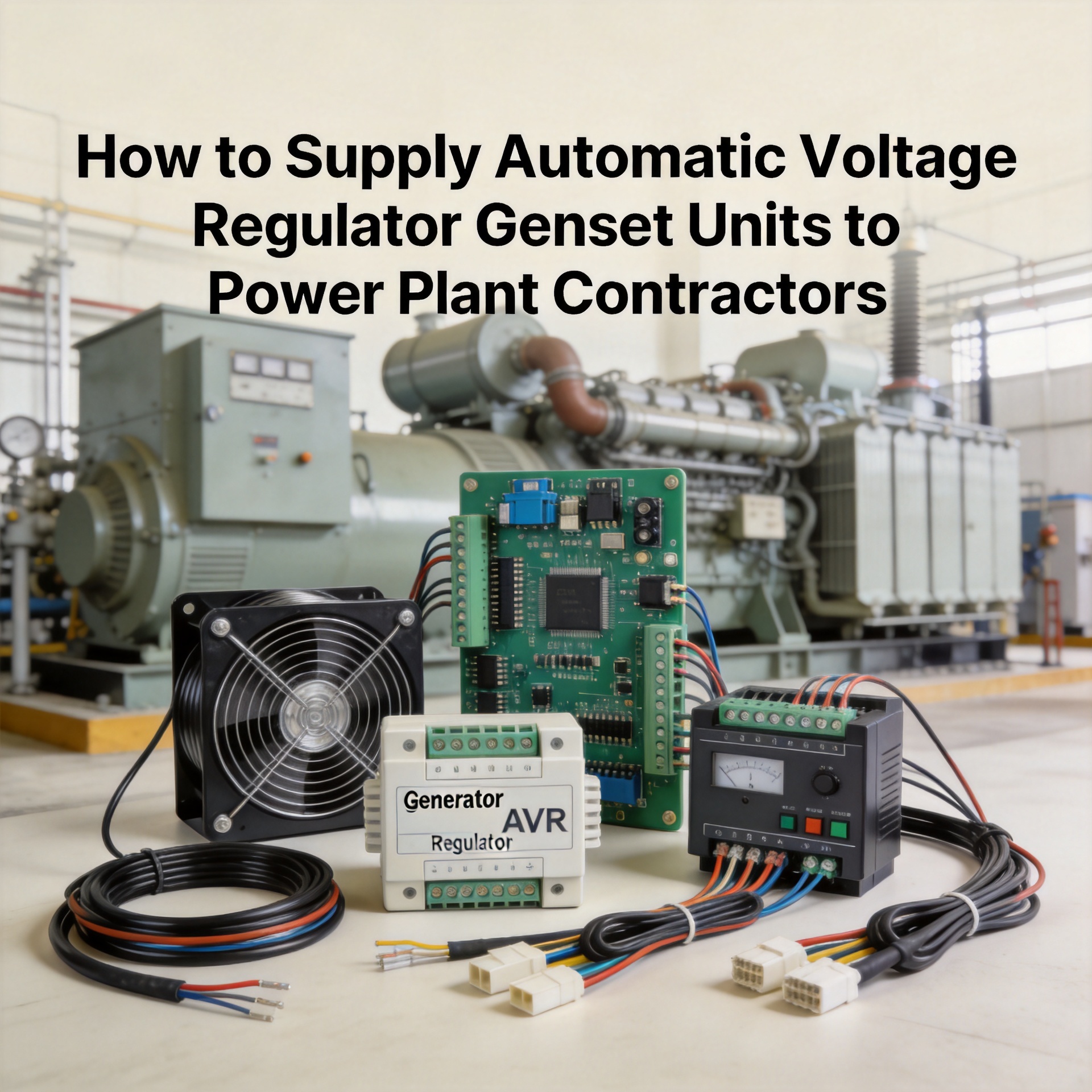
How to Supply Automatic Voltage Regulator Genset Units to Power Plant Contractors?
From a procurement and supply perspective, the path to becoming a preferred supplier of automatic voltage regulator genset components for power plant contractors is narrower than it looks. Most buyers at this level do not just want parts — they want documentation, compatibility assurance, batch consistency, and a supplier who understands the operational stakes of a power plant installation. If you are positioning your product line as a source for automatic voltage regulator genset units, the approach needs to align with how EPC contractors and power plant procurement teams actually make decisions.
What Power Plant Contractors Actually Require from an AVR Genset Supplier
Power plant contractors operate under project specifications that trace back to IEC, IEEE, or locally-adapted standards. When a project specifies that each genset must include an automatic voltage stabilizer for genset applications, the procurement team is not just looking for a unit that "works" — they are checking whether your product meets the voltage regulation accuracy window (typically ±1% to ±2.5% of rated voltage), the excitation response time, and the compatibility table for the specific alternator series installed on site.
The first question a contractor's engineering team will ask is: which alternator brands and frame sizes does your AVR support? For industrial and power plant gensets, the short list usually covers Stamford, Mecc Alte, Marathon, Leroy Somer, and equivalent OEM platforms. A supplier who can map their genset avr module lineup to a compatibility matrix — listing alternator frame series, voltage range, KVA rating bracket, and model number cross-references — moves quickly to the shortlist. Suppliers who answer only with "compatible with most generators" do not.
Technical Specifications That Matter for Power Plant Applications
Voltage regulation accuracy is the headline specification, but it is rarely the only one. For power plant projects, contractors typically evaluate the following parameters before placing a bulk order:
- Voltage regulation accuracy: ±1% to ±2.5% under steady-state load variations , with the tighter end preferred for mission-critical applications.
- Input voltage range: Standard compatibility covers 190–277Vac ±10%, 50–400Hz for single-phase sensing configurations.
- Output impedance: Industry guideform specifications typically call for 3.0%–5.0% depending on KVA rating.
- Operating temperature range: Power plant environments demand ratings covering at least -20°C to +60°C for reliable field performance.
- Short-circuit and overcurrent tolerance: AVRs installed in power plants need clearly specified fault-response behavior, especially on units driving multi-generator parallel configurations.
For genset voltage control in parallel operation , which is common in power plant configurations with multiple gensets sharing load, contractors also check whether the AVR supports droop compensation or active load sharing. This capability is often documented in the technical datasheet but overlooked by suppliers who lead with price rather than application fit.
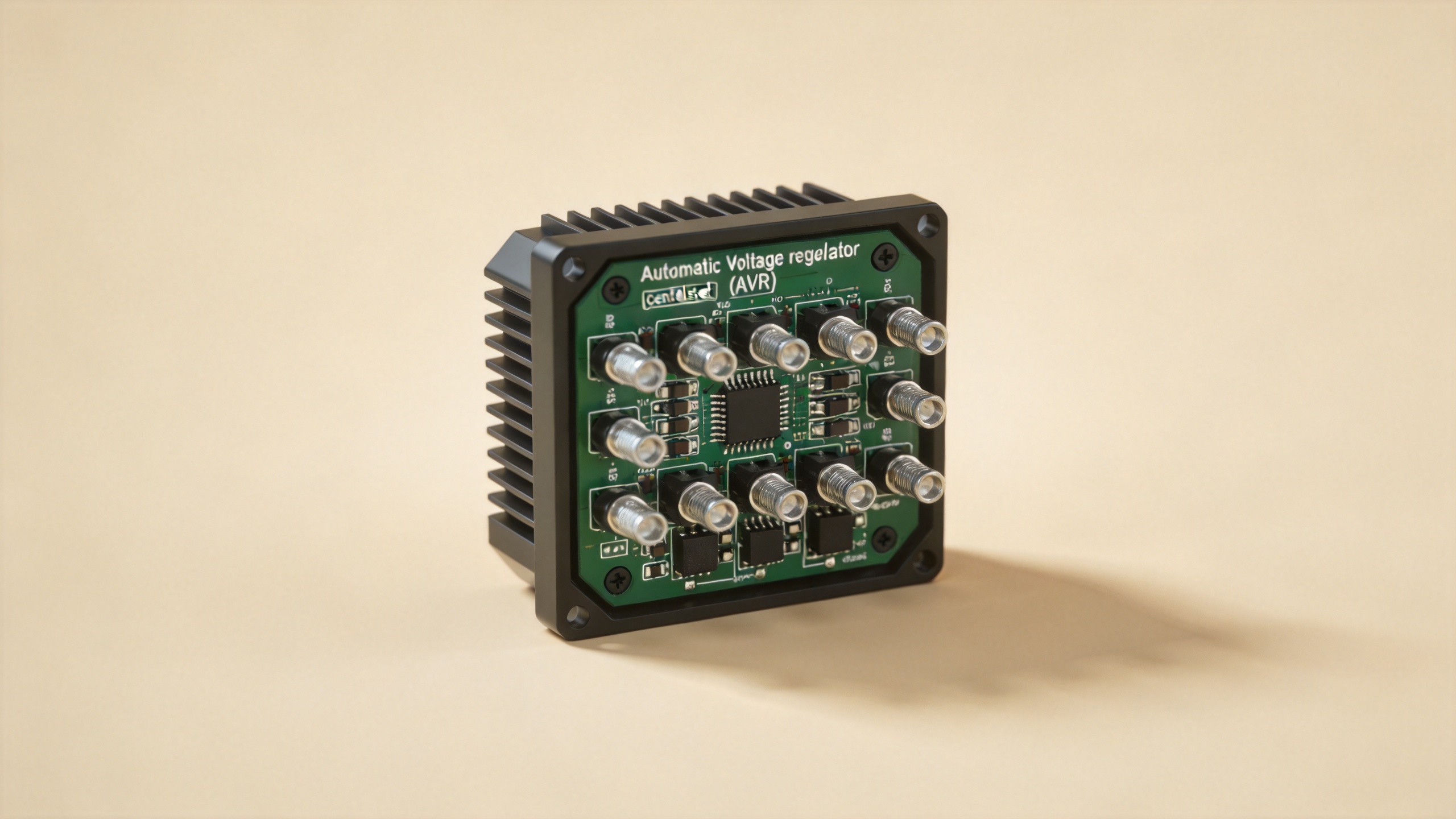
Common AVR Models Used in Power Plant Genset Installations
Contractors working on industrial power plants frequently specify or accept the following model families as baselines: SX460, SX440, AS440, MX341, and MX321. These are broadly compatible with Stamford-platform alternators across a wide KVA range and have established service histories in critical power applications globally.
As a supplier, aligning your catalog with these model families , whether through OEM-equivalent or compatible aftermarket variants, streamlines the specification approval process. The key is providing clear cross-reference data and, where applicable, type test reports that confirm performance against the relevant standard. A contractor procurement team reviewing ten potential suppliers will give priority to the ones who provide this documentation upfront.
Supplying avr for generating set components into this market is also about demonstrating consistent batch performance, not just individual unit compliance. Contractors ordering 20 to 200 units for a project need confidence that unit 150 will perform identically to unit 1. Batch test reports and quality control certificates matter here more than for single-unit retail supply.
Documentation and Certification Requirements
A common gap in B2B AVR supply for power plant projects is documentation readiness. Contractors do not just need the product — they need the paperwork their own QA team can submit to the project owner. This typically includes:
- Product datasheets with clearly stated electrical parameters and tolerances.
- IEC compliance declarations or CE/UL certificates where the project specification requires them.
- Type test reports for voltage regulation accuracy and thermal stability.
- Batch inspection reports for each delivery, referencing the order number and quantity.
- Wiring diagrams compatible with the specified alternator model.
Suppliers who have this documentation package ready for common models , especially SX460, AS440, and MX341, reduce the contractor's administrative burden and improve the likelihood of repeat orders. Documentation delays are one of the most common reasons a technically acceptable supplier loses a project order to a competitor.
How to Structure the Supply Relationship with Power Plant Contractors
The practical side of supplying automatic voltage regulator genset units to power plant contractors involves more than meeting technical specs. Lead time reliability is often weighted as heavily as price. Contractors managing project timelines cannot absorb a 12-week delivery that slips to 18. If you are building a supply relationship in this segment, the starting point is clarity on lead times by model family and order volume bracket — and a clear escalation process if delays become likely.
Pricing structure is the next conversation. Most experienced buyers stop asking for the lowest unit price after one emergency substitution experience — and start asking for price stability within a project cycle. Locking in pricing for the duration of a multi-month project, with volume-bracket transparency, is a more compelling offer than a marginally lower unit price with uncertain availability.
For wholesale and brand buyers sourcing through Fujian Kaiyue Electronics Co., Ltd. (KYGEN Power), the advantage is a direct manufacturer supply structure that covers the AVR range alongside governors, controllers, and complementary genset components. This means a single source for multiple BOM line items rather than separate vendor relationships for each component category — which is a practical benefit for contractors managing complex procurement schedules.
Key Takeaways for Suppliers Entering the Power Plant Contractor Market
Supplying automatic voltage regulator genset modules to power plant EPC contractors is a technically and commercially structured process. The entry point is a well-prepared compatibility matrix, aligned with the alternator brands and model series common in the target project type. From there, documentation readiness — datasheets, type test reports, batch QC records — determines whether you can move from sample approval to project supply. Lead time reliability and price stability for project durations close the deal.
Contractors at this level are not difficult to supply, but they are selective about who makes the shortlist. A supplier who can answer technical specification questions, provide documentation on request, and commit to delivery windows with confidence is a different category from a parts vendor. That distinction is what this market segment rewards.






