
 EN
How to Source Generator Governor Parts for Wholesale Spare Parts Suppliers?
A generator governor may be a small line item on a purchase order, but it has an outsized effect on whether a replacement job proceeds smoothly. For a wholesale spare-parts supplier, the real task is not simply finding a low unit price. It is confirming that the governor matches the engine, control architecture, duty cycle, and receiving process before inventory is committed.
As a technical buyer evaluates generator control components, the useful starting point is compatibility rather than a familiar brand name. A governor that looks similar can have a different actuator travel, pickup input, connector, voltage range, or speed-control logic. That difference can turn an apparently economical order into returns, field delays, and stock that cannot be resold.
Start with the job the generator governor must perform
A generator governor regulates engine speed. Because engine speed is closely tied to generated frequency, the part has to work with the engine and the operating requirement, not just fit physically. In a diesel generator governor application, buyers should first establish whether the set needs simple steady-load regulation, droop for parallel operation, or isochronous control for tighter speed response.
Industry performance discussions often use ISO 8528-5 concepts such as frequency droop, steady-state frequency band, and recovery time. You do not need to turn every wholesale quote into a test report, but these terms help the purchasing team ask the right question: what performance behavior is the end user expecting after a load change? If the application has frequent motor starts or rapidly changing loads, the response requirement deserves more attention than it would for a stable-load set.
Build a quote-ready compatibility record
The most reliable sourcing teams make one structured record for each requested generator governor. Ask the buyer for the engine make, exact model, serial or build range where available, rated speed, frequency, and the existing governor or controller part number. Add clear photos of the label, connector, linkage, mounting face, and any speed sensor. This prevents the common mistake of ordering only by engine family.
- Engine identity: model, variant, serial range, rated RPM, and fuel system.
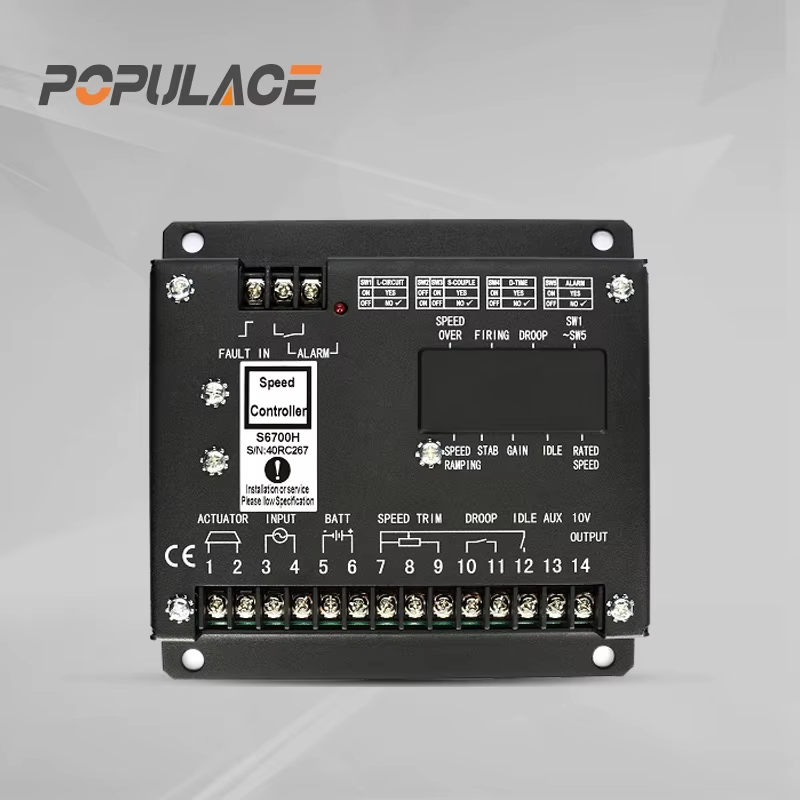
- Control type: mechanical, hydraulic, electronic, or an electronic generator governor paired with an external actuator.
- Interface: connector pin count, supply voltage, magnetic pickup signal, actuator current range, and linkage geometry.
- Operating mode: standby or prime-power duty, single-set use or parallel operation, and expected load profile.
- Replacement evidence: old part number, cross-reference notes, photos, and any controller configuration information.
Keep these fields beside the supplier quotation, not only in an email thread. A buying team can then compare offers on the same basis and preserve the record for repeat orders. If the application runs at a stable load profile, a conventional generator speed governor arrangement may be appropriate. If the load swings often, verify the stated response and control compatibility instead of assuming all electronic options behave alike.
Separate component sourcing from system verification
Many sourcing errors happen when a governor for generator use is treated as a standalone spare part. In practice, the governor may depend on a speed controller, actuator, magnetic pickup, wiring harness, linkage, and controller settings. A supplier should therefore state exactly what is included in the offer and what remains with the customer’s existing system.
For example, an electronic generator governor can be supplied as a controller-only item, while another request may require the controller, actuator, and pickup as a matched set. Neither approach is universally better. The deciding factor is whether the installed components have verified specifications and acceptable condition. Where the installed actuator or pickup is unknown, offering a documented system option can reduce uncertainty, provided the customer validates installation and commissioning requirements.

Qualify suppliers before placing a wholesale order
Supplier qualification should test information quality as well as price and lead time. Request a datasheet or cross-reference basis, product-label photos, packaging details, origin information where relevant, and a sample or inspection plan for first orders. A capable supplier should be able to explain what evidence supports the compatibility statement and where uncertainty remains.
For recurring lines, agree on a change-control process. If a factory changes a connector, board revision, actuator specification, or packaging label, the purchaser should know before the next shipment. Lot identification and incoming inspection matter particularly when inventory will be redistributed to repair shops or regional dealers. A simple receiving check can compare the label, connector, mounting points, included hardware, and cosmetic condition against the approved sample record.
Use a staged purchasing plan for new sources
- Validate the request: collect the compatibility record and clarify the required control behavior.
- Compare like with like: send the same data package to each supplier and identify any assumptions in each quote.
- Approve a sample: inspect identity, interfaces, and documentation before authorizing volume.
- Define acceptance: specify labeling, packaging, lot traceability, and the process for reporting a mismatch.
- Review early field feedback: use returns and installation questions to improve the cross-reference file before reordering.
This staged approach is slower than buying from a photograph, but it protects wholesale margin and customer trust. The selection mindset shifts from “which governor has the lowest quoted price?” to “which documented match has the lowest total replacement risk?”
Questions to ask before releasing the purchase order
Can the supplier confirm the match by part number and interface?
Part-number confirmation is helpful, but it should be supported by the engine variant and interface details. Ask the supplier to flag any match that is based on a broad cross-reference rather than an exact replacement record.
What must be commissioned after installation?
Some governor replacements require calibration, linkage adjustment, controller configuration, or speed-setting checks. A wholesale supplier should communicate that requirement clearly without promising a universal plug-and-play outcome.
How will quality be checked across repeat shipments?
Define the approved sample, required labels, packaging standard, and escalation route. The answer is especially important when parts will be stocked across multiple service locations.
Make sourcing repeatable
A disciplined generator governor sourcing process turns technical uncertainty into a repeatable purchasing routine. Match the engine and interface first, establish the required speed-control behavior, verify what the quoted item includes, then protect the decision with sample approval and traceable receiving checks. This gives wholesale spare-parts suppliers a sounder basis for stocking both diesel generator governor and electronic control lines while keeping customer expectations realistic.





