
 EN
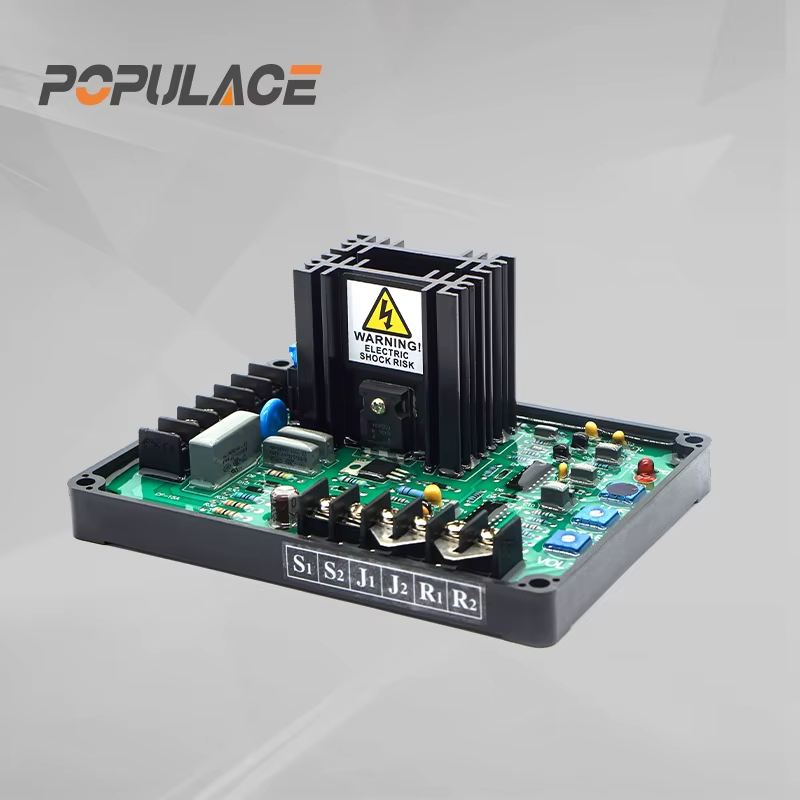
How to Select the Right GAVR 8A for Your Generator Wholesale Business?
For a generator-parts wholesaler, choosing a GAVR 8A is not a matter of buying a familiar black module at the lowest unit price. The regulator becomes a stocked promise to dealers, repair shops, and generator assemblers: it must fit the alternator, respond predictably, and arrive with enough technical information for a technician to install it correctly. A disciplined selection process reduces returns, avoids field failures, and makes it easier to build a dependable replacement-parts range.
This guide focuses on the questions a buyer should ask before approving a gavr-8a avr for wholesale inventory. It also separates useful published specifications from the compatibility checks that still need to happen on the actual generator.
Start with the job the AVR must perform
An automatic voltage regulator senses generator voltage and adjusts excitation so output remains close to the chosen setpoint as load changes. In a small brushless generator, that sounds straightforward, but the AVR is tied to the alternator winding, sensing connection, field circuit, engine speed, and protection settings. A small generator avr that looks similar may not have the same terminal arrangement, input range, or field requirement.
For wholesale purchasing, define the intended replacement population first. List the generator brands or alternator frames your customers actually service, their nominal output voltage and frequency, and whether the units are single-phase or another configuration. This turns an open-ended product search into a controlled compatibility project.
Check the sensing and power-input range before comparing price
Published references for the GAVR-8A commonly describe programmable sensing for 110/220/400 VAC, single-phase, two-wire applications. That statement is a starting point, not a blanket approval. Confirm the revision-specific marking and datasheet from the supplier, then compare it with the generator wiring diagram. A mismatch here can cause unstable voltage, a non-starting build-up circuit, or a regulator that is damaged during commissioning.
- Nominal sensing voltage: Verify the generator’s actual sensing points and whether 110, 220, or 400 VAC selection is supported by the supplied module.
- Operating supply: Check the AVR’s stated power-input range against the alternator’s available supply under normal operating conditions.
- Frequency behavior: Ask how under-frequency protection is set and at what point voltage roll-off begins. Engine-governor behavior matters as much as the regulator setting.
- Terminal map: Compare terminal labels, connector style, and lead length with the replacement application. Do not assume two boards with the same product name are wired identically.
A supplier’s gavr 8a datasheet should show these items clearly. If it does not, request a terminal drawing, a revision photo, and an installation reference before approving samples.
Interpret “8 amp” correctly
The phrase 8 amp voltage regulator generator often drives the initial search, yet current rating alone does not establish suitability. Some published GAVR-8A materials state 8 A continuous output and 10 A for 10 seconds for a specified version. Treat those figures as a product-version claim to verify, not as proof that every GAVR-8A listing has the same capacity.
More importantly, compare the AVR output with the alternator field’s voltage, resistance, and required excitation current. A regulator may appear generous on paper but still be a poor choice if the field circuit is outside the design range or if the generator’s excitation architecture differs. Your technical file should record the field resistance and the test conditions used for the sample, rather than relying only on a catalog headline.
Evaluate adjustment functions as service features
Wholesale customers value an AVR that can be set up consistently in the workshop. For a GAVR 8A, ask the supplier to identify the function and usable range of each adjustment: voltage, stability, and under-frequency control are common examples. A soft-start or voltage-ramping function may also appear in product literature. What matters is whether the adjustment is repeatable and documented for your target application.
Create a one-page service sheet for each approved gavr-8a avr. It should show default positions, the safe adjustment sequence, and the symptom each control addresses. This material helps distributors avoid returning a working module merely because voltage was set incorrectly after installation.
Use a wholesale sample-approval process
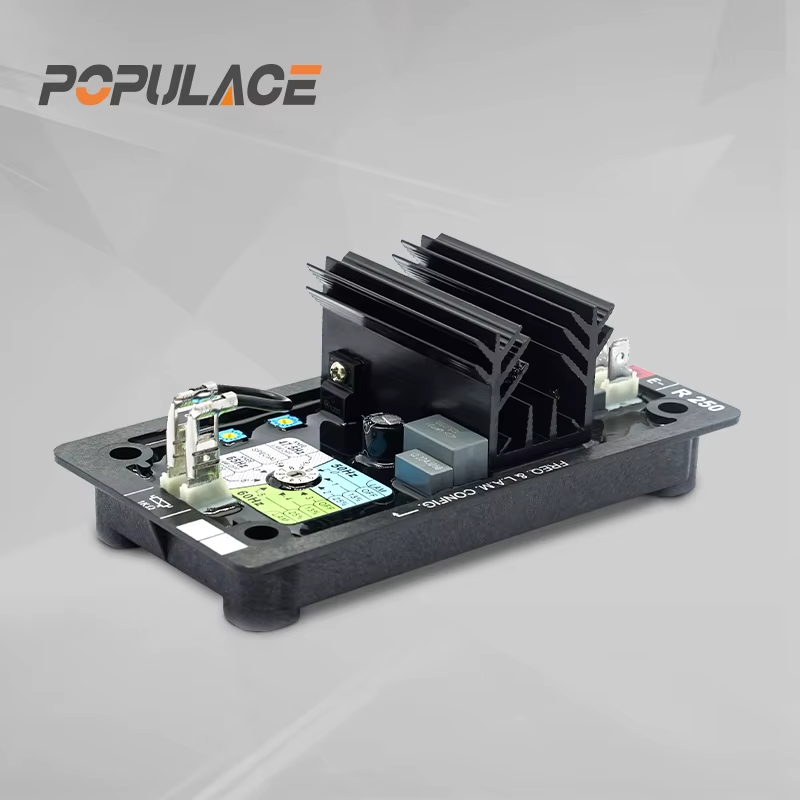
Before placing a volume order, run a structured approval on samples from the exact production source. Direct category specialists can be useful because generator governors, AVRs, and replacement parts are their daily focus; however, every buyer should still verify the supplied version independently. Use the same incoming and bench-test process for every lot.
- Photograph the front, back, terminal labels, and packaging, then match them to the purchase specification.
- Measure basic dimensions and mounting-hole locations so the board fits the intended enclosure or panel.
- Install the sample on a representative generator with correct wiring and a qualified technician.
- Record no-load voltage, loaded voltage response, frequency, ambient conditions, and adjustment positions.
- Test controlled load changes and confirm that voltage recovery is stable rather than hunting.
- Retain the tested sample and records as the golden reference for incoming inspection.
For a small generator avr line, this procedure is particularly valuable because compact generator models can vary by winding and connector even when their external appearance is alike.
Specify what your supplier must deliver
A wholesale-ready GAVR 8A is more than a board. Your purchase specification should require a clear part number or revision identifier, terminal diagram, input and output specifications, adjustment instructions, packaging method, and batch traceability. Ask for a current gavr 8a datasheet tied to the supplied revision. If you plan to sell under your own label, agree on label artwork, carton marks, and inspection criteria before production—not after the first container arrives.
Buyers who consolidate governors and AVR parts with a focused B2B supplier may simplify sourcing, but consolidation should not remove technical control. Keep approved samples, change-control requirements, and a defined response process for a reported field issue.
Build an assortment, not just a single SKU
A sound GAVR 8A program begins with one validated configuration and expands only after demand is proven. Separate similar-looking regulators by application, voltage-sensing arrangement, and field-circuit requirement in your catalog. Use clear photos and a compatibility note that tells dealers what they must compare before ordering.
That approach protects your margin. Instead of competing only on a generic 8 amp voltage regulator generator price, you provide verified selection support, consistent documentation, and an easier path for the repair technician.
Final buying checklist
- Match the GAVR 8A sensing and supply requirements to the generator diagram.
- Verify field voltage, resistance, and excitation-current needs.
- Confirm terminal layout, mounting dimensions, and adjustment functions.
- Review the exact-revision datasheet rather than a generic marketplace listing.
- Approve samples on representative generators before a bulk order.
- Set incoming inspection, traceability, packaging, and change-control requirements.
Selecting the right GAVR 8A is a technical sourcing decision. When your team verifies compatibility first and documents the approved configuration, you can stock a regulator line that is easier for customers to install, support, and reorder.






