
 EN
How to Select a Versatile Generator Controller for Your Product Line?
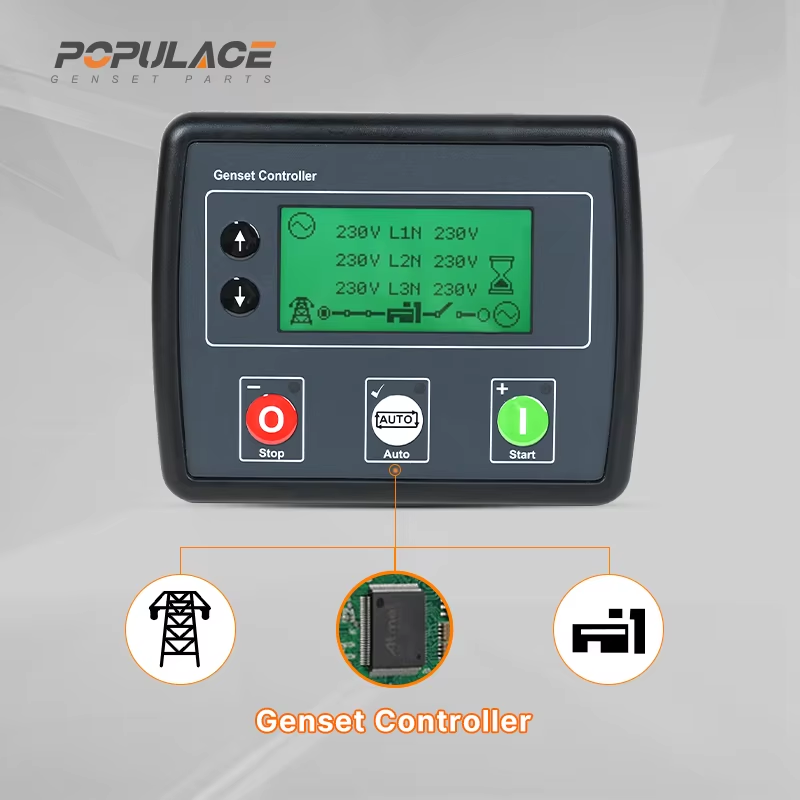
For an OEM, distributor, or private-label buyer, choosing a generator controller is not simply a matter of comparing screen size or price. The controller becomes the operating language of the genset: it reads conditions, starts and stops the engine, presents alarms, and exchanges signals with the rest of the system. A versatile choice lets a product line serve more applications without forcing your team to redesign wiring, documentation, or service procedures for every model.
As a procurement manager, begin with the installation families you intend to support rather than with a single preferred module. A compact standby set, a utility-failure application, and a remotely supervised rental set may all need a different configuration. The practical goal is to define a stable controller platform, then add only the I/O, communications, and switching functions each tier genuinely needs.
Start with the product-line map, not a feature checklist
List the generator sets you sell by engine type, alternator sensing arrangement, destination market, and expected operating mode. Then mark the functions that recur across those groups. Most basic generator packages need engine start/stop logic, protection inputs, generator voltage and frequency sensing, alarm indication, and a clear local interface. Those common functions are the foundation of a standard generator controller specification.
Next, separate universal requirements from optional functions. This stops a premium module from becoming an unnecessary default on every set, while also preventing a low-cost module from creating a dead end for higher-value applications. A useful three-tier map is:
- Essential tier: manual and automatic operation, core engine protection, generator electrical sensing, configurable alarms, and service-friendly wiring.
- Standby tier: utility sensing, transfer-switch coordination, event logging, and an automatic generator controller workflow.
- Advanced tier: expanded I/O, communications, remote monitoring, synchronization, or load-sharing where the application actually requires them.
This approach gives sales teams a clear upgrade path and gives production teams a smaller set of repeatable harnesses and test routines.
Check compatibility before comparing advanced functions
A flexible generator control module must fit the electrical and mechanical reality of the set. Confirm the supply-voltage range, AC sensing topology, current-transformer inputs, speed-sensing method, and available analog and digital I/O. Also verify connector type, terminal layout, enclosure cutout, display orientation, and environmental rating against your panel design. A controller with an impressive feature list is a poor product-line choice if it requires a new cabinet layout or special adapters on every build.
Document the engine-side signals as carefully as the alternator-side signals. Oil-pressure switches, coolant-temperature senders, fuel-level inputs, magnetic pickups, ECU data, and emergency-stop circuits can vary by engine family. Ask whether the selected controller can accept the signal types you use today and whether its configuration can accommodate the variants planned for the next model year. Compatibility is usually more valuable than a rarely used menu function.
Define automatic operation precisely
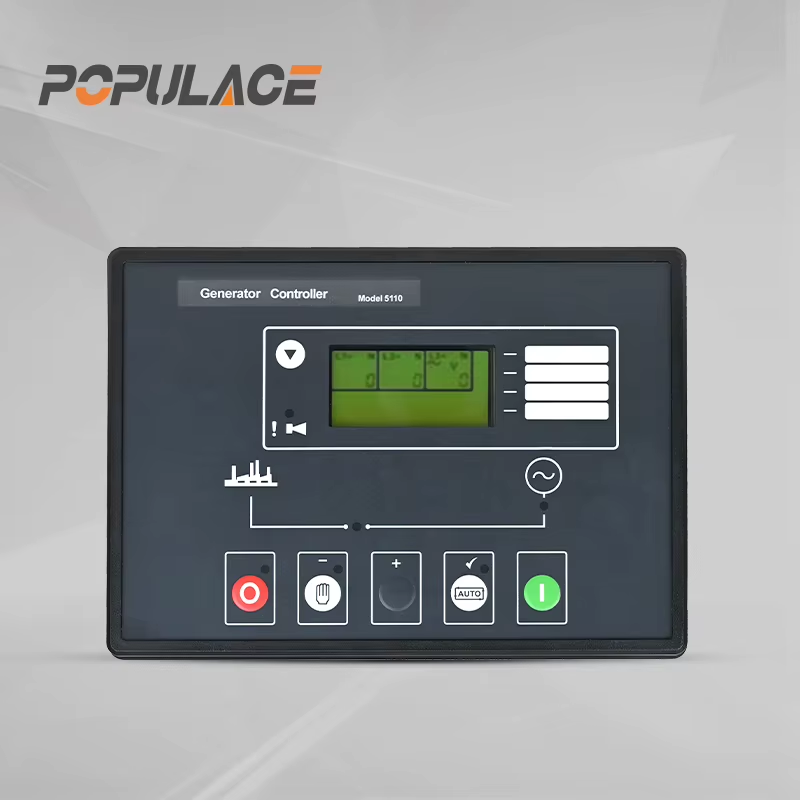
The terms “auto start,” “AMF,” and remote start are often used together, but they answer different operating needs. An automatic generator controller can start and stop a set from configured inputs or schedules. An amf generator controller adds utility monitoring and transfer logic for installations that must respond when mains voltage or frequency moves outside configured limits. It is the better fit when the product is intended for standby duty with an automatic transfer arrangement.
A generator remote start controller, meanwhile, needs a safe remote command path and clear operating permissions. Remote capability should not bypass local safety logic, lockout conditions, or required warm-up and cool-down sequences. For a product line, decide which models need remote start as standard, which need it as an option, and which only need provisioned terminals for a future upgrade. That choice keeps the panel concept consistent without overcomplicating entry-level sets.
Evaluate the monitoring and protection model
Buyers expect a generator controller to make abnormal conditions understandable, not merely to show a fault code. Review how the module presents generator voltage, frequency, current, power, battery condition, running status, and engine alarms. The exact sensing package depends on the model and installation, so specify the measurements your product line must expose rather than assuming every controller measures every value.
Protection settings deserve the same discipline. Confirm that delays, thresholds, warning/shutdown actions, and alarm labels can be configured for each application. A practical module should support consistent defaults while allowing controlled adjustments for different engine and alternator combinations. Event history and clear alarm text can also shorten service diagnosis, especially when distributors support equipment across several markets.
Use I/O and communications as a scalability test
Count the signals required today, then reserve a realistic margin for options. Extra inputs may be needed for low fuel, door status, fire suppression, external fault, or transfer position. Outputs may be needed for preheat, fuel solenoid, crank, common alarm, charger failure, or customer-specific interlocks. A suitable generator controller platform is not necessarily the one with the most I/O; it is the one that covers your planned variants without a maze of external relays.
Apply the same test to communications. Decide whether your buyers require local configuration only, a serial interface, network integration, remote monitoring, or fleet-level visibility. Confirm protocol support, access control, configuration backup, and the service tools needed by your channel. Avoid promising cloud functions or integration outcomes unless the selected model and the final system design have been verified together.
Build a repeatable qualification process
- Create a requirement matrix for each product tier: sensing, protection, start logic, I/O, communications, and panel constraints.
- Bench-test representative engines, alternator sensing arrangements, and transfer interfaces before approving a controller family.
- Run fault and recovery tests: failed start, low battery, overspeed input, sensor loss, and simulated utility failure where applicable.
- Freeze a configuration baseline, wiring diagram, parameter backup, and service checklist for every approved SKU.
- Review supplier availability, technical documentation, and change-control support before expanding the range.
For wholesale and brand programs, supplier specialization can simplify this work. A manufacturer focused on generator control components can help buyers compare compatibility coverage across controllers, AVRs, governors, and related parts, but final selection should be validated on the actual genset configuration.
Make versatility measurable
A versatile generator controller is one that supports your intended applications with a controlled number of panel designs, harnesses, configurations, and service procedures. Select the common platform first; then use a clearly defined option ladder for AMF, remote operation, expanded I/O, and higher-level power-management functions. That discipline protects margins, reduces training burden, and gives customers an easier path to specify the right generator set.
Before releasing a controller across the range, ask one final question: can your production and service teams explain the configuration, test it consistently, and support it in the markets you serve? If the answer is yes, you have selected more than a component—you have created a scalable product-line standard.






