
 EN
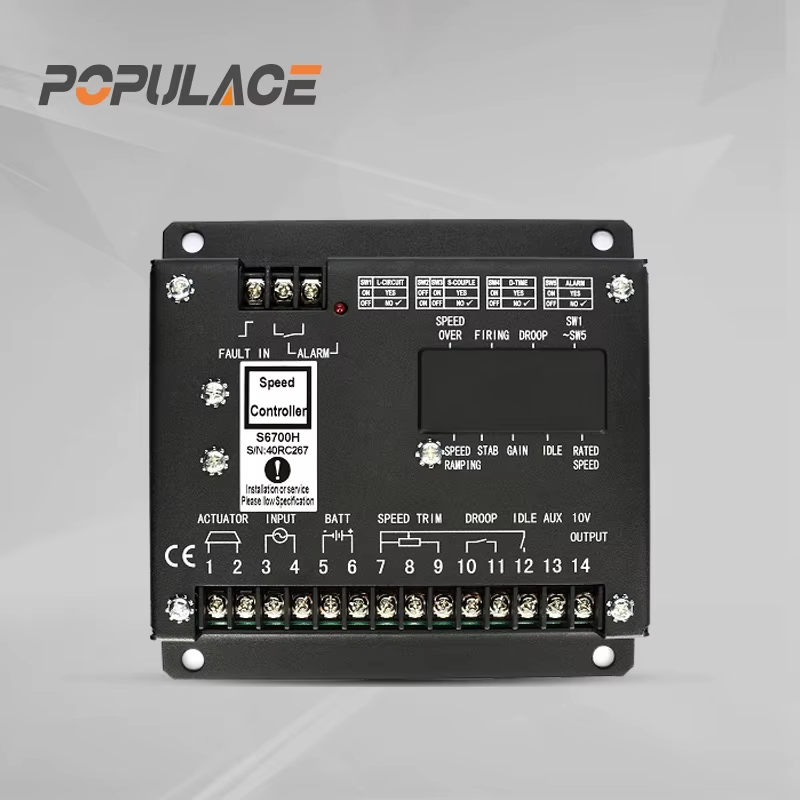
How to Select a Generator Engine Governor for a Rental Fleet?
A rental fleet does not buy a governor for one clean, predictable installation. It buys a control component that may face unfamiliar operators, different engine variants, repeated transport, block loads, and a short window to get a set back into service. That is why choosing a generator engine governor by price or a broad engine-brand label is risky. The selection has to work at the engine, controller, service, and inventory levels.
From a fleet-procurement standpoint, the useful question is not “Which governor has the lowest quoted price?” It is “Which documented configuration can we install, test, replace, and support across this part of the fleet?” A compatible unit with a clear setup record can reduce repeat troubleshooting far more effectively than a low initial purchase price.
Start with a compatibility record, not a generic part number
A generator engine governor regulates fuel input so the engine holds the intended speed as load changes. Because engine speed is tied to output frequency, the governor is part of the frequency-control chain; it is not a substitute for the AVR, which regulates voltage. A diesel generator engine governor that looks similar to the removed unit can still be wrong if its actuator travel, supply voltage, speed-sensor input, connector pinout, control direction, or calibration range differs.
Before approving a fleet part number, build a one-page fit record for every engine family and variant. Capture the engine model and serial range, rated speed and frequency, existing controller and actuator references, magnetic-pickup details where used, wiring connector, mounting geometry, fuel-system linkage, and the intended operating mode. Include photographs of the label and connector during teardown. This is more reliable than ordering by the engine brand alone.
- Mechanical or hydraulic replacement: confirm the physical linkage, shaft or lever travel, spring arrangement, and rated speed range.
- Electronic replacement: confirm the controller supply, actuator current capability, speed-signal type, shielding practice, input/output interfaces, and fault behavior.
- Parallel-capable sets: identify whether droop or load-sharing control is required before choosing a generator governor control.
Early in sourcing, buyers often focus on voltage and frequency ratings. After a failed installation, the focus usually shifts to the details that actually decide fit: actuator interface, sensing input, connector pinout, and the operating mode programmed into the controller.
Match the governor response to the rental load profile
An engine speed governor for generator applications is judged by what happens when the load moves, not only by no-load speed. A rental set may supply lighting one day and see motor starts, pumps, compressors, welders, or temporary distribution loads the next. When load rises, engine speed tends to dip before the governor increases fuel; when load is removed, speed can rise before the system settles. Poorly matched response can show up as hunting, slow recovery, overspeed, nuisance trips, or customer complaints about frequency-sensitive equipment.
Ask the supplier for the configuration range and commissioning guidance rather than accepting a vague “stable response” statement. The governor, actuator, engine fuel system, speed sensor, and control settings work as a system. A fast controller does not automatically create a stable set if the actuator linkage is wrong or the tuning is unsuitable for the engine.
Choose the operating mode deliberately
For a stand-alone set, isochronous control is commonly used when the goal is to hold speed closely as load changes. For sets operating in parallel, droop or a coordinated load-sharing strategy may be necessary so units divide load without fighting each other. Neither mode is universally better. If a unit is intended only for stand-alone operation, prioritize stable stand-alone response; if it will share a bus, confirm the complete generator governor control architecture before standardizing a replacement.
ISO 8528-5 is useful as a reference framework because it addresses transient generator-set performance during load changes. It should guide your acceptance-test design, not be treated as proof that an individual replacement part makes a set compliant. The tested engine-generator package, rating, controls, and load steps all matter.
Specify durability for fleet handling and field service
A rental fleet needs a diesel generator engine governor that can tolerate vibration, heat, dust, moisture exposure, connector handling, and repeated service access. Review enclosure and connector protection, mounting robustness, harness strain relief, temperature range, documentation quality, and the availability of setup instructions. For electronic governor assemblies, ask how the unit behaves after loss of speed signal, supply interruption, or actuator circuit fault, then verify that behavior during commissioning.
Serviceability is just as important. A technician should be able to identify the part, confirm the revision, access terminals or connectors, and return the set to a documented baseline without relying on a single experienced person. Keep a controlled parameter sheet with rated speed, droop or isochronous setting, actuator limits, pickup gap or signal expectations where applicable, and a record of the test load used.
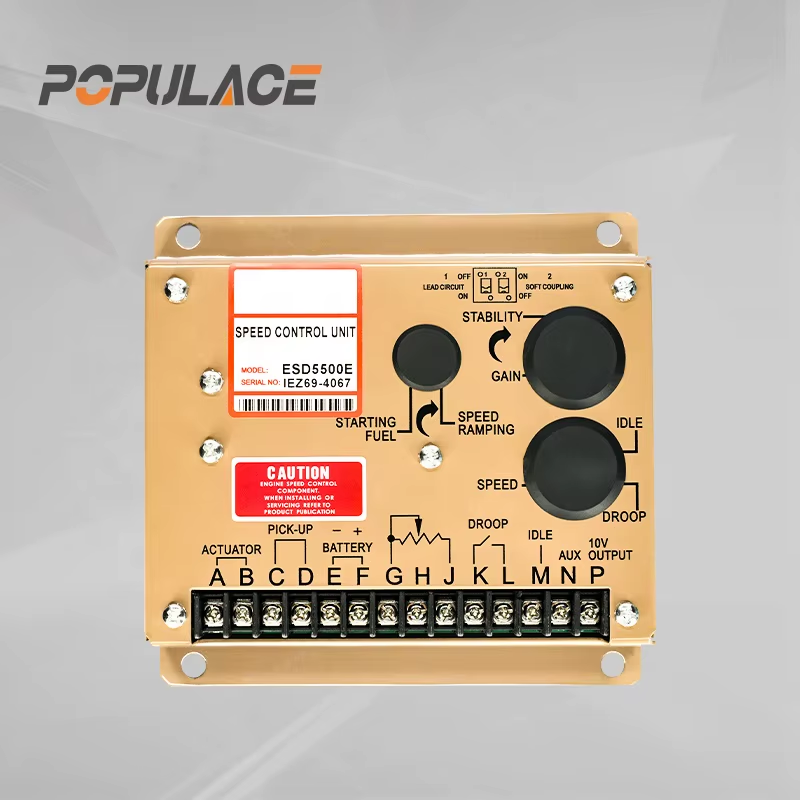
Plan stock around interchangeability and consequences of downtime
For rental operations, stocking every possible governor is rarely economical. Instead, group the fleet into compatible families only after the compatibility record proves common interfaces and settings. Keep a small number of controlled stock codes, each linked to engine variants, approved harnesses, setup notes, and test procedures. Do not call two parts interchangeable merely because both are described as an electronic engine governor generator.
Set reorder points by the consequence of downtime, installed population, lead time, and failure history. A unit used across many high-utilization sets may justify deeper stock than a low-volume configuration. Where substitution is permitted, document the exact approval conditions and any calibration changes required. This prevents an emergency shipment from turning into an unplanned engineering trial in the yard.
Use an acceptance test before releasing a new fleet standard
The strongest way to validate a proposed generator engine governor is a repeatable acceptance test on a representative set. Test one configuration at a time and keep the original baseline where practical. Record ambient conditions, fuel condition, engine and controller references, software or setting revision, and measuring equipment.
- Inspect mounting, linkage, harness routing, grounding, connector retention, and label traceability.
- Confirm rated no-load speed and output frequency after warm-up; then verify the governor responds predictably to a controlled speed-reference change.
- Apply and remove representative load steps, including the fleet’s common motor or block-load behavior where safely available. Watch frequency dip or rise, recovery, hunting, exhaust response, and protective alarms.
- Run a sustained-load hold test and repeat starts after cool-down. A governor that passes a brief run but drifts or hunts after heat soak is not ready for fleet release.
- For parallel applications, test synchronization, load sharing, and the intended droop or load-control behavior with the actual system controls.
- Save the as-tested settings, waveform or meter records where available, installer notes, and pass/fail criteria in the fleet file.
A good acceptance test does not need to promise a universal response number. It needs to use documented, repeatable conditions and show that the set returns to the fleet’s expected operating band without unstable behavior. If the application runs at a stable load profile, a simpler setup may hold well. If the load swings frequently—especially with motor loads cycling—verify the response under those conditions before approving volume stock.
Make the purchase decision with a fleet scorecard
Score each candidate generator engine governor against compatibility evidence, response behavior, environmental durability, diagnostic/service access, documentation, traceability, lead time, and stocked-spare strategy. Weight compatibility and acceptance-test evidence more heavily than brochure features. For a rental fleet, the practical winner is the option that can be identified correctly, installed consistently, and restored quickly across the specific machines you operate.
Once you manage parts inventory long enough, you stop asking only which supplier has the lowest price and start asking whether the same approved configuration can arrive when a customer return reveals a failure. That shift turns governor selection from a component purchase into an uptime-control process.
Rental-fleet governor selection checklist
- Confirm engine model, serial range, rated RPM, frequency, controller, actuator, and connector data.
- Define stand-alone or parallel operation and the required droop, isochronous, or load-sharing behavior.
- Validate the engine speed governor for generator loads with representative step tests, not only an unloaded run.
- Approve durability, fault behavior, service access, and a documented baseline setting sheet.
- Stock only proven interchangeable families, with clear part traceability and reorder logic.
- Release an electronic engine governor generator configuration only after its test record is stored with the fleet standard.
Use this process to select a generator engine governor that supports predictable frequency control, faster field service, and a more manageable rental inventory.






