
 EN
How to Offer Genset AMF Solutions for Commercial Building Backup Power?
Commercial buildings do not buy a backup generator simply to own equipment. They need a controlled sequence that detects a utility problem, starts the standby set, transfers approved loads, and returns the site to normal without creating a second outage. A well-scoped genset AMF solution makes that sequence visible, testable, and easier to support after handover.
From a genset system integrator’s viewpoint, the most reliable projects begin with the operating scenario rather than a controller part number. The brief should define which loads are backed up, what the transfer equipment must do, how the generator is permitted to run, and who will test the system. This approach helps distributors and panel builders offer an amf panel for genset applications that fits the building’s electrical design instead of promising a generic “auto start” function.
Start by defining the commercial building’s backup-power objective
Ask the facility team what must remain energized during a mains failure. Typical priorities include life-safety circuits, fire and security systems, emergency lighting, data-room support, elevators where permitted, and selected tenant loads. The answer affects generator capacity, switchgear arrangement, load-shedding logic, and the I/O list for the automatic mains failure controller.
Separate emergency loads from convenience loads early. In many jurisdictions, emergency systems and their transfer equipment have distinct design and marking requirements. The engineer of record and the authority having jurisdiction should confirm the locally adopted electrical and fire codes. A supplier can support that process with a clear interface schedule, but should not substitute its own assumptions for approved drawings.
Explain what a genset AMF solution actually includes
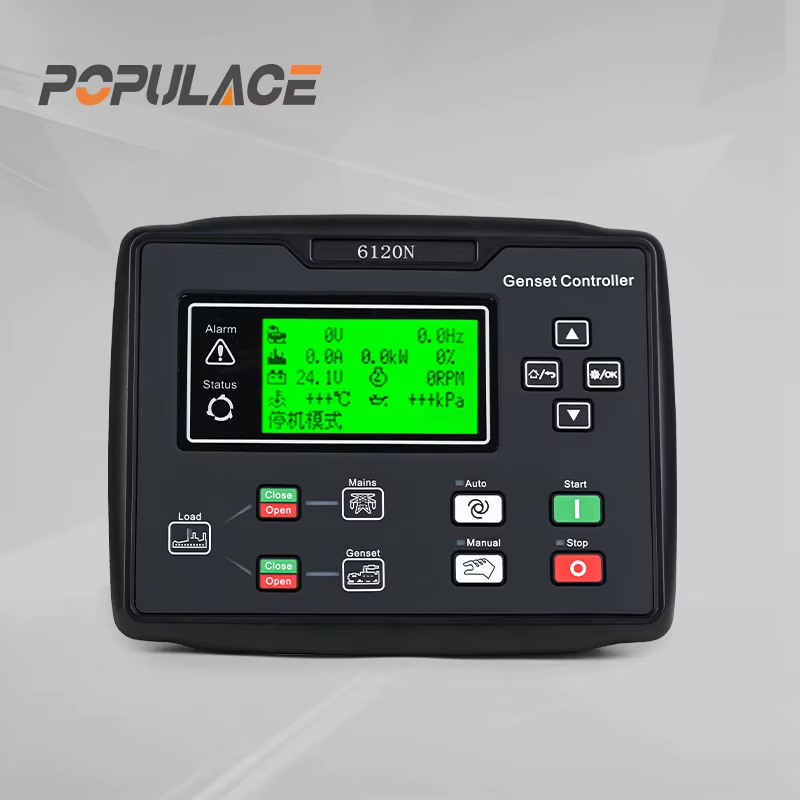
A genset AMF offer is a coordinated package, not merely a display module. At minimum, it normally includes the generator control function, mains sensing, generator sensing, start and stop outputs, protective alarms, and the agreed interface to transfer equipment. Depending on the project, the package can also include remote annunciation, dry contacts for a building-management system, battery charging supervision, and load-shedding signals.
- Mains monitoring: watches phase presence, voltage, frequency, and phase sequence according to the approved settings.
- Generator control: starts the engine after a verified utility failure, supervises warm-up and cool-down, and records alarms.
- Transfer coordination: exchanges permissive and status signals with an ATS or other approved switching arrangement; the switching equipment must be selected for the installation.
- Alarm and event handling: gives operators a practical record of failed starts, abnormal voltage, low fuel signals, and transfer status.
This division is important when presenting an amf control panel. The AMF logic decides when backup operation should be requested; it does not automatically make every switching device suitable for every load, fault level, or code category.
Build the offer around a site survey and an I/O schedule
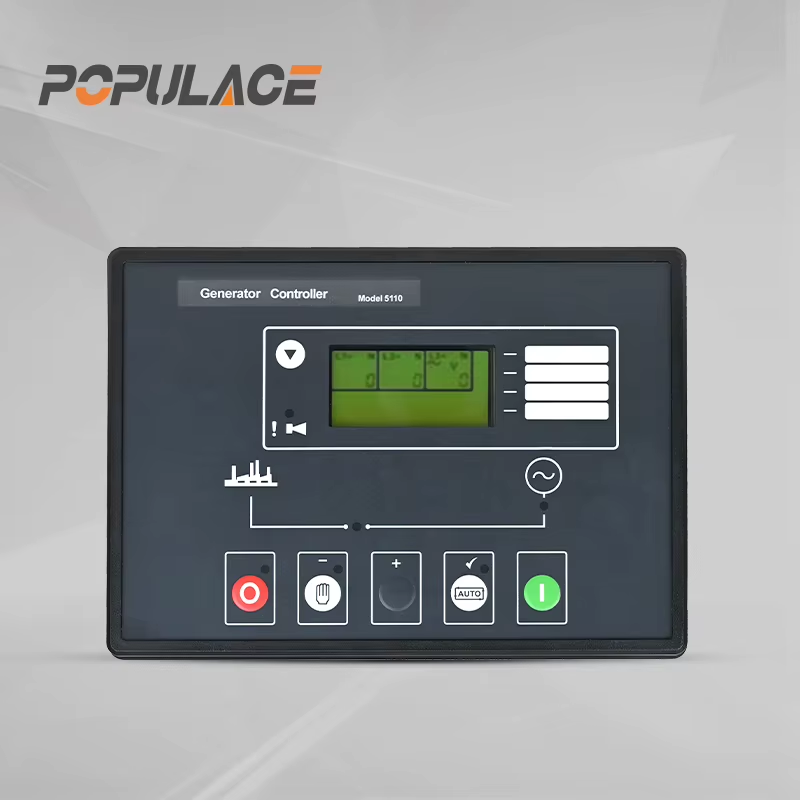
A short discovery worksheet improves both quotation accuracy and commissioning results. Capture the normal supply arrangement, generator voltage and rating, fuel type, transfer-switch type, essential-load list, starting constraints, remote monitoring requirement, and space or environmental limitations. Then turn the answers into an I/O schedule that identifies every hardwired signal and its normal state.
For example, a genset amf module may need utility healthy, generator available, ATS normal position, ATS emergency position, remote start enable, common alarm, low-fuel warning, and emergency-stop status. Naming these points in advance prevents the common problem of a panel that starts the generator correctly but has no confirmed feedback that the load has transferred.
Use delays as operational settings, not defaults
Specify a mains-failure delay to avoid starting for a very short disturbance, a warm-up period before transfer where appropriate, a retransfer delay to avoid chasing an unstable utility, and a cool-down period before stop. The right values depend on the building process, generator manufacturer guidance, and approved design. Document each value in the commissioning sheet so a future technician can understand why the automatic mains failure controller behaves as it does.
Offer a practical panel architecture
For many projects, the proposal can be framed in three layers: field power and sensing, the control layer, and the operator layer. Keep sensing and control wiring clearly labeled; use terminal references that match the drawings; and leave service access for testing. When the application calls for it, specify surge protection, interposing relays, fused sensing circuits, and clearly identified isolation points in line with the approved design.
For B2B buyers sourcing controls and replacement parts, a specialist supplier can add value by checking signal compatibility before shipment. Populace Electronic Co., Ltd. focuses on generator control components and related parts, so a quote discussion can address controller interfaces and documentation rather than treating all industrial controls as interchangeable. That is especially useful when an amf panel for genset must connect to existing switchgear.
Make commissioning and maintenance part of the solution
A commercial buyer should receive more than a wiring diagram. Include a startup checklist, alarm list, cause-and-effect table, test record, and operator handover notes. During commissioning, simulate a utility loss under safe, approved conditions; confirm start, voltage acceptance, transfer feedback, alarm reporting, retransfer, and cooldown. Record the observed sequence and any settings changed on site.
Routine exercising matters because a standby system is only useful if the complete chain works. Guidance on emergency power systems commonly includes regular inspection, monthly exercise, and transfer-switch operation, while the exact schedule and test method must follow the adopted code, equipment instructions, and facility risk plan. Encourage customers to assign qualified personnel and keep records for every test.
Present a clear commercial scope
A strong genset AMF quotation states what is included, what must be supplied by the electrical contractor, and which approvals remain with the engineer and facility owner. List the controller or panel configuration, voltage sensing range, required inputs and outputs, interface assumptions, documentation, factory checks, site commissioning support, exclusions, and lead-time conditions. This clarity protects the distributor while giving the building team a usable path from design review to reliable backup operation.
Frequently asked questions
Is an AMF controller the same as an ATS?
No. An AMF controller manages mains-failure detection and generator operating logic. An ATS is transfer equipment that moves approved loads between normal and alternate sources. They must be coordinated, but they perform different roles.
How do I choose a genset AMF module?
Match voltage and frequency sensing, engine interface, required I/O, alarm needs, communications, transfer arrangement, and the approved operating sequence. Confirm compatibility against the generator and switchgear documentation before ordering.
Can one AMF panel serve every commercial building?
No. Building load priorities, code obligations, generator ratings, switching arrangements, and monitoring needs differ. Use a site survey and an I/O schedule to configure the solution for the actual project.






