
 EN
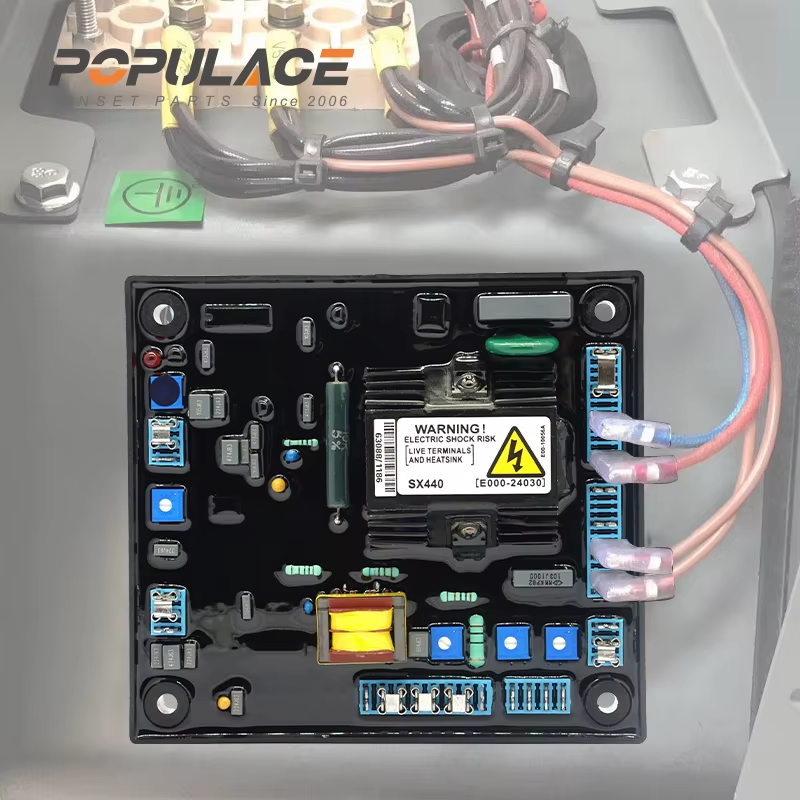
How to Import AVR Generator 3 Phase Units for Industrial Power Solutions?
Importing an avr generator 3 phase unit is not a matter of matching a box photo to a generator nameplate. For an industrial buyer, the regulator is part of an excitation and sensing system. A correct purchase begins with alternator data, ends with controlled commissioning, and includes documents that allow the receiving team to verify what arrived. This guide gives purchasing managers, distributors, and maintenance teams a practical route from specification to acceptance.
Start with the operating duty, not the regulator model
Define the generator application before you request a quotation. Is the set supplying motors, a mixed commercial load, sensitive electronics, or a parallel system? Record rated kVA, rated voltage, frequency, phase configuration, power factor, altitude or ambient constraints, and the expected load pattern. These details determine whether a three phase generator avr needs simple voltage regulation or additional stability, droop, or protection functions.
Also separate alternator regulation from a site-level 3 phase voltage stabilizer for generator requirement. An AVR controls excitation to maintain alternator terminal voltage. A downstream stabilizer addresses a different point in the electrical system. Treating them as interchangeable can create an incorrect specification and an avoidable import claim.
Build a compatibility sheet for every avr generator 3 phase order
Ask the generator owner or OEM for the alternator manual, existing AVR label photographs, wiring diagram, and terminal-board information. Then place the following items in one approval sheet shared by engineering, procurement, and the supplier:
- Sensing arrangement: confirm whether the regulator senses one phase, phase-to-neutral, phase-to-phase, or all three phases.
- Input and output ratings: verify sensing range, supply source, field excitation voltage, and continuous/max excitation current against the alternator data.
- Frequency: state 50 Hz or 60 Hz and identify any under-frequency roll-off requirement.
- Excitation architecture: identify shunt, auxiliary winding, PMG, or another excitation arrangement. An avr 3 phase alternator must be matched to its actual excitation system, not just its output voltage.
- Control functions: specify voltage adjust range, stability adjustment, droop or reactive compensation needs, and protection expectations.
- Mechanical and connector details: compare mounting, terminals, plugs, harness length, and terminal markings with the installed part.
Supplier listings often describe a 3 phase automatic voltage regulator with only broad voltage or kVA language. Use that as a starting lead, not as a substitute for the compatibility sheet. Where possible, have the supplier mark each line as confirmed, not applicable, or requiring an engineering drawing.
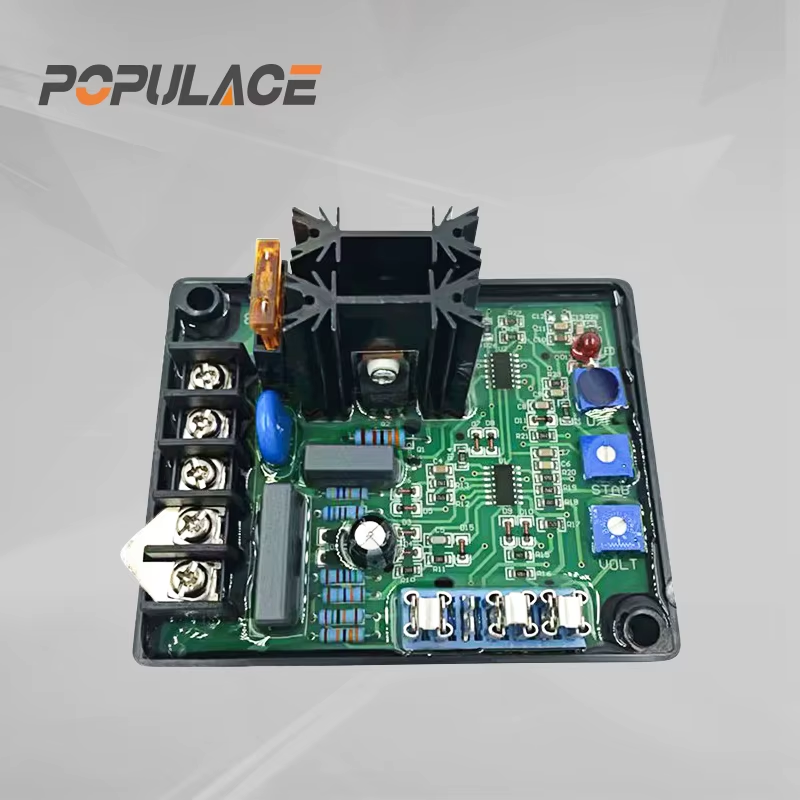
Request evidence before placing the import order
A repeatable evidence pack reduces ambiguity. Request a dimensional drawing, connection diagram, datasheet, product label artwork, packing list format, and clear photographs of the production sample. For a replacement three phase generator avr, ask for images showing terminal identifiers and the reverse side of the original unit. A supplier should also confirm the exact revision being quoted; near-identical boards can have different sensing terminals or field-output ratings.
For a first order, a sample or pre-shipment inspection is usually more valuable than an oversized initial quantity. Check board markings, connectors, mounting dimensions, protective packaging, and the documentation supplied with the lot. Keep the approved sample record under the purchase order number so later shipments can be compared against a known configuration.
Plan commercial terms and logistics around traceability
Write the agreed specification into the purchase order rather than relying on chat history. Include part number or approved drawing revision, quantity, Incoterm, destination port, packaging requirements, label language, and the acceptance documents. Confirm who supplies the commercial invoice, packing list, certificate-of-origin documentation where applicable, and any country-specific import materials requested by your broker.
Classify the goods with your customs broker before shipment. Duties, import controls, and paperwork depend on the importing country and the actual product classification. Do not rely on a generic description such as “electronic accessory.” Your broker and compliance team should make the final classification decision. Build time for this step into the procurement schedule, especially when the avr generator 3 phase order supports a planned maintenance outage.
Inspect the shipment before installation
At receiving, compare carton count, labels, part markings, and documents against the approved purchase order. Photograph any transit damage before opening the package. Check terminal hardware, connectors, conformal coating condition where specified, and whether the unit matches the approved sample. Quarantine any board with unclear labeling, damaged terminals, or a mismatch between the wiring diagram and the physical connector.
Use a controlled installation process. Isolate the generator, verify it cannot start unexpectedly, and have a qualified technician follow the alternator and AVR documentation. Do not infer wire positions from color alone. Confirm sensing, supply, and field connections one by one. Before applying load, set adjustments according to the manufacturer guidance and record the initial settings.
Commission and document the result
A useful acceptance test records no-load voltage, voltage under representative load, frequency, phase balance, and response to a planned load change. Three-phase sensing may offer better regulation with unbalanced loads because it evaluates all three phase voltages; that advantage only applies when the regulator and wiring arrangement are designed for it. Escalate unexpected hunting, overheating, poor voltage recovery, or unstable readings to the equipment engineer rather than repeatedly turning adjustment pots.
Store the approved specification, photos, test record, supplier batch reference, and any corrective-action notes together. This turns a one-time import into a controlled sourcing process. For distributors and OEM buyers, a supplier focused on generator controllers, AVRs, governors, and related generator parts can also make future compatibility discussions more efficient, provided each replacement is still verified against the alternator data.
Final import checklist
- Capture alternator and existing AVR data.
- Approve a line-by-line compatibility sheet.
- Request drawings, wiring evidence, and a sample record.
- Put the approved revision and documents in the purchase order.
- Confirm classification and import paperwork with the broker.
- Inspect the delivery before installation.
- Commission under controlled conditions and retain the test report.
With this discipline, an avr generator 3 phase purchase becomes a traceable engineering procurement decision rather than a trial-and-error replacement. The same method helps protect uptime whether you are importing a single critical spare or building a repeatable supply program for industrial power solutions.






