
 EN
How to Import AVR GAVR 8A Modules for Genset Assembly Plants?
For a genset assembly plant, importing an avr gavr 8a is not a simple matter of ordering a familiar-looking board. The regulator sits in the excitation loop, so a mismatch can surface as unstable output, a failed acceptance test, or costly rework on the assembly line. From a procurement perspective, the useful question is not “who has the lowest unit price?” but whether each avr gavr 8a batch can be identified, checked, wired, and supported against the alternator configuration you actually build.
As a supplier-focused technical team, we recommend treating the avr gavr 8a as a controlled electrical component. That means defining the required version before quotation, protecting it during shipment, and validating it on a representative generator before releasing a full lot. This approach helps wholesalers, private-label brands, and plant buyers make a repeatable decision rather than relying on a photo or a generic model name.
Start with the application, not the model label
A universal avr gavr-8a is commonly marketed for brushless generators, but “universal” does not mean every alternator and harness use the same terminals, sensing arrangement, field resistance, or adjustment range. An avr gavr 8a should be assessed against the alternator drawing, the intended output voltage and frequency, the excitation circuit, and the control-panel architecture. Ask the generator engineer to provide those inputs before the purchase order is released.
Published search previews for this class of regulator often mention selectable sensing values around 110/220/400 VAC and an 8 A continuous output rating. Those statements are useful screening references only. Your incoming-inspection sheet must use the supplier’s current manual, terminal marking, and product label as the acceptance basis. A revision change can matter even when the enclosure and the words avr gavr 8a look identical.
Build an import specification that a supplier can quote
A clear specification prevents the most common problem: a board that powers up but is not suitable for your generator. Include the following items in the RFQ and purchase order for every avr gavr 8a batch:
- Generator and alternator model, rated kVA, nominal voltage, phase arrangement, and frequency.
- Required sensing-input configuration and the exact terminal convention used by your harness.
- Field voltage and field-resistance information supplied by the alternator manufacturer.
- Required functions, such as voltage adjustment, stability adjustment, under-frequency roll-off, or remote trim compatibility.
- Drawing revision, connector style, board dimensions, mounting-hole position, and label language.
- Sample approval, lot traceability, packaging method, inspection level, and replacement policy.
This document is more valuable than a generic product photo. It gives the factory a chance to flag a conflict before production. It also lets your team compare an 8 amp automatic voltage regulator offer against the correct technical baseline instead of comparing only price and lead time.
Verify the GAVR-8A wiring diagram before installation
A gavr-8a wiring diagram should be treated as a controlled document, not copied from an unrelated online listing. Terminal labels and jumper or dip-switch settings must be checked against the manual supplied with the physical batch. Before any energization, have a qualified generator technician trace the sensing leads, field connections, and any auxiliary adjustment connection against the approved drawing.
Do not infer wiring from board color, connector position, or a previous avr gavr 8a purchase. Isolate the genset, follow site electrical safety procedures, and use the alternator manufacturer’s data to confirm polarity and expected values. If the plant runs multiple alternator variants, label the approved harness and document which regulator revision belongs to each variant. That small discipline reduces accidental cross-installation on a busy line.
Use a practical incoming-inspection sequence
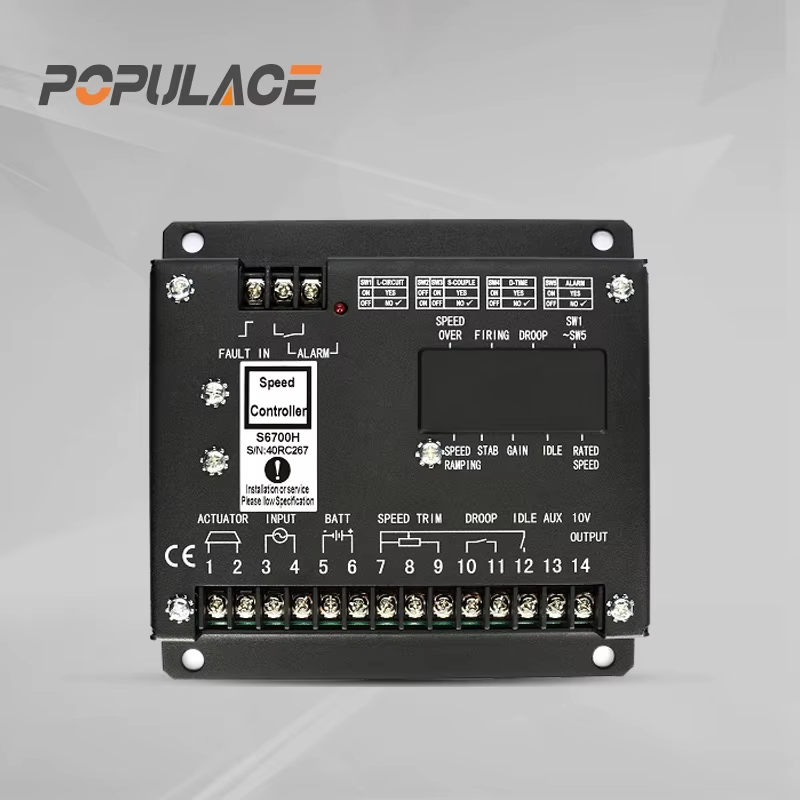
Once you manage parts inventory long enough, you stop asking only whether a carton arrived intact and start asking whether every carton represents the same controlled batch. A generator avr board can pass a visual check yet create a difficult field issue if its terminal labeling, adjustment range, or protection behavior differs from the approved sample.
- Check identity: compare carton labels, board labels, revision marks, quantity, and PO number.
- Inspect condition: look for cracked housings, bent terminals, loose components, moisture exposure, or missing fasteners.
- Review documents: retain the current manual, wiring sheet, packing list, and batch or production identification where available.
- Confirm fit: verify mounting points and harness reach on the intended alternator before committing the lot to assembly.
- Run a controlled sample test: install the approved sample with qualified personnel and record no-load, stepped-load, stability, and protection observations according to your plant procedure.
- Release by lot: quarantine discrepancies, keep inspection records, and release only the batch that matches the approved criteria.
The 8 amp automatic voltage regulator label is not a substitute for this process. Output-current capability, sensing selection, and under-frequency behavior all need confirmation in the intended generator system. If your load profile changes frequently, especially with motor starts or cycling loads, stability should be reviewed under representative conditions rather than judged from a bench check alone.
Plan shipping, customs, and batch continuity
For an imported avr gavr 8a, request anti-static protection, individual identification, inner-carton cushioning, and moisture-aware packing appropriate to the route and storage environment. Confirm the tariff classification, import documentation, country-of-origin information, and any local electrical or environmental requirements with your customs broker or compliance adviser. Requirements vary by destination, so a supplier’s past shipment experience should not replace your own verification.
For repeat imports, approve a retained reference sample and a revision-control rule. If a supplier changes a component source, terminal marking, board layout, or firmware-related behavior, require notice and a new sample review. This is particularly important when an avr gavr 8a is assembled into a branded genset, because later service parts must remain compatible with the installed fleet.
Choose the supplier on evidence and response quality
There is no single right source for every generator avr board. An OEM-style route may suit a tightly controlled alternator platform; a compatible replacement route may suit multi-model assembly or service stock. The deciding factor is the supplier’s ability to answer model-level questions, provide consistent documentation, and support a defined sample-to-batch process.
Fujian Kaiyue Electronics focuses on generator control components and generator parts, which can make specification discussions more direct for buyers sourcing AVRs, controllers, governors, and related replacement parts. Still, the right choice depends on your alternator data, test capability, import market, and service commitments. Request the documents and sample evidence needed for your own evaluation rather than accepting a universal claim.
Final import checklist for an AVR GAVR 8A order
Before payment, confirm the alternator match, approved gavr-8a wiring diagram, manual revision, sample result, packaging, documents, and batch-traceability plan. Before assembly, repeat the identity, fit, and controlled test checks. With that workflow, an avr gavr 8a becomes a managed production input instead of an uncertain replacement board—and your plant has a clearer path to stable output and fewer avoidable returns.






