
 EN
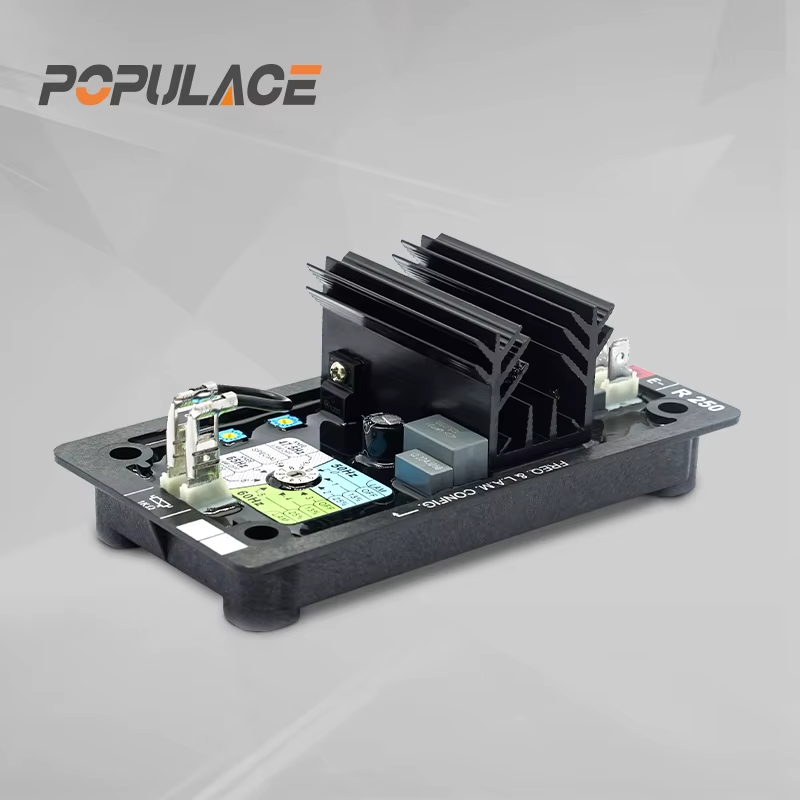
How to Import Automatic Voltage Regulator for Alternator in Bulk?
Buying an automatic voltage regulator for alternator in volume is not a simple “match the voltage and place the order” exercise. An AVR controls excitation so the alternator can hold a set output voltage as load changes. For a distributor, importer, or generator service group, one compatibility mistake can turn a low unit price into returned stock, delayed repairs, and expensive freight.
From a procurement perspective, a reliable bulk purchase process combines technical confirmation with commercial controls. The checklist below helps buyers source an automatic voltage regulator for alternator for repeat orders without treating a catalog photo as proof of fit.
1. Start with a purchase specification, not a keyword search
An alternator avr should be defined by the generator and alternator configuration it must serve. Ask the technical team or end customer for the existing regulator label, alternator model, wiring diagram, terminal layout, sensing arrangement, excitation details, rated output, and operating environment. The nameplate is useful, but it may still be incomplete.
The pitfall that gets overlooked most often with an automatic voltage regulator alternator is not the nominal output rating. It is the sensing input range and interface arrangement, which can vary with winding configuration and may not be obvious in a generic listing. In plain language: an AVR can look electrically similar yet read the wrong signal or connect differently on the target alternator.
- Record rated alternator voltage, frequency, phase, and kVA range.
- Capture sensing input and excitation output requirements from the existing unit or OEM documentation.
- Confirm terminal labels, connector type, mounting dimensions, and wiring sequence.
- State whether the application is standby, prime power, marine, mobile, or a high-temperature site.
- Identify any required functions, such as soft start, voltage adjustment, under-frequency protection, or droop support.
For a brushless alternator avr, include the exciter and sensing arrangement in the request. Do not assume that two brushless machines use interchangeable regulator connections.
2. Verify compatibility before you approve a sample
Send the same written specification pack to every shortlisted supplier. A credible response should distinguish confirmed items from items that still need a drawing, photo, or test reference. Early in the sourcing process, many buyers focus on voltage and frequency. After a failed installation, the focus usually shifts to sensing input, terminal configuration, and excitation behavior.
Ask the supplier to return a compatibility confirmation sheet that lists the buyer’s requested model, the offered alternator voltage regulator module, any deviations, and the evidence used for the match. A part number cross-reference can be helpful, but it is not a substitute for checking the actual interface and electrical requirements.
For an initial order, request a sample and test it under a representative load profile. If your generator operates with rapidly changing motor loads, high ambient temperature, or sensitive electronics, make those conditions part of the test plan. Bench operation alone may not show every field issue.
3. Turn the sample into a production quality-control gate
A sample only proves that one unit can be evaluated. The bulk-order question is whether the production batch will follow the approved configuration. Put the approval reference on the purchase order and require the supplier to identify the production lot on the packing list or inspection record.
Your pre-shipment inspection plan can be practical rather than elaborate:
- Check labels, model codes, terminals, mounting, and visible workmanship against the approved sample.
- Verify basic electrical function against the agreed test method and acceptance criteria.
- Confirm that packaging labels match the part number, quantity, and lot reference.
- Photograph a small sample of packed cartons before release.
- Keep the approved sample, drawings, and inspection record together for reorders and warranty review.
This matters because batch consistency is a commercial issue as much as a technical one. A supplier may provide compatibility support and documentation, but the buyer should still specify what must remain unchanged between the approved sample and production.
4. Specify packaging for electronic controls
An automatic voltage regulator for alternator is vulnerable to handling damage that may not be visible at receiving. Request individual anti-static bags, protective inserts, clear part-number labels, and outer cartons sized to limit movement. If cartons will move through several warehouses or air freight, agree on carton markings and handling instructions in advance.
Packaging should also support your inventory process. Each carton should let the receiving team identify the alternator avr, quantity, purchase order, and lot without opening every inner pack. That small discipline makes later traceability and warranty discussions much easier.
5. Build the document package before shipment
Import documentation requirements vary by market, product classification, and customer application, so confirm them with your customs broker and compliance team before production is released. At a minimum, align the commercial invoice, packing list, product description, country-of-origin information where applicable, and transport documents. For electrical components, ask early which declarations, test information, markings, or material statements your destination market and customer require.
Do not request certifications by name unless you know they apply to the imported product and destination. Instead, tell the supplier the market, intended use, and documents requested by your buyer or authority, then review the evidence for applicability. Clear English specification and installation documents also reduce handover friction for distributors and service teams.
6. Compare landed cost, not just the quotation
For bulk sourcing, the real cost driver is not only the ex-works price of an automatic voltage regulator alternator. Compare product price, export packing, inland delivery, freight, insurance, customs clearance, duty, import tax, inspection cost, and the cost of holding inventory. Currency exposure and payment terms may also change the effective cost.
Create one comparison sheet using the same quantity, Incoterm, destination, carton data, and payment assumption for each quotation. If a supplier cannot provide packing dimensions or a clear commercial breakdown, flag that gap before treating its offer as the lowest landed-cost option.
7. Plan shipping around the order profile
For a small first order, express or consolidated air freight can shorten the learning cycle, although the freight share per unit may be high. For a stable replenishment order, consolidated sea freight may offer better economics. The right choice depends on urgency, carton volume, customs process, and the cost of a stockout in your market.
Confirm the handoff point, shipment booking responsibility, export documentation timing, and tracking contact in writing. For a brushless alternator avr order intended for seasonal maintenance inventory, allow time for a pre-shipment document review rather than discovering a missing detail after cargo reaches the port.
8. Evaluate supplier support for the second order
A first shipment is only the start of supplier qualification. Assess how quickly the supplier resolved compatibility questions, whether the documentation matched the goods, and whether the packaging and labeling were consistent. Populace Electronic Co., Ltd. positions its generator control component support around pre-sales compatibility review, English-language documentation, export-ready packaging, and technical follow-up; buyers should still confirm the exact scope for their requested alternator voltage regulator module and order terms.
The most useful reorder test is often a small follow-up order: it checks whether lead time, configuration control, and communication remain consistent after the initial sample stage. This is a measured way to build confidence before relying on one source for deeper inventory.
Bulk import checklist
- Written alternator and AVR specification pack completed.
- Compatibility confirmation signed off against the requested configuration.
- Sample tested under relevant conditions and retained as the reference unit.
- Production lot, inspection criteria, and labeling requirements added to the PO.
- Anti-static and impact-protective packaging specified.
- Commercial, customs, and compliance documents checked for the destination market.
- Landed-cost sheet compared on like-for-like shipping assumptions.
- Supplier support and reorder performance reviewed after delivery.
Final takeaway
The safest way to import an automatic voltage regulator for alternator in bulk is to treat compatibility, sample approval, batch control, packaging, documents, and landed cost as one connected process. A disciplined first order takes more preparation, but it gives distributors a cleaner basis for repeat buying, faster receiving, and more reliable service to their own customers.






