
 EN
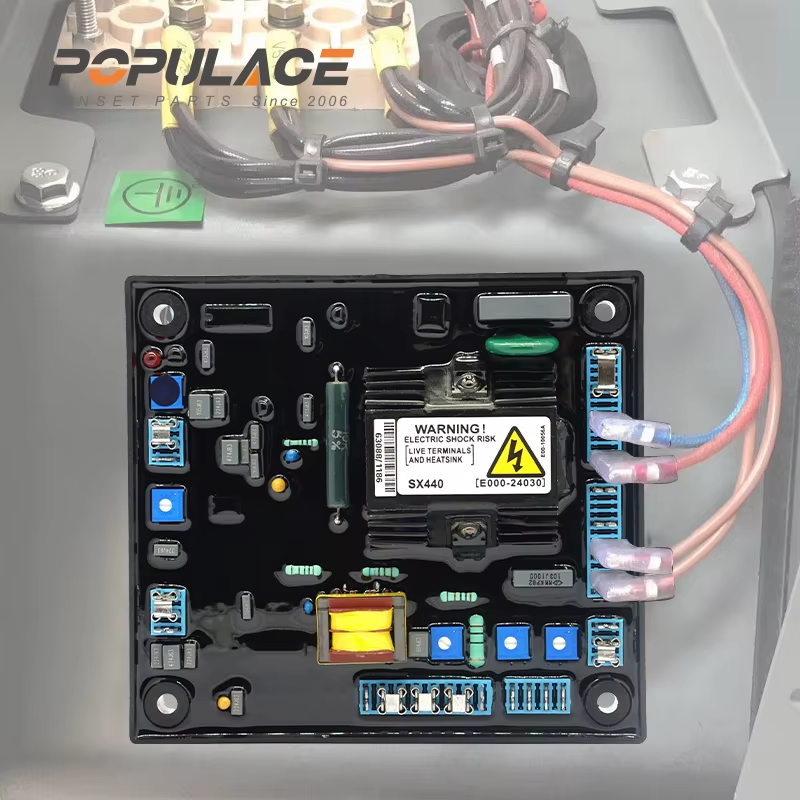
How to Identify Symptoms of a Bad Voltage Regulator on a Generator.
When a generator starts delivering inconsistent power — lights flickering, sensitive equipment tripping off, or the voltmeter reading jumping around — the first question is: is the voltage regulator on a generator the cause, or is something else going on? Getting this wrong means swapping the right part last instead of first.
This article covers the observable symptoms that point to a failing AVR, why they occur at the component level, and what to check before ordering a replacement.
Understanding the Generator Voltage Regulator Function
The generator voltage regulator function is fairly straightforward: the AVR continuously senses the generator's AC output voltage and adjusts the excitation current to the alternator's rotor windings to keep that output stable under changing load conditions. Load increases, voltage tends to drop — the AVR increases excitation. Load drops, voltage tends to rise — the AVR reduces it.
The automatic voltage regulator working principle depends on a closed feedback loop. Sensing terminals on the AVR read the output, the internal circuit processes that reading, and a correction signal adjusts the field winding current in real time. When the sensing circuit or output stage degrades, that feedback loop breaks down — and that is when symptoms start appearing.
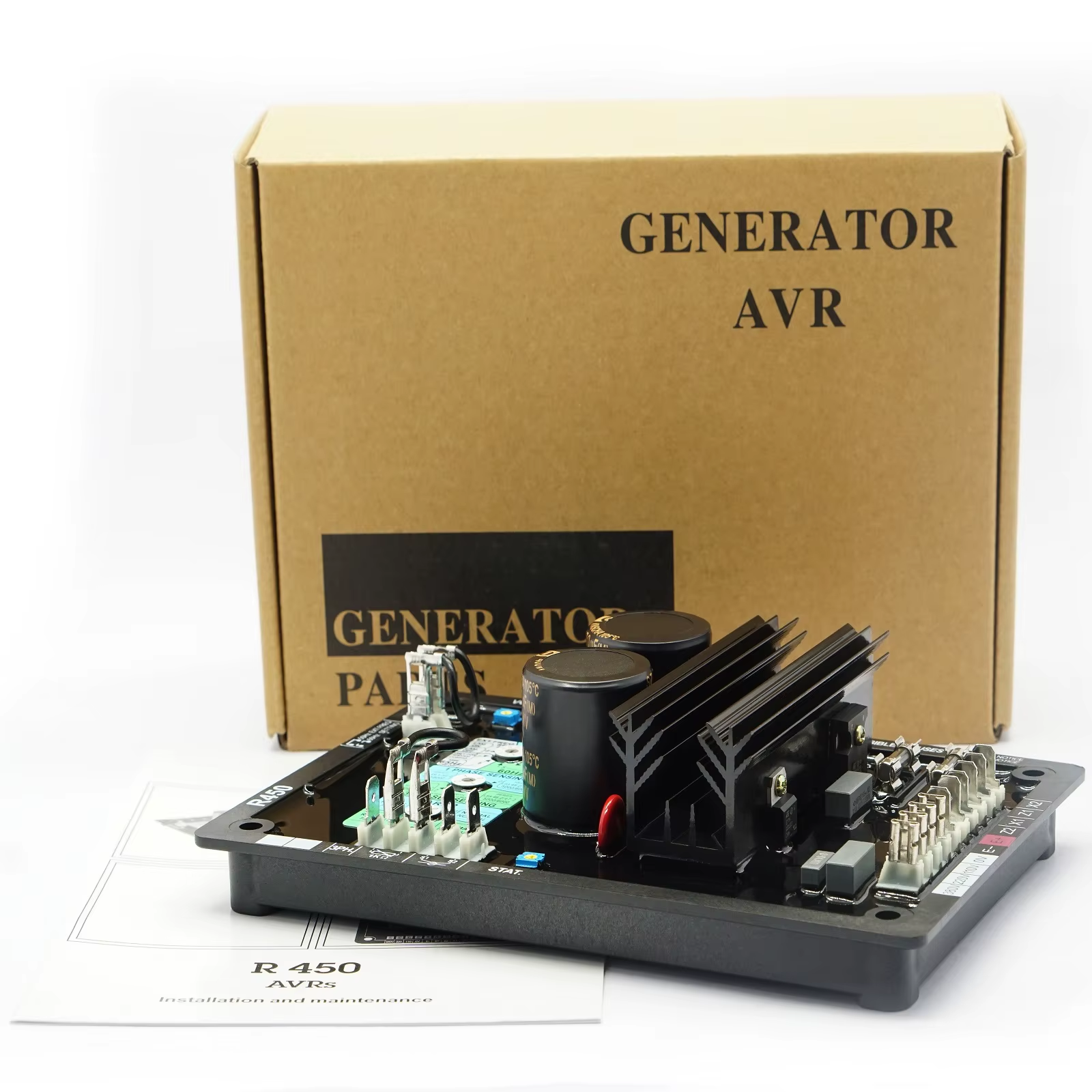
Common Symptoms of a Bad Voltage Regulator on a Generator
AVR behavior under load often differs from bench test results because temperature rise introduces variability. Some failures only show up after the generator has been running under load for several minutes. Here are the symptoms worth watching for:
1. Erratic or Fluctuating Output Voltage
Voltage meter readings swinging up and down without a corresponding load change suggest the AVR is struggling to maintain stable output. Healthy voltage control in generators keeps output within a narrow band — typically within 1–2% of nominal. Fluctuations that do not correspond to load changes are a direct signal of AVR instability.
2. Lights Dimming and Brightening Unexpectedly
Incandescent or dimmable lighting connected to a generator with a failing AVR will visibly dim and brighten in a pattern unrelated to any obvious load cycle. If this happens while engine speed appears stable, the issue is voltage regulation, not speed control. The governor and AVR are separate systems — that distinction matters when tracing the fault.
3. Generator Running but Producing No Power
A severe sign of generator avr operation failure is the engine running normally but delivering zero or near-zero output voltage. This typically means the AVR has failed in a way that cuts excitation entirely, so the alternator cannot produce meaningful output despite the engine operating correctly. Before assuming an alternator winding fault, check whether residual magnetism is present and whether the AVR output terminals are supplying any field voltage.
4. Burnt Smell or Visible Overheating
An overheating AVR produces a recognizable burnt smell from electronic components exceeding their thermal rating. Visible burn marks or discoloration on the board or connectors confirm thermal damage. Once internal components have burned out, the AVR needs replacement — field repair is not practical.
5. Connected Equipment Sustaining Damage
Overvoltage events, caused by an AVR that loses control and allows excitation to run too high, can damage motor windings, control panels, or sensitive electronics. These events are often brief but intense and may not trigger overcurrent protection. If connected equipment has failed without an obvious cause and the generator was the power source, investigate the AVR before restoring power.
6. Static Voltage Outside Normal Range
A consistent reading 10–20% above or below nominal, under stable load, points to AVR trim pot failure, sensing circuit degradation, or a shorted internal component. A properly functioning voltage regulator on a generator should hold nominal output within specification regardless of load.
Why AVR Failures Occur
Knowing the common causes helps confirm whether a symptom is genuinely AVR-related or linked to a different system fault:
- Heat stress: Sustained operation in high-ambient environments without adequate ventilation accelerates component degradation inside the AVR.
- Age and capacitor wear: Electrolytic capacitors degrade over time, especially in generators that sit idle for extended periods. Degraded capacitors cannot maintain stable regulation.
- Overload conditions: Persistent load above the generator's rated capacity stresses the excitation system, the AVR included.
- Short circuit events: A downstream short circuit produces a sudden excitation surge that can damage the AVR's internal power stage.
- Poor connections: In brush-type alternators, excessive wear between brushes and slip rings creates abnormal voltage signals that gradually wear on the AVR's sensing circuit.
Steps to Verify Before Replacing the AVR
- Check engine speed: Voltage instability that tracks with speed is a governor issue, not an AVR issue. Confirm correct RPM before proceeding.
- Inspect wiring connections: Loose, corroded, or damaged connections at the AVR sensing terminals or field output can mimic AVR failure without the AVR itself being faulty.
- Check residual magnetism: If output voltage is zero, briefly connect a DC battery to the field terminals. If voltage builds and holds, the alternator windings are likely intact.
- Measure field current: Zero DC current from the AVR to the rotor field winding, when voltage is absent, points to AVR output stage failure.
- Inspect the AVR board: Look for blackened components, broken solder joints, or damaged trim potentiometers. Physical damage confirms replacement is needed.
Sourcing the Correct Replacement AVR
Specifying the generator brand alone rather than the alternator model and AVR type is the most common ordering error. Different AVR models have different sensing voltage input ranges, excitation output capacity, and connector pinouts. A mismatched unit may regulate poorly under load and reproduce the original symptom without generating an obvious fault code.
Wholesale buyers and distributors sourcing AVRs for fleet maintenance get better outcomes from suppliers who confirm compatibility against the specific alternator model before shipping. Verifying the sensing range, field output current rating, and physical interface type before the order avoids the most common post-delivery compatibility issues. KYGEN Power's technical team at [email protected] can assist with specification matching for generator AVR replacement parts.
Summary
A bad voltage regulator on a generator produces identifiable symptoms: fluctuating voltage, lights dimming and brightening, no output with the engine running, burnt smell, connected equipment damage, and out-of-range static voltage readings. Effective voltage control in generators depends on an AVR that can sense and respond to output conditions continuously. A systematic check before replacement avoids misdiagnosis and ensures the part ordered matches the alternator's specification.






