
 EN
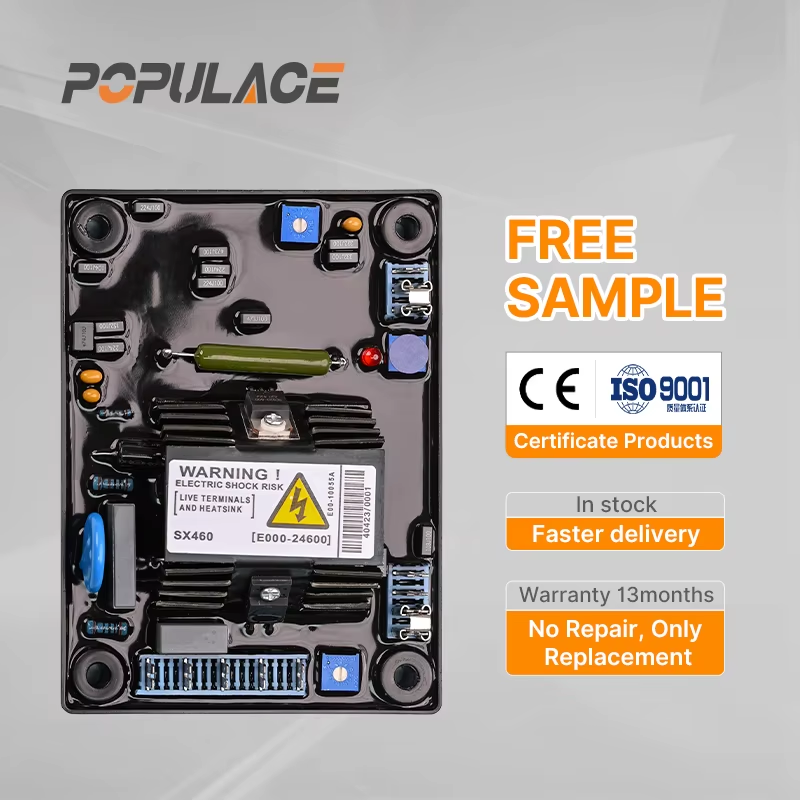
How to Identify a Failing DG AVR and Replace It Quickly.
When a diesel generator starts but its voltage is low, unstable, or absent, the dg avr is often the first component technicians suspect. That is sensible, but it is not a reason to replace the module blindly. A diesel generator automatic voltage regulator works with the alternator excitation circuit, sensing leads, protection devices, and engine speed. A fast repair comes from separating an AVR fault from a wiring, alternator, or speed problem before a replacement is ordered.
This field-oriented checklist helps maintenance teams identify a likely dg avr failure, isolate common look-alikes, and install a compatible dg avr replacement with less downtime. Work only with qualified personnel: generator panels can retain hazardous voltage, and a live excitation test should follow the set manufacturer's procedure.
What a DG AVR does—and what a failure looks like
A diesel generator automatic voltage regulator senses the alternator's output and changes field excitation to hold the selected voltage as load changes. In practical terms, the module compares sensed voltage with its set point and increases or reduces excitation. If the dg avr cannot sense, supply, or control that circuit correctly, output voltage can drift even when the engine sounds normal.
Common symptoms include:
- No generator output voltage or voltage that remains unusually low after the set reaches rated speed.
- Voltage that rises and falls repeatedly, especially when a load is connected or removed.
- Output that is consistently too high, too low, or cannot be corrected with the voltage trim.
- Visible heat damage, a burnt odor, cracked terminals, swollen components, or corrosion on the dg set avr module.
- Intermittent output that changes when a connector, fuse holder, or sensing lead is disturbed.
None of these signs proves the regulator has failed. A loose sensing wire, blown fuse, poor ground, damaged field wiring, incorrect engine RPM, or alternator fault can create nearly the same complaint. Treat the dg avr as one part of a complete excitation system.
Use this quick fault-isolation sequence first
1. Make the set safe and record the symptom
Open and lock out the load connection where site rules require it. Note the output voltage, frequency, engine speed indication, alarm history, and whether the issue appears at no load, under load, or all the time. Frequency and voltage are related but different: a governor or fuel issue that leaves engine speed off target can confuse the diagnosis of a generator avr for dg.
2. Inspect before measuring
With the generator stopped and isolated, compare every terminal label and wire position with the approved wiring diagram. Look for loose screws, rubbed insulation, overheated plug housings, damaged fuses, water ingress, and signs that an earlier repair moved a sensing or field lead. Pay special attention to the sensing pair and the field/exciter connections. A five-minute visual check often prevents an unnecessary dg avr replacement.
3. Verify engine speed and basic alternator conditions
Run the set only when it is safe to do so and verify that frequency is at the specified value for the application. If the engine hunts or runs at the wrong speed, correct that condition before adjusting the regulator. Then use the manufacturer-approved test points to confirm the regulator supply or residual-voltage condition, the sensing voltage, and field circuit continuity. Do not use generic terminal values from a different alternator or dg set avr module.
4. Check the inputs before condemning the module
A regulator that has no correct supply or no valid sensing signal cannot regulate normally. Test fuses, connectors, sensing leads, and field wiring against the set documentation. If those inputs are correct, the engine speed is stable, and the alternator field circuit passes the specified checks, persistent unstable or absent control makes the dg avr a stronger suspect. Photograph the module, its labels, terminal markings, and the wiring before disconnecting anything.

When to replace the DG AVR
Replacement is usually justified when the module is physically damaged, fails the manufacturer's test procedure, or still cannot control output after upstream wiring, protection, speed, and alternator checks are confirmed. Avoid “turning the trim until it works” as a repair method. An incorrectly adjusted or mismatched generator avr for dg can over-excite the alternator, leave voltage outside the site's acceptance range, or damage connected equipment.
For an urgent repair, send the supplier a clear identification pack: generator and alternator model, serial range where available, original dg avr part number, nameplate voltage and frequency, sensing arrangement, field connection labels, photographs of both sides of the module, and the measured fault symptoms. Technical compatibility confirmation is more useful than choosing a module by appearance alone.
How to select a compatible replacement module
A dg set avr module is not automatically interchangeable because it has the same connector count or mounting shape. Confirm the following before ordering:
- Alternator and generator model: match the actual alternator configuration, not just the diesel engine brand.
- Input and sensing range: confirm the voltage and phase arrangement used by the regulator.
- Excitation output and field connection: verify terminal functions and the required field circuit characteristics.
- Frequency and stability settings: make sure the replacement is suitable for the operating frequency and control scheme.
- Protection and adjustment features: compare under-frequency roll-off, voltage trim, stability, droop, and any remote control interface required by the set.
For distributors and service contractors, keeping these records with the replacement order also makes the next dg avr replacement faster. A specialist generator-parts supplier can use the information to cross-check compatibility before shipment rather than relying on an incomplete model name.
Replacement procedure: fast, controlled, and documented
- Shut down, isolate, and verify the equipment is de-energized according to the site's safety process.
- Photograph the installed dg avr and label each wire before removal. Do not rely on wire color alone.
- Remove the old module without pulling on conductors. Inspect terminals, connectors, fuses, grounding points, and the mounting area for heat or moisture damage.
- Mount the replacement generator avr for dg securely and reconnect wires exactly to the confirmed terminal functions and approved diagram.
- Set adjustment controls to the supplier's or manufacturer's initial recommended positions; do not copy arbitrary positions from a damaged module.
- Start at no load, verify frequency first, then confirm voltage is within the set specification. Add load gradually while watching stability and alarms.
- Record final readings, module identification, settings, and any parts replaced. This creates a useful reference for future service.
Post-replacement checks that prevent a repeat fault
After a dg avr replacement, observe the set through a controlled no-load and load test appropriate to the installation. Check that voltage recovers smoothly after load changes, that there is no abnormal heat or smell at the module, and that terminals remain secure after the first operating cycle. If output is still unstable, stop changing settings repeatedly and return to the alternator, sensing, field, and engine-speed checks. The replacement may be correct while the original root cause remains in the system.
FAQ
Can a DG AVR fail without visible damage?
Yes. Internal electronic failure may leave no obvious mark. A proper diagnosis still starts with supply, sensing, fuse, field wiring, alternator condition, and engine speed so that a good module is not replaced unnecessarily.
Why does voltage fluctuate after installing a new AVR?
Check wiring order, sensing configuration, frequency, stability settings, field connections, and alternator condition. A new dg set avr module cannot compensate for a loose sensing lead or an engine that is hunting.
What should I provide when requesting a replacement?
Provide the original part number, alternator and generator data, voltage and frequency, terminal photos, wiring information, and the measured symptom. That evidence supports a compatibility check for the correct diesel generator automatic voltage regulator.
Keep the repair focused on compatibility
The quickest way to restore reliable output is not to assume every voltage fault is the dg avr. Inspect the circuit, confirm speed and sensing conditions, document the old module, and select a replacement from verified electrical and terminal data. This approach reduces repeat visits, protects the alternator, and gives maintenance teams a repeatable process for every generator avr for dg service call.





