
 EN
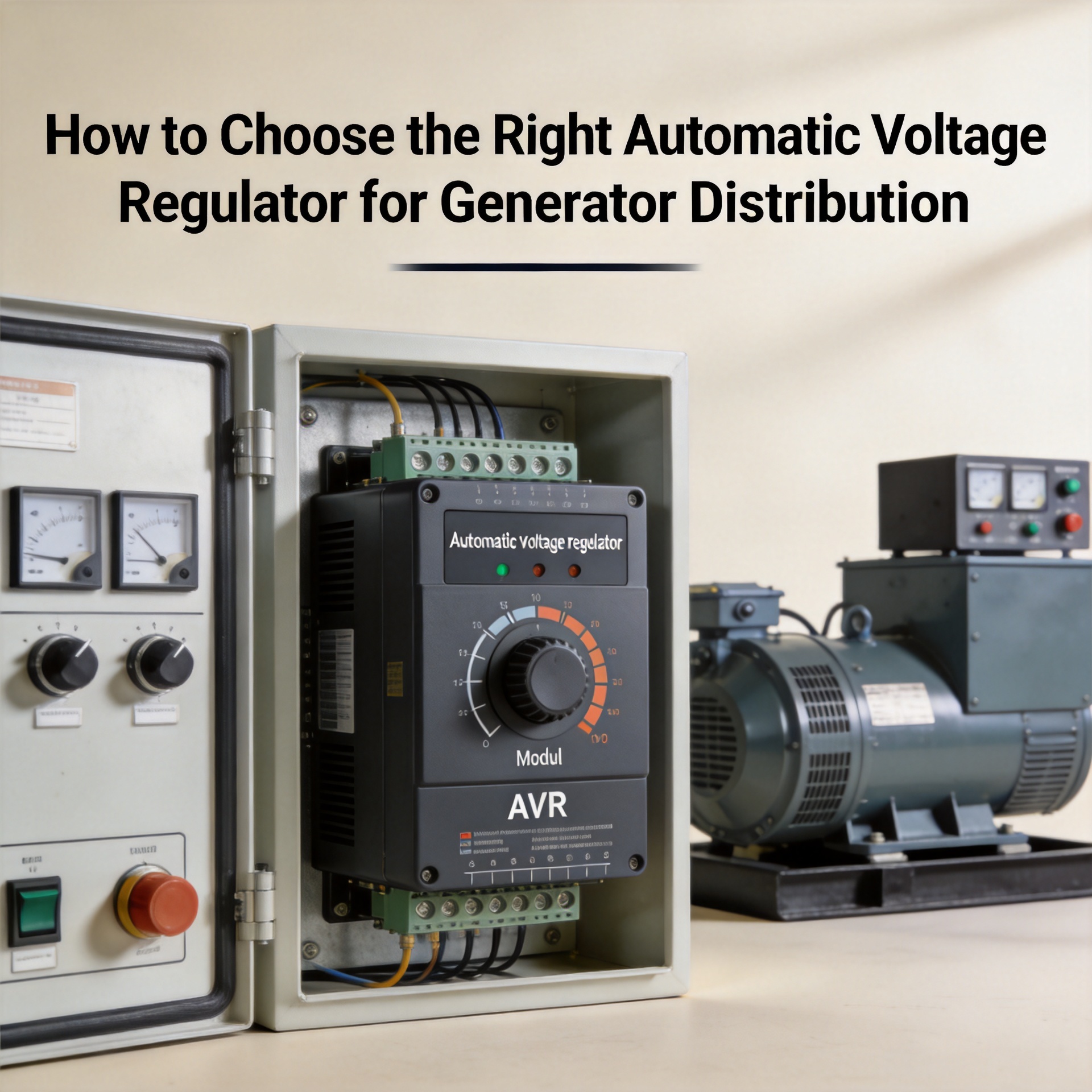
How to Choose the Right Automatic Voltage Regulator for Generator Distribution?
When building or maintaining a generator distribution system, one of the more impactful decisions you will face is selecting the right automatic voltage regulator for generator operation. Get this right, and your system delivers stable, clean power to every downstream load. Get it wrong, and you risk equipment damage, premature AVR failure, or unpredictable voltage swings that can disrupt sensitive electronics across the distribution network.
This guide takes the perspective of someone who has worked through generator parts compatibility across a range of genset configurations. Rather than recommending a single product, this guide offers a practical framework for evaluating your options and avoiding the selection mistakes that cause the most problems in the field.
What Does an Automatic Voltage Regulator Do in a Generator System?
A generator voltage regulator is the component responsible for maintaining stable output voltage regardless of load changes. By sensing the generator's output and adjusting excitation current accordingly, a well-specified automatic voltage regulator for generator applications typically holds output within ±1% of the target voltage under normal operating conditions.
In distribution settings — where a generator may be supplying power to a panel serving multiple circuits, motors, or even parallel generator banks — the voltage regulation performance has a direct impact on downstream equipment reliability. An automatic voltage stabilizer generator combination that is not properly matched can result in voltage creep under heavy loads, overshoot during load shedding, or instability during startup events. These are not theoretical risks; they represent the most common category of AVR-related generator failures in distribution applications.
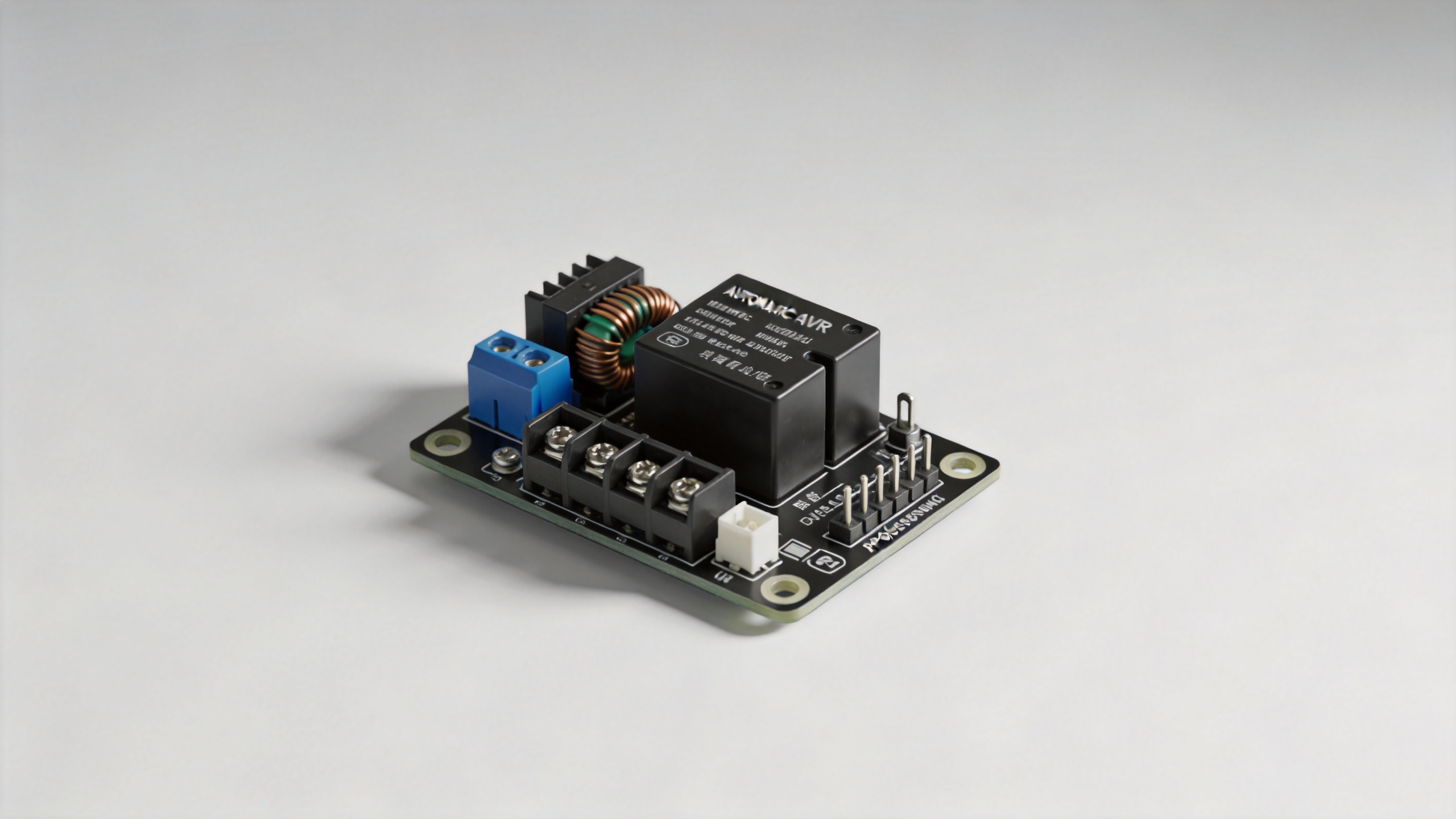
Key Selection Criteria for Generator AVR in Distribution Applications
Before you order, it is worth asking: Are you selecting based on the generator's nameplate, or based on the actual operating conditions in your distribution setup? Those are two different starting points, and conflating them is one of the most common sources of compatibility problems.
Match the Excitation Type First
The first and most important parameter is excitation type compatibility. The generator avr automatic voltage regulation system relies on an interface between the AVR and the alternator's excitation winding. Self-excited, separately excited, and brushless configurations each require AVRs designed for that topology. Installing a self-excited AVR on a brushless alternator — or vice versa — produces either no output regulation or incorrect excitation current, both of which are damaging over time.
Before specifying any avr for generator use, confirm the alternator manufacturer's designation: compound excitation, residual voltage, permanent magnet generator (PMG) excitation, or auxiliary winding excitation. Each type has a corresponding AVR product category, and mixing them is the most preventable source of compatibility failure.
Verify Voltage Sensing Range and Phase Configuration
The sensing input range of the generator voltage regulator you select must match the generator's output voltage. A unit designed to sense at 110–120V AC will not regulate properly on a 220–240V output, and vice versa. For three-phase distribution systems, confirm whether the AVR is rated for single-phase sensing or three-phase sensing — some models offer both input configurations, while others are fixed at the time of manufacture.
One area where buyers frequently run into trouble: they specify the output voltage of the generator correctly, but overlook that the AVR's sensing circuit taps a different point in the winding circuit. Technical documentation — wiring diagrams and connection instructions — should be reviewed before purchase, not after delivery.
Match kVA Rating and Load Capacity to the Distribution Load
The AVR's capacity must be appropriate to the generator's kVA output. As a general specification reference, output impedance for distribution-grade AVRs typically falls in the 3.0–5.0% range, with the specific value depending on kVA rating. For a 100kVA distribution generator, the AVR power capacity must meet or exceed the generator's excitation demand under full load — not just rated load, but peak demand including motor starting transients.
Undersizing an AVR relative to the generator's kVA rating leads to thermal stress, reduced regulation accuracy under load, and shortened service life. This is especially relevant in distribution environments where load fluctuations are frequent and load composition is mixed.
Account for Frequency Stability and Dynamic Load Profiles
Beyond kVA matching, distribution applications introduce load profile complexity. Motor starting events, variable frequency drives, and switched loads all create transient demands that a properly selected automatic voltage stabilizer generator system must handle. The AVR's response time and stability settings need to accommodate these profiles without introducing oscillation or regulation hunting.
Some AVRs include adjustable stability, voltage trim, and response time settings — parameters that matter in distribution setups far more than in simpler fixed-load configurations. If you are sourcing an avr for generator distribution use, verify that the selected AVR provides these adjustment capabilities and that the supplier can provide documentation on the adjustment range.
Common Mistakes When Specifying an AVR for Generator Distribution
Compatibility matters more than specification alone: a technically capable AVR specified without confirming interface compatibility is less useful than a mid-range unit that fits the application properly. Experience across distribution generator projects points to three recurring selection errors:
- Voltage sensing mismatch: Specifying an automatic voltage regulator for generator use based on generator brand alone, without verifying the sensing voltage range and excitation interface type for the specific alternator model.
- kVA underestimation: Selecting an AVR sized for standard rated load without accounting for starting current peaks in the distribution load profile — a particularly common mistake when the distribution panel includes motor loads.
- Documentation gap at ordering stage: Accepting delivery without reviewing wiring diagrams and installation instructions upfront, then discovering interface incompatibilities after the unit is on-site. Requesting technical documentation before order confirmation prevents this entirely.
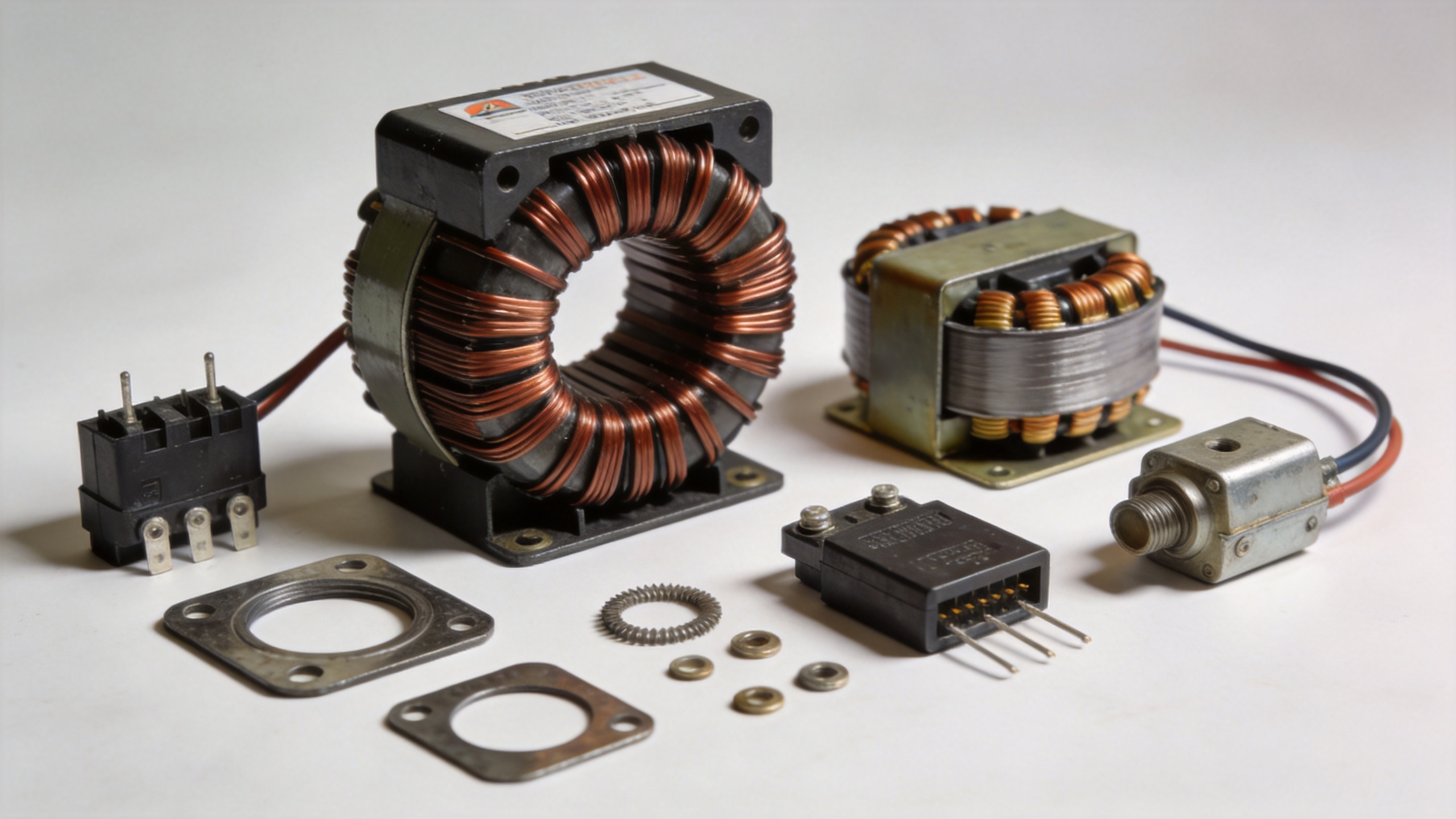
These are not edge-case problems. They account for the majority of AVR compatibility failures reported by distributors and maintenance engineers managing mixed-brand generator fleets.
Sourcing Considerations for B2B and Wholesale Buyers
For wholesale buyers and distributors sourcing generator voltage regulator components at volume, the sourcing process introduces additional selection considerations beyond the technical parameters themselves.
Suppliers who provide technical documentation upfront — wiring diagrams, compatibility charts, and voltage and phase specification tables — as part of the product listing or quotation process reduce the validation burden on the buyer's side. Documentation availability is a meaningful quality signal, not just a convenience. It indicates that the supplier understands the compatibility requirements of the product category they are selling.
Pre-shipment compatibility verification, where the supplier confirms the AVR model against the customer's specified generator configuration before order confirmation, is another differentiating capability for distribution applications where installation access is limited and returns are operationally disruptive.
KYGEN Power (kygenpower.com) specializes in generator control components including AVRs and governors for the wholesale and brand buyer market. Compatibility verification and technical documentation support are available as part of the B2B inquiry process, with AVR options covering major alternator configurations under the Populace and Doopser brands for buyers across Asia, Europe, and North America.
Final Checklist: Before You Order an AVR for Generator Distribution
Use the following checklist when specifying an automatic voltage regulator for generator distribution applications:
- Confirm alternator excitation type: self-excited, brushless PMG, or auxiliary winding
- Verify sensing voltage range matches alternator output — and confirm the circuit tap point
- Confirm phase configuration: single-phase sensing or three-phase
- Match AVR capacity to generator kVA, accounting for peak load demand including motor starting
- Check that output impedance and response and stability settings suit the distribution load profile
- Request wiring diagrams and compatibility documentation before finalizing the order
- For critical distribution installations, request pre-shipment compatibility confirmation from the supplier
Choosing the right automatic voltage regulator for generator distribution is fundamentally a specification discipline, not just a product selection exercise. The technical parameters are not complicated once you know which ones matter — the difficulty lies in knowing which questions to ask before the order is placed, and choosing a supplier that can answer them accurately.






