
 EN
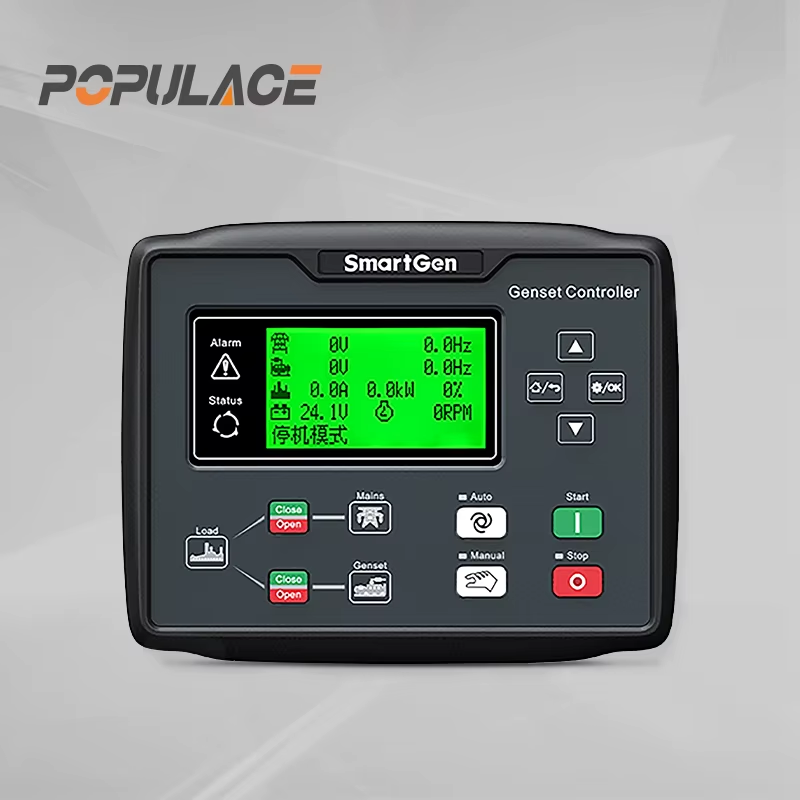
How to Choose a Generator Controller with Remote Monitoring Capabilities for Wholesale?
When you are sourcing generator controllers for wholesale distribution, whether for resale to service companies, OEM bundling, or fleet maintenance accounts, the buying decision involves more variables than most first-time buyers expect. Price and brand recognition attract attention early. But the question that usually determines downstream customer satisfaction is whether the controller's remote monitoring capabilities match the actual deployment scenarios those customers face.
From a procurement standpoint, sourcing generator controllers at scale means balancing unit price, minimum order quantities, lead time, and supplier reliability — not just the lowest quoted price. This guide walks through the selection criteria that experienced wholesale buyers apply when evaluating a generator controller with remote monitoring capability, and what to confirm before placing volume orders.
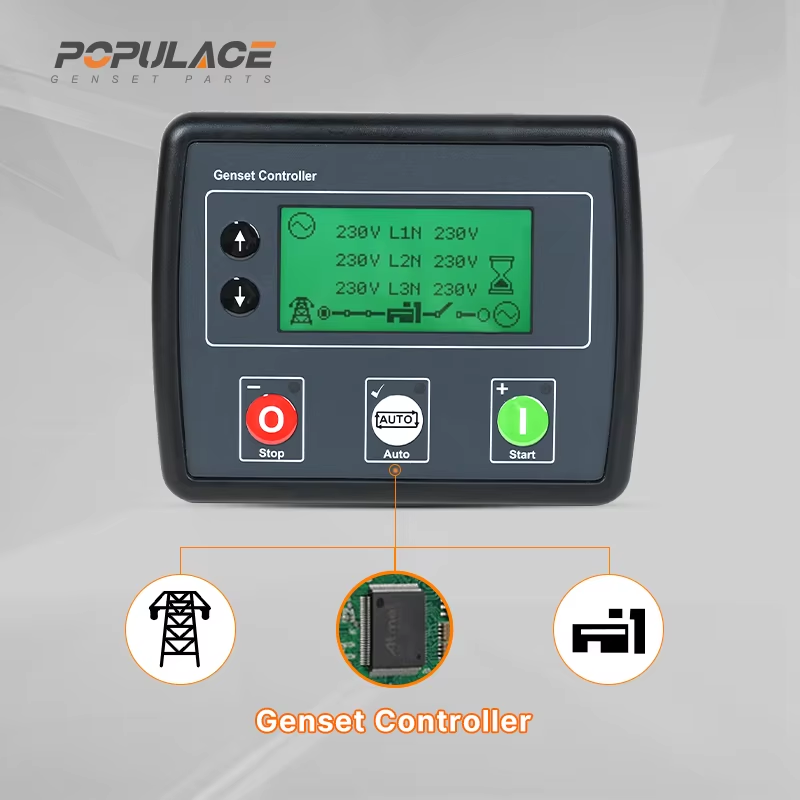 What Makes a Generator Controller "Remote-Monitoring Ready"?
A generator controller handles three core responsibilities: auto start/stop sequencing, real-time parameter monitoring (voltage, frequency, oil pressure, coolant temperature, load), and fault protection with configurable alarm outputs. When remote monitoring is part of the requirement, the controller needs dedicated communication capability. That is where the selection process becomes more specific.
Remote-monitoring-capable controllers typically support one or more of these communication interfaces:
- RS485 / Modbus RTU: Standard in industrial environments; allows integration with SCADA systems, building management platforms, and third-party telematics devices. Widely used in digital generator controller designs for industrial deployment.
- GSM / Cellular module: Built-in or external cellular connectivity for SMS alerts and remote web dashboard access — practical for unattended or off-grid sites.
- Wi-Fi / Ethernet: Less common in entry-level generator controller modules but increasingly available in higher-specification digital controller variants for fixed-site commercial applications.
Not every deployment needs all three. If your customers operate small commercial generator sets at fixed locations with existing network infrastructure, a Modbus RS485 interface with a local gateway may be fully sufficient. If they manage remote installations — telecom towers, rural substations, construction sites — a GSM-capable auto start generator controller is a more practical fit for unattended operation.
Key Selection Criteria for Wholesale Buyers
Communication Protocol Compatibility
Before evaluating any specific generator controller module, clarify which communication protocols matter for your customer base. Buyers serving industrial facility managers typically need Modbus TCP/IP or RS485 for SCADA integration. Buyers serving SME property managers or rental fleets more often prioritize cellular-based SMS alerting and cloud dashboard access over protocol-level integration.
A common ordering mistake with generator control panel controllers is specifying a model family by brand name alone and assuming the remote monitoring feature set is consistent across the line. In practice, a given model range frequently splits into a base variant (display and protection only) and a communications-enabled variant. Confirming the specific variant code before issuing a purchase order prevents receiving a unit without the remote monitoring capability the end customer requires.
Auto-Start Logic and Unattended Operation Support
An auto start generator controller is the operational foundation of any remote monitoring setup: if the unit cannot automatically start on mains failure and shut down on restoration, remote monitoring adds limited practical value. For wholesale sourcing, confirm whether the auto-start logic supports:
- Configurable start delay and warm-up timers
- Scheduled exercise runs with programmable intervals
- Mains failure detection sensitivity and restoration delay settings
These parameters determine compatibility with the grid conditions and utility reliability profiles your customers operate within. What works well for a stable grid in Europe may require different configuration thresholds for a market with frequent and variable utility interruptions. If your application runs at a stable load profile with consistent grid quality, standard auto-start timing settings will usually hold — if the grid quality varies significantly across customer sites, you would want to verify the controller's detection sensitivity is adjustable.
Digital Display Interface and User Experience
A digital generator controller with a clear, menu-driven display reduces installation time and the need for specialist training — both factors that affect total deployment cost for wholesale buyers whose customers include smaller service contractors. Remote monitoring adds value only when field technicians can also work with the local interface effectively during commissioning and maintenance.
Display quality and menu structure vary significantly in the mid-range controller market. Evaluating a sample unit for readability, menu depth, language options, and the availability of English-language wiring diagrams is worth the time — particularly for buyers distributing to markets where installation teams rely on clear visual interfaces rather than deep controller programming expertise.
Protection Functions and Alarm Configuration
Configurable protection thresholds are a baseline requirement for any generator control panel controller with remote monitoring capability: overvoltage, undervoltage, overfrequency, underfrequency, overcurrent, low oil pressure, and high coolant temperature at minimum. Beyond that, alarm log behavior and alert transmission method matter as much as the thresholds themselves — how alarms are recorded, how notifications are pushed remotely, and how a remote shutdown confirmation is handled all affect how useful the remote monitoring function is in practice.
Once you manage a parts inventory long enough, you stop asking "which controller has the most features?" and start asking "which controller allows the most consistent alarm configuration across different generator engine types?" That shift reflects the operational reality of fleet maintenance — standardization reduces training costs and commissioning errors regardless of the generator brand involved.
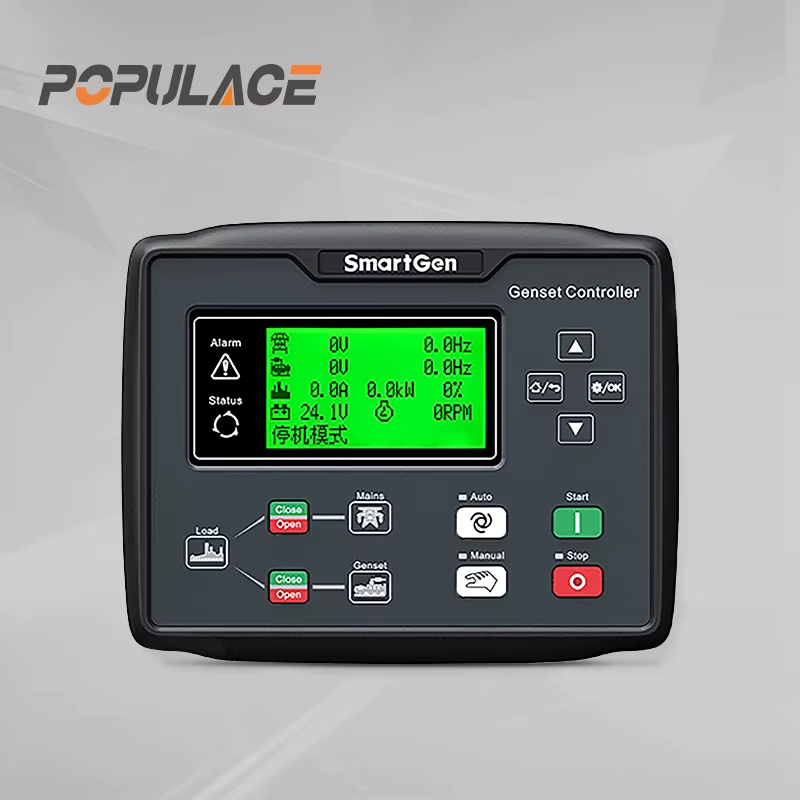
Additional Considerations for Volume Wholesale Sourcing
Generator Controller Module Compatibility Across Brands
Wholesale buyers managing distribution for multi-brand generator fleets face a specific challenge: a generator controller module optimized for one alternator configuration or engine type may not provide clean auto-start and monitoring behavior on a different brand's system. Compatibility documentation (not just a general compatibility claim) is a primary supplier evaluation criterion for distributors managing diverse fleet configurations.
The practical approach is to confirm the controller's verified compatibility range against the generator brands and models your key accounts actually operate, before committing to volume inventory. Requesting the compatibility chart by engine and alternator type before the quotation stage adds a few days to the process but prevents receiving units that require field modifications.
Supplier Documentation and Technical Support
When evaluating digital generator controller suppliers, request wiring diagrams, communication protocol documentation (including Modbus register maps where applicable), firmware version notes, and confirmation of the pre-order technical compatibility query process. For buyers distributing to international markets, where service teams in Asia, Europe, or North America commission units without direct factory support access, thorough English-language documentation is an operational requirement, not a preference.
Most buyers start with a focus on unit price. After one missed deadline or emergency substitution caused by a documentation gap or compatibility mismatch, lead time reliability and supplier technical responsiveness become the filters that drive supplier selection. The choice between a lower-priced option with limited documentation and a slightly higher-priced option with complete technical support is not purely a cost question — it is a total landed cost and downstream service risk question.
Wholesale Pricing Structure and MOQ Flexibility
Suppliers who accommodate flexible minimum order quantities, allowing trial orders before full-volume commitment, reduce the qualification cost for wholesale buyers evaluating a new product line. Consistent batch quality across repeat orders matters as much as the initial sample quality. Building a second smaller test order into the qualification process before committing to stock-depth inventory is a step experienced wholesale buyers have found justified by the reduction in downstream field complaints.
Summary Selection Checklist
Before finalizing a generator controller selection for wholesale sourcing, confirm the following:
- The specific variant code includes the communication module, not only the base display variant
- Supported protocols match your customer deployment scenarios (Modbus RS485, GSM, Ethernet)
- Auto-start logic supports configurable timers, exercise scheduling, and adjustable mains detection sensitivity
- Protection threshold configurability covers the grid and engine types in your target market
- Modbus register map or protocol documentation is available if SCADA integration is expected
- Sample unit display clarity and English documentation quality have been evaluated
- MOQ, lead time commitment, and batch consistency policy are confirmed with the supplier
- Compatibility documentation covers the specific generator brands your accounts operate
Are you sourcing a generator controller for a specific fleet type, or building a catalog range across multiple configurations? That distinction changes which of these criteria deserves the most attention — and which supplier conversations to prioritize first. The selection criteria that matter most for a single-brand commercial generator account differ from those for a multi-brand industrial fleet maintenance distributor, and understanding that difference before entering supplier negotiations is what separates a reliable wholesale sourcing process from one that depends on correcting mistakes after the first bulk order arrives.






