
 EN
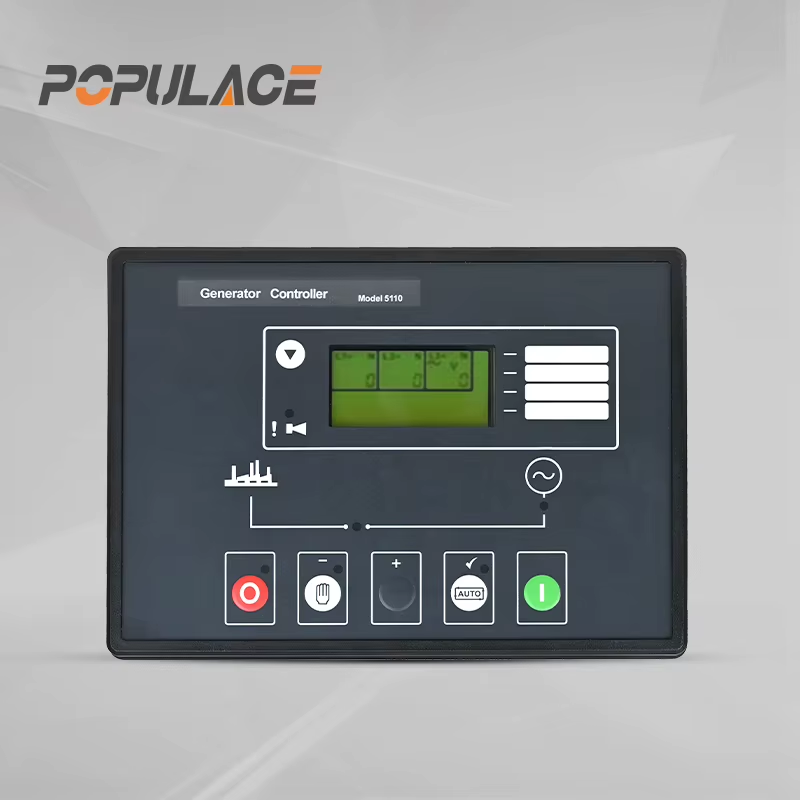
How to Become a Distributor of Deep Sea Generator Controllers?
Becoming a distributor of a deep sea generator controller is not simply a matter of adding control modules to a catalogue. Your customers will expect you to help them identify the right controller family, interpret a generator deep sea controller manual, and respond when a site needs support quickly. For a wholesaler, the opportunity is real, but the business works most reliably when technical discipline comes before stock volume.
From a procurement standpoint, controller distribution is a balance of product fit, stock discipline, documentation, and supplier reliability. The lowest purchase price matters, of course, but a returned or incorrectly specified module can erase that saving quickly.
Start with the distributor model you want to build
First decide whether your business will serve replacement buyers, genset assemblers, service companies, or project contractors. Each group buys a deep sea generator controller for a different reason. A service contractor may need a fast replacement for a failed panel. A genset builder may need a repeatable specification across several machine sizes. A contractor may need a controller that fits an automatic transfer switch controller arrangement.
That choice determines what you should stock, what questions your sales team must ask, and how much application support you need. It is usually better to start with a focused customer segment than to promise every controller model to every buyer.
Build technical capability before expanding inventory
A credible distributor needs more than part numbers. Create an intake form that captures the generator make and model, engine interface, alternator sensing arrangement, battery voltage, operating mode, mains requirement, and the customer’s existing module number. When the application includes utility changeover, ask how the automatic transfer switch controller is wired and what operating logic is required.
Keep model-specific references with every stocked line. Official support resources show that operator and software manuals are available for numerous controller families, including the DSE7420 MKII. A deep sea 7420 controller enquiry should therefore lead to a check of the exact revision, installation context, and required configuration—not an assumption that any similar-looking module will be interchangeable.
Make documentation part of your sales process
A generator deep sea controller manual is useful both before and after the sale. Before quoting, it helps a technical team confirm terminals, inputs, outputs, and operating scope. After delivery, it helps the installer commission the unit and gives your service desk a shared reference point. Store current manuals, configuration notes, and change records in a controlled folder rather than relying on individual staff members to locate them each time.
Choose a sensible opening range
New distributors often overstock. A stronger approach is to create a starter range around the applications you can support. For example, your opening mix might cover common manual/auto start modules, a limited number of mains-failure controllers, accessories needed for installation, and selected items for ATS-related applications. Add advanced synchronising or paralleling products only when you have a clear customer base and an escalation path for commissioning questions.
When customers ask for a dse genset controller, clarify whether they need basic engine monitoring, auto mains failure operation, remote communication, or load sharing. Those are different commercial conversations. The same is true for an automatic transfer switch controller: it should be specified around the switching equipment and operating sequence, not sold as a generic add-on.
Qualify suppliers and establish a support route
Supplier qualification should cover availability, traceability, packaging, batch consistency, warranty handling, technical response time, and export documentation. Ask how the supplier handles obsolete or superseded references. Ask what evidence accompanies a suspected fault. If your market includes installers, confirm whether configuration assistance is available and who owns the first response when a commissioned set does not behave as expected.
KYGEN Power focuses on generator parts such as controllers, AVRs, governors, and related components for wholesale and brand buyers. For distributors, a specialised generator-parts source can be valuable because the commercial discussion can include compatibility review and repeat-order consistency rather than a catalogue-only transaction. Still, assess each supplier against your own market, lead-time, and quality requirements.
Set up an inventory and quoting discipline
Separate fast-moving replacement references from project-specific stock. Set reorder points using actual customer demand, lead time, and the cost of a stock-out. Keep serial-number and revision information visible in your system. Once you manage a parts inventory long enough, you stop asking only which supplier has the lowest price and start asking whether the supplier can deliver consistent batches with dependable documentation.
- Use a technical checklist before confirming a deep sea generator controller quotation.
- Record the old module number, application, and any configuration constraints.
- Quote accessories and harnesses only after confirming the installation requirement.
- Define a process for unopened returns, installed returns, and suspected faults.
- Review slow-moving models quarterly and avoid tying cash up in unsupported variants.
Train sales staff to sell the right level of support
Sales staff do not need to become commissioning engineers, but they should know when to pause and escalate. A customer asking for a dse genset controller may be replacing a simple controller, while another may be changing a panel with mains sensing and transfer logic. The difference affects the quotation, delivery expectations, and support workload.
Give every salesperson a short decision tree: identify the existing controller, define the generator and mains application, collect photos of the panel and wiring labels where appropriate, then have a technical reviewer confirm compatibility. If the application runs under stable conditions, that process may be quick. If the load profile or switching arrangement is unusual, verify the details before promising a replacement.
Market your distributor capability, not just product availability
Your marketing should show customers what makes ordering safer through you: model identification help, clear documentation handling, reliable stock communication, and a defined after-sales path. Publish practical guidance around topics such as how to read a generator deep sea controller manual, when a deep sea 7420 controller is suitable, and what information is needed before selecting an automatic transfer switch controller.
Do not claim that one controller or supplier is right for every genset. The right choice depends on the engine, alternator, site logic, customer budget, and required service level. That qualified approach is more useful to serious buyers and reduces avoidable returns.
Frequently asked questions
Do I need technical staff to distribute a deep sea generator controller?
You need access to technical capability, whether that is in-house or through a documented supplier escalation route. At minimum, your team should collect correct application information and avoid confirming compatibility without review.
How should I handle a deep sea 7420 controller enquiry?
Confirm the exact model and revision, the generator and mains application, the existing panel wiring, and the required configuration. Use the relevant manual and approved support route before finalising the order.
Can I sell an automatic transfer switch controller with every genset controller?
Not automatically. Confirm the switching equipment, sensing requirements, operating sequence, and the responsibilities of the panel builder or installer before making a combined recommendation.
Conclusion
To become a dependable distributor of deep sea generator controllers, begin with a defined customer segment, build a model-specific documentation process, qualify suppliers carefully, and stock only the range you can support. The distributor who makes compatibility and after-sales readiness routine will be better positioned for repeat business than one who competes on price alone.






