
 EN
How to Become a Distributor of AS540 AVR for Alternator Manufacturers?
Becoming a credible as540 avr distributor is less about adding another regulator to a catalogue and more about building a repeatable compatibility-and-support process. Buyers often begin with a part number, a photo, or an urgent alternator repair request. A distributor has to turn that incomplete request into a technically defensible supply decision without implying an OEM relationship that has not been verified.
The AS540 is commonly identified in public technical material as an analogue, two-phase-sensing, self-excited automatic voltage regulator. Public manufacturer information also describes an optional auxiliary-winding interface used to support motor starting and sustained short-circuit current. That description is useful for identification, but it is not a substitute for checking the alternator model, wiring document, revision, and application conditions for every order.
Start with the right market fit
An as540 avr distribution program is most suitable where customers maintain or manufacture brushless alternators, generator sets, service panels, or replacement-parts inventories. Typical buyers include alternator assemblers, genset service firms, rental fleets, electrical repair shops, and regional parts wholesalers. The opportunity is strongest when a buyer needs continuity: not merely one regulator today, but a source that can document a repeatable replacement path and support later orders.
From a procurement standpoint, the lowest quotation is only the starting point. The real cost appears later if a shipment arrives with the wrong sensing arrangement, connector layout, or documentation. Experienced distributors therefore sell a verification process alongside the part. This matters especially for enquiries that use names such as avk as540; a brand reference alone does not establish that a particular unit is genuine, authorized, current, or compatible.
Identify the regulator before you quote it
Build an intake sheet for every as540 automatic voltage regulator enquiry. Ask for clear images of both sides of the existing regulator, the alternator nameplate, the complete terminal area, the generator rating, system voltage and frequency, and the application load. Also ask whether the alternator uses self-excitation only or an auxiliary winding, whether parallel operation is involved, and whether there has been a previous retrofit.
- Record the complete printed part number and any revision or date code.
- Capture terminal markings, plug type, mounting-hole pattern, and board dimensions.
- Confirm sensing input, excitation output, and auxiliary-winding connections against approved documentation.
- Separate “looks similar” from “verified replacement” in the quotation record.
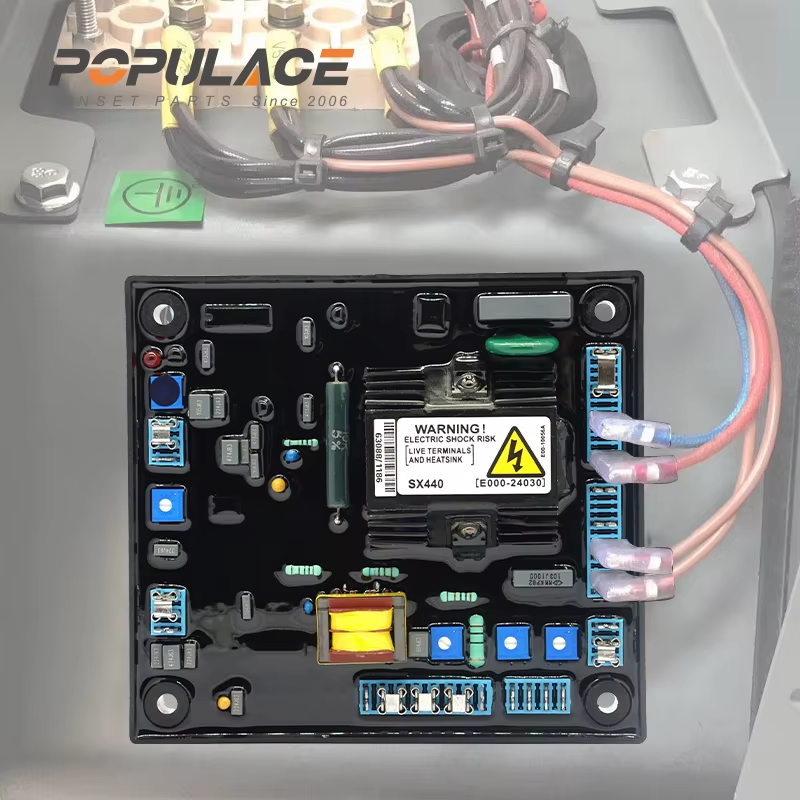
Early in sourcing, many buyers focus on voltage and frequency. After a failed installation, the focus usually shifts to sensing inputs, field wiring, terminal identity, and interface details. That is why a photo match should not be treated as the final compatibility decision for an as540 avr.
Make compatibility a documented gate
Public documentation associates the AS540 family with particular alternator ranges, but distributors should not turn that general information into a blanket fitment claim. Use the relevant as540 voltage regulator manual, the alternator documentation, and the customer’s configuration details together. Where the documentation is unavailable or inconsistent, quote the item as subject to technical confirmation rather than promising direct interchangeability.
A practical approval file should contain the customer’s nameplate image, existing-unit photos, requested quantity, wiring reference, the supplier’s datasheet or drawing, and the reviewer’s compatibility conclusion. For a recurring OEM or alternator-manufacturer account, add an approved bill of materials and a revision-control rule. This makes the next order faster while preserving a traceable decision trail.
Qualify suppliers beyond the sample price
A distributor needs evidence that the supply chain can deliver the same result after the first order. Ask a prospective supplier to identify its manufacturing or sourcing role, provide the exact part identification used on the packing and documents, explain batch traceability, and state how it handles nonconforming units. Do not present yourself as an authorized brand distributor unless you have written authorization that supports that statement.
Evaluate suppliers across five areas: technical response quality, sample consistency, documentation control, lead-time reliability, and corrective-action handling. A supplier that can answer a clear wiring or configuration question is generally more useful than one that only repeats a generic sales description. If you need a compatible or aftermarket option, label it accurately and avoid using another company’s branding in a way that could confuse the end buyer.
Test samples before inventory commitment
Sample testing should reflect the customer’s actual alternator and load profile where possible. At minimum, record visual inspection, mounting fit, connection verification, controlled commissioning, voltage adjustment response, and stability observations. For configurations using the optional winding, include the applicable connection check in the test plan. A passed bench check is helpful, but it does not prove fit across every alternator variation.
Use a simple acceptance record: sample ID, incoming inspection result, test configuration, technician notes, deviations, and final disposition. That record becomes valuable when you expand an as540 avr line from samples to stocked batches. It also helps distinguish a wiring issue from a potential product issue if a field complaint appears later.
Plan inventory around supportable variants
Do not stock every visually similar regulator. Start with variants that have recurring demand, a confirmed documentation set, and a realistic replenishment route. Maintain a small safety stock only after samples and early orders establish a stable specification. Once you manage inventory long enough, you stop asking which supplier has the lowest price and start asking which one can provide consistent batch quality, documentation, and reliable delivery.
Keep cartons, labels, incoming inspection records, and internal SKU names aligned. Your internal SKU should distinguish verified configuration details rather than relying only on a broad search term such as as540 automatic voltage regulator. This reduces picking errors and helps sales staff avoid overpromising when similar requests arrive.
Provide wiring support without guessing
AS540 avr wiring support is a distribution capability, not a diagram copied from an unrelated installation. Provide the correct manual or supplier-approved wiring reference for the verified configuration, explain that work must be performed by qualified personnel, and require the customer to confirm terminal labels before energizing the system. Do not advise a customer to move leads based only on wire colour or a low-resolution photograph.
For each technical request, log the document revision supplied, the alternator information reviewed, the question asked, and the response provided. If the required wiring reference is missing, pause the guidance and obtain it. This protects the buyer, the service technician, and your distribution reputation.
Position the offer honestly
A strong distributor message is simple: you help buyers identify the required as540 avr, verify the evidence available for their alternator configuration, arrange samples, and support documented ordering. State clearly whether you are offering an authorized product, an independently sourced replacement, or a compatibility option—and only make the first claim when it is supported by written evidence.
That approach may feel slower than immediately quoting every request. In practice, it creates fewer returns, clearer technical conversations, and a distributor business that alternator manufacturers can use again with confidence.






