
 EN
DSE7320 MKII: AMF Controller Setup and Wiring
Having configured generator control systems across a range of single-phase diesel and gas genset installations, one pattern emerges consistently: the difference between a clean commissioning and a frustrating one usually comes down to understanding the controller's wiring logic before touching a terminal. The dse7320 MKII from Deep Sea Electronics is an AMF module that rewards preparation — and penalizes the assumption that all AMF controllers work the same way.
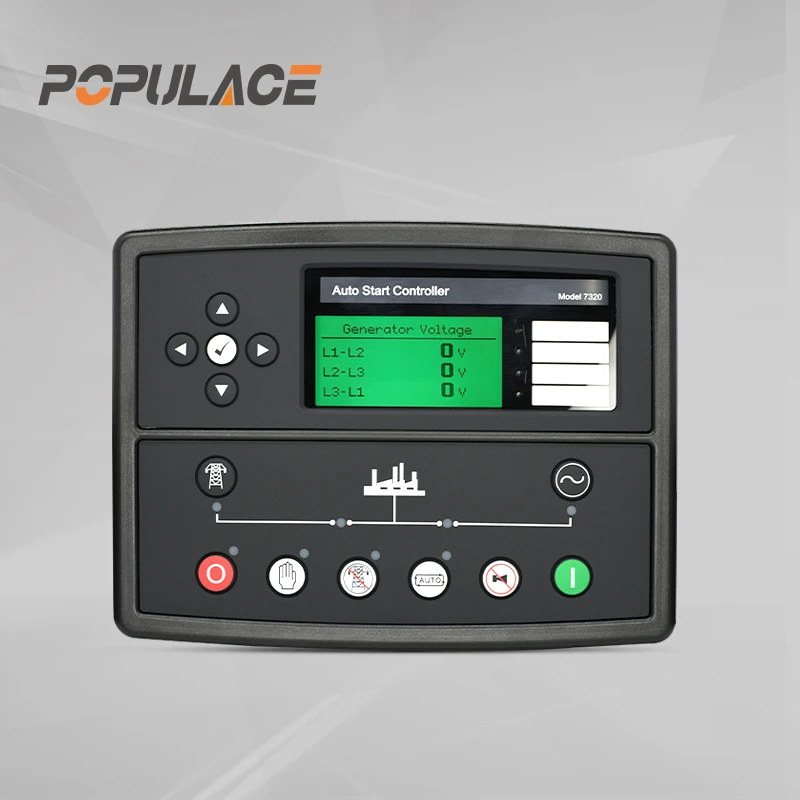
What the DSE7320 MKII Controls and Why It Matters
The dse7320 MKII is an Auto Mains (Utility) Failure control module designed for single diesel or gas genset applications. Its core function: monitor the incoming mains supply, detect a failure condition, automatically start the generator, control the generator changeover switch to transfer load, and return to mains when utility power recovers.
The distinction between the DSE7320 and its sibling the DSE7310 is worth understanding before specifying either. The DSE7310 handles auto-start logic competently, but it lacks direct mains utility sensing. The dse7320 adds that sensing layer (voltage, frequency, and phase rotation monitoring on the mains side), which is what makes it a proper AMF controller rather than a timed auto-start unit. If the application requires the controller to distinguish between a genuine mains outage and a brief voltage dip, that difference matters.
Deep Sea Electronics' 7000 series designation also matters here: the dse7320 uses True RMS voltage measurement rather than averaging methods. For sites supplying variable-frequency drives, UPS systems, or other non-linear loads, averaging measurement produces inaccurate voltage readings under harmonic-rich conditions. True RMS does not have that limitation — a practical advantage in industrial and commercial installations where load character is rarely purely resistive.
Wiring the DSE7320 MKII: Setup Sequence for First-Time Commissioning
Before connecting any terminals, note the physical specs: the dse7320 MKII installation documentation specifies conductor sizes from 13 AWG to 20 AWG, with module external dimensions of approximately 245 mm × 184 mm × 51 mm. Verify these clearances against your panel layout before cutting the mounting aperture. Then follow this commissioning sequence:
- DC power supply first. Connect the module's battery terminals (8–35 V DC range) before any other wiring. Confirm the module powers on and displays correctly before connecting engine or mains terminals.
- Mains sensing inputs. Wire the mains voltage sensing conductors to the designated mains sensing terminals. The dse7320 uses these continuously to monitor voltage, frequency, and where applicable, phase rotation. Confirm polarity before energizing — a reversed phase on mains sensing causes the module to misread a healthy supply as failed, triggering unnecessary start sequences.
- Generator output sensing. Connect generator voltage sensing from the generator bus. These feed the True RMS measurement circuits driving the front-panel metering display and the module's generator protection functions.
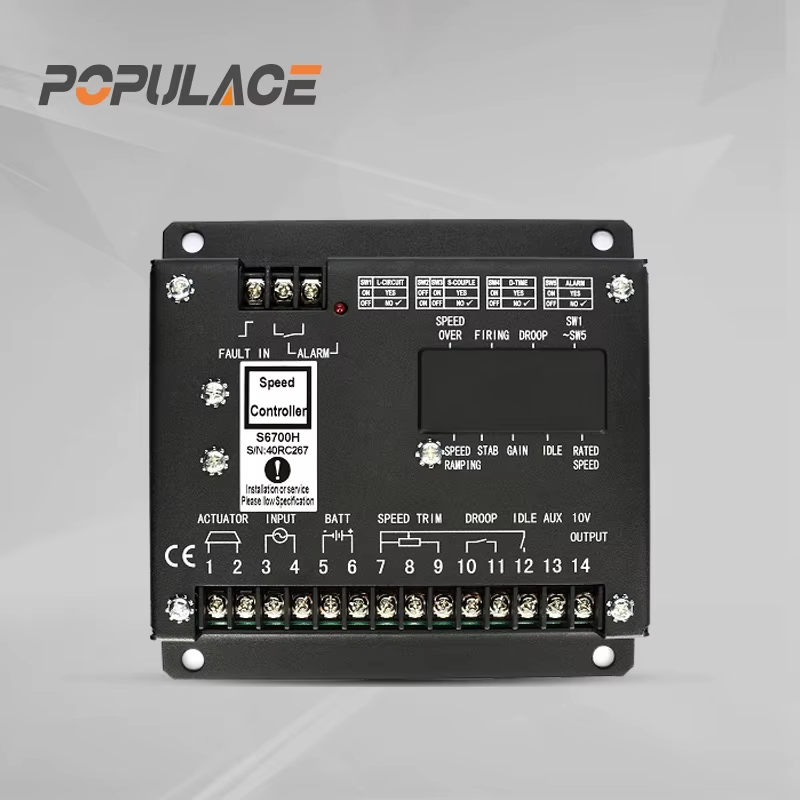
- Engine start and stop outputs. These interface with the engine's start relay and fuel solenoid. One clarification worth making early: the governor motor connection — on gensets using an electronic speed governor — interfaces through the engine's own governor controller, not directly through the DSE7320's output terminals. The dse7320 sends a start signal and monitors engine run status; it does not drive the governor motor directly. Confirm the engine manufacturer's wiring diagram before assuming a direct connection.
- Generator changeover switch outputs. The dse7320 provides relay or open-collector outputs to control the generator changeover switch — typically wired to the mains contactor coil and generator contactor coil circuits. Observe the coil voltage and polarity specifications of your ATS hardware; mismatches here are a common source of contactors that fail to pick up or drop out correctly.
- Configuration via front panel editor. With the module in STOP mode and the engine at rest, enter the configuration menu. Minimum parameters to confirm: start delay, transfer delay, return-to-mains delay, and the under/overvoltage thresholds for both mains and generator sensing. For most standard AMF applications, the factory defaults are reasonable starting points — confirm them against your project specification before commissioning.
A note on centrifugal governor applications: if the genset uses a centrifugal governor on a mechanically governed engine rather than an electronic speed controller, the dse7320 interface is simpler. The module monitors the engine's speed signal or oil pressure switch to confirm run condition, then signals the changeover. The centrifugal governor handles its own speed regulation independently — no additional configuration in the DSE7320 is required for that function.
DSE7320 MKII vs. SmartGen HGM Series: Selection Comparison
For procurement teams and engineers comparing the dse7320 MKII against the SmartGen HGM series — particularly the HGM6120N or HGM7220 — the decision typically involves three considerations: measurement accuracy, alarm output flexibility, and sourcing channel preference.
| Specification | DSE7320 MKII | SmartGen HGM6120N |
|---|---|---|
| AMF function | Yes — full mains utility sensing | Yes — standard AMF |
| Voltage measurement method | True RMS | Averaging |
| CAN bus (J1939) | Yes | Yes |
| Configurable I/O flexibility | Higher — more configurable alarm outputs | Standard — adequate for typical installs |
| Typical primary market | Europe, North America | Asia, cost-sensitive markets |
| Documentation availability | Extensive — full manuals from DSE | Good for standard configurations |
The SmartGen HGM6120N is a reliable choice for standard AMF applications where budget is the primary constraint and the load profile is predictable. The dse7320 MKII is the clearer specification when True RMS accuracy is required, when the project involves more extensive alarm mapping, or when the downstream customer or project specification explicitly calls for Deep Sea Electronics equipment. Neither is universally superior — the application context and the buying channel both factor into the final call.
Sourcing the DSE7320 MKII: OEM and Compatible Options
For system integrators sourcing the dse7320 at volume, compatible module options from generator parts specialists can reduce lead times compared to the OEM channel. The POPULACE DSE7320 MKII AMF Generator Control Module is one such option, available through international B2B channels serving Asia, Europe, and North America.
If the project scope also includes simpler AMF applications — secondary generators, smaller standby units — the DSE4520 MKII Auto Mains Failure Control Module covers single-genset AMF functions in a more compact form factor. Having both the dse7320 and DSE4520 available from the same supplier simplifies procurement coordination on multi-unit projects.
When evaluating any sourcing channel for the dse7320, confirm that the supplier can provide the full documentation package — installation instructions, wiring diagram, and configuration manual. Controllers received without documentation create immediate commissioning delays on-site. Pre-sales technical support for confirming governor interface compatibility or ATS contactor coil voltage matching is worth using before placing a volume order.
Key Installation Reminders
- Pre-configure the dse7320 on the bench before panel installation. The dse7320 MKII's configuration menu is accessible in STOP mode with no engine running. Navigating the configuration menu with live mains present is inefficient and introduces unnecessary risk.
- Label all terminal connections before energizing — the DSE7320's terminal layout is logical, but unlabeled cables become diagnostic problems during any post-commissioning fault investigation.
- Test the full AMF sequence manually before enabling automatic mode: manually start the generator, confirm the generator changeover switch transfers correctly, then simulate a mains failure to validate the complete automatic sequence.
- For electronically governed engines, verify the governor motor interface requirements with the engine supplier before finalizing the wiring schematic — assumptions about direct DSE7320 output connections to governor hardware are a frequent source of commissioning faults.
The dse7320 MKII's front-panel configuration editor handles most standard parameter settings without external software, which is practical on sites where laptop access to the panel is restricted. More advanced configurations — load shedding sequences, maintenance alert thresholds, input/output label customization — require the PC configuration software available from Deep Sea Electronics.






