
 EN
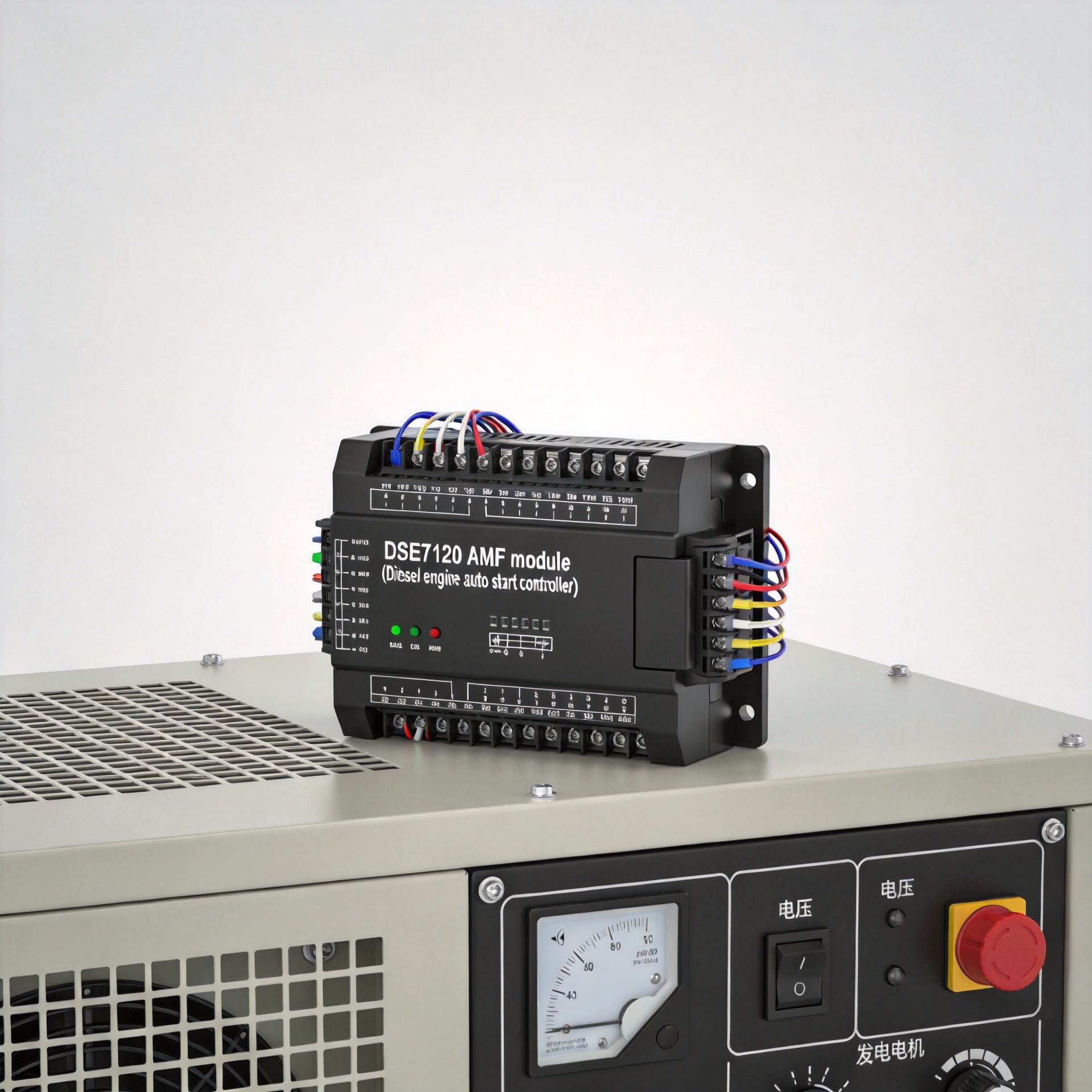
DSE7120 AMF Module: Features and Wiring Overview
Selecting the right AMF controller for a diesel generator installation requires understanding how the module integrates with the engine's fuel and start circuits, how it handles the mains transfer sequence, and whether its configuration options match the site's requirements. The dse7120 is a purpose-built Auto Mains Failure Control Module for single diesel or gas generator sets, offering a well-documented feature set for AMF and ATS applications. This overview covers the module's functions, wiring essentials, and key selection considerations versus the SmartGen HGM series.
What Is the DSE7120 AMF Module?
The DSE7120 comes from Deep Sea Electronics (DSE), a UK-based manufacturer with broad market presence in standby power applications across Europe, North America, the Middle East, and Southeast Asia. The 7000 series targets AMF (Automatic Mains Failure) and ATS (Automatic Transfer Switch) applications. The dse7120 sits within this family as the module responsible for monitoring the mains utility supply and automatically controlling generator start and stop sequences when utility power is lost or restored.
In practice, the DSE7120 functions as the decision layer between the mains supply, the generator, and the load. When utility voltage drops outside configured thresholds, the module initiates the automatic start sequence for the connected engine. Once the generator reaches stable voltage and frequency, it signals the ATS contactor to transfer the load. When utility recovers, the module manages the retransfer and cool-down shutdown. This is the core diesel engine auto start controller function the DSE7120 delivers, using a configurable icon-based interface backed by an ARM microprocessor.
Key Features of the DSE7120 MKII
- ARM Microprocessor Core: Provides reliable timing of the AMF sequence and real-time engine parameter processing.
- 132 × 64 Pixel LCD Display: Icon-based screen gives operators a clear view of generator status, mains voltage, output voltage, and active alarms without external tools.
- True RMS Monitoring: Measures True RMS voltage, current, and power — important when loads include UPS systems or variable speed drives. This accuracy also supports reliable automatic excitation control feedback in complex installations.
- USB Connectivity: Front-panel USB port allows configuration uploads and firmware updates using DSE's PC software.
- Configurable I/O: Configurable digital inputs and outputs support integration with external alarm systems, remote start signals, and auxiliary load management relays.
- Engine Protection: Low oil pressure, high coolant temperature, over/under-speed, and over/under-voltage protection for both mains and generator output.
- Five-Key Menu Navigation: Field-adjustable timers, voltage thresholds, and protection setpoints without a PC.
Physical Specifications: The dse7120 MKII measures 240 mm × 181 mm × 42 mm, panel cutout 220 mm × 160 mm, weight 0.82 kg. Minimum supply voltage is 8V DC continuous during cranking — verify battery health on older installations.
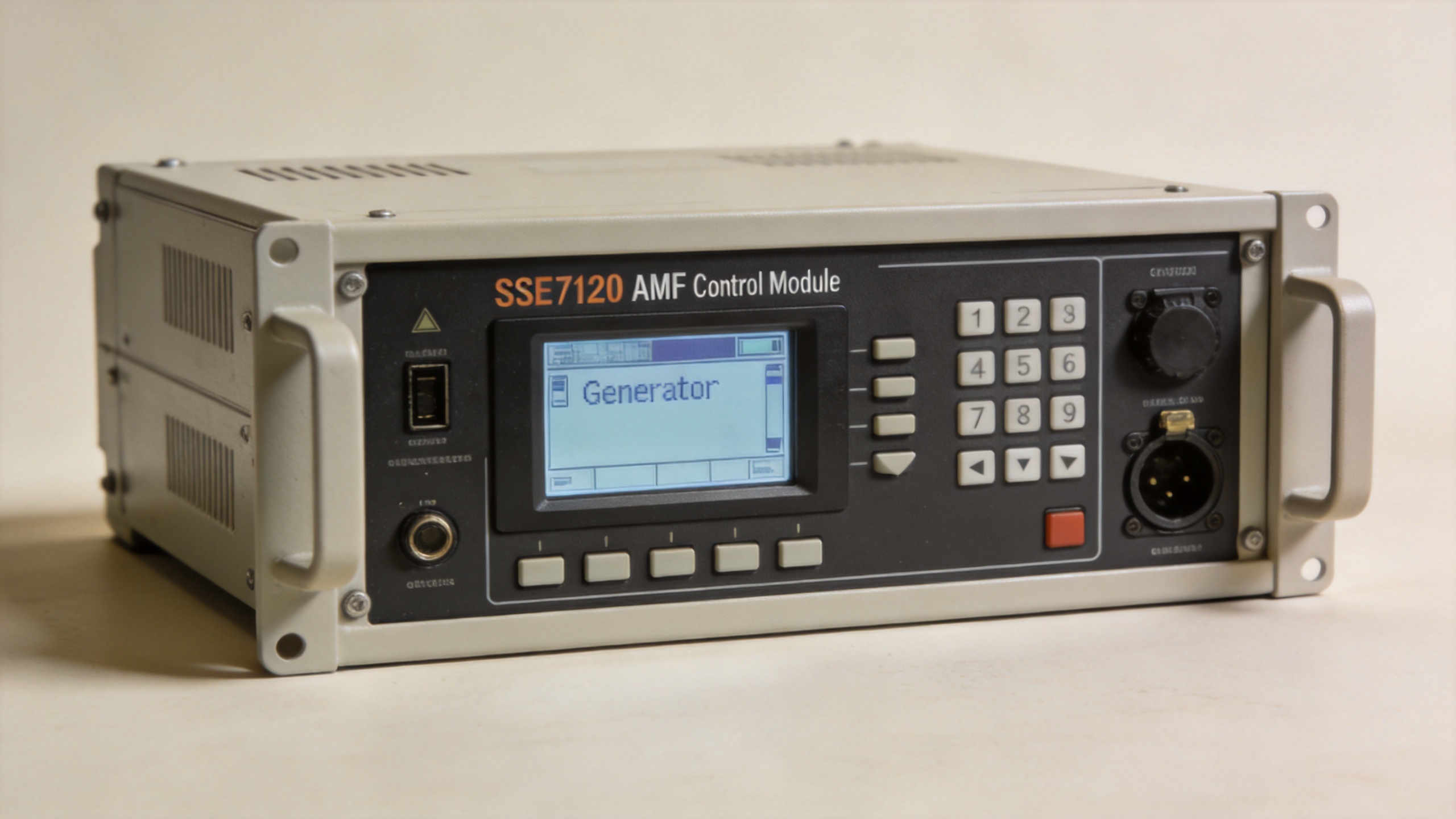
AMF Control Sequence
The DSE7120 follows a defined, configurable timing logic for the AMF sequence:
- Mains Monitoring: Continuously monitors utility voltage and frequency. When voltage falls below the loss-of-mains threshold, the loss-of-mains delay timer starts.
- Generator Start: After the delay expires, the dse7120 issues pre-heat, fuel enable, and start signals in sequence, cranking until engine-running confirmation is received via speed or oil pressure.
- Load Transfer: Once generator output is within configured voltage and frequency acceptance windows, the module signals the ATS contactor to transfer load. A settling delay prevents premature transfer.
- Return-to-Mains: When utility recovers and remains stable for the return delay, the module retransfers load and initiates the cool-down run before stopping the engine.
These timer values — loss-of-mains delay, crank time, transfer delay, return delay, and cool-down — are all user-configurable, making the dse7120 applicable across diverse building types, utility network conditions, and generator sizes.
DSE7120 Wiring: Key Connections
For system integrators and installation teams, the wiring of the DSE7120 covers four main connection groups:
DC Supply
Connect the 12V or 24V DC battery to the module's battery terminals. Supply must stay above 8V during cranking. Undersized cables or a weak battery bank can cause erratic behavior or false alarms. Include a dedicated fuse and verify battery condition before troubleshooting DSE7120 startup issues.
Mains and Generator Sensing
Mains sensing connects to the utility side of the ATS; generator sensing to the alternator output. A mismatch between configured nominal voltage and actual utility voltage causes nuisance trips. Configure thresholds based on real site measurements. Incorrect sensing wiring or mismatched transformer ratios on the generator side will produce false voltage error reports even when the alternator output is normal.
Engine Control Outputs
The DSE7120 provides relay outputs for fuel solenoid, starter motor, and stop functions. If the engine uses a Cummins-style interface — as is common alongside a cummins powercom controller configuration — verify fuel enable logic (energize-to-run vs. energize-to-stop) matches the solenoid type. Swapping these connections is a well-documented source of start failures during commissioning.
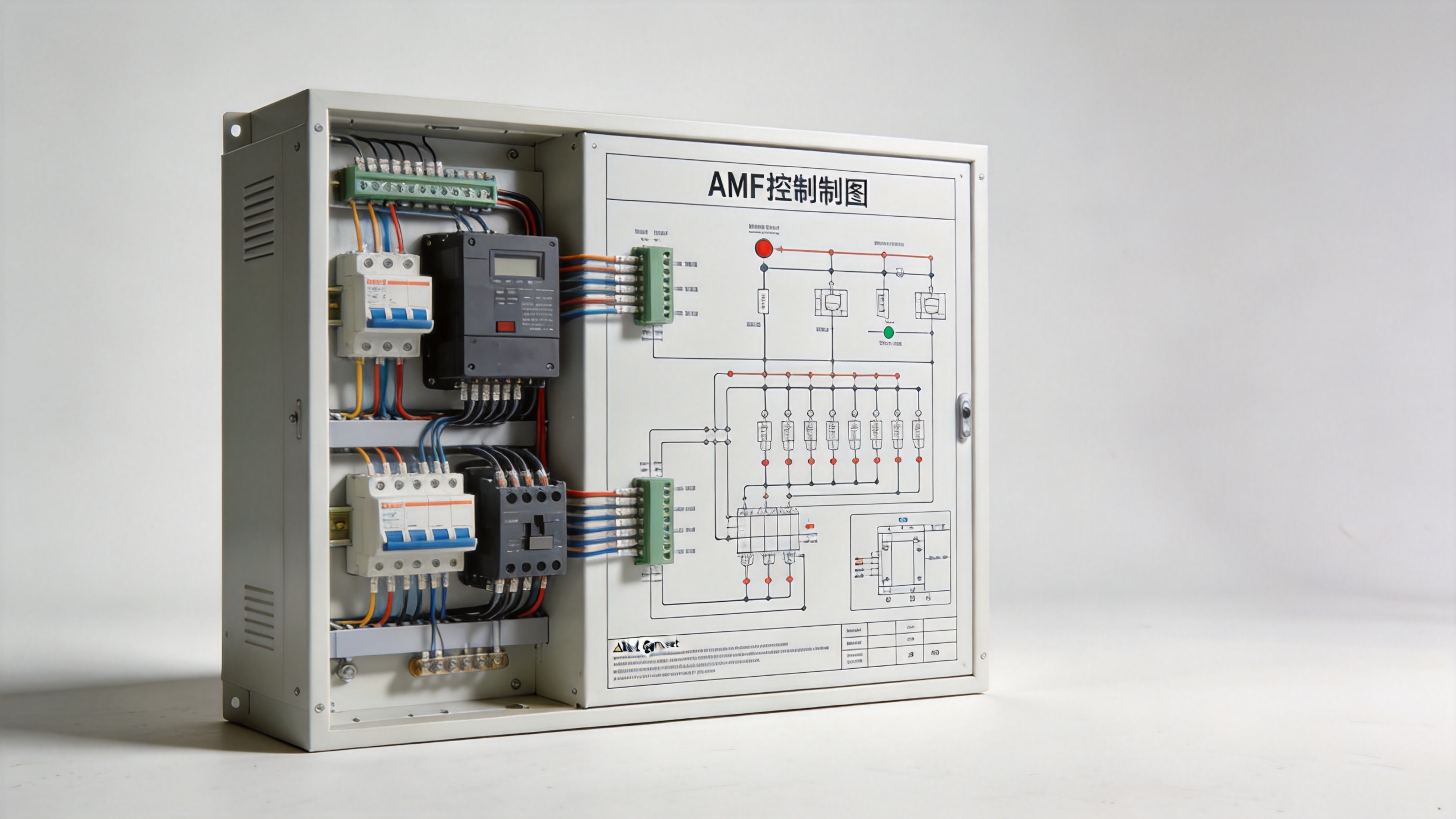
DSE7120 vs SmartGen HGM Series
Both the DSE7120 and SmartGen's HGM series (HGM6120, HGM7120) provide AMF and ATS control for single-engine generator sets. The practical selection differences are:
- Documentation: DSE provides comprehensive English datasheets, operator manuals, and PC configuration software. SmartGen documentation quality varies; DSE's English resources are generally more complete for international commissioning teams.
- Price and Availability: SmartGen HGM controllers are widely available through Chinese OEMs at lower price points. DSE carries a higher per-unit cost but is preferred by European and North American customers maintaining DSE-based infrastructure.
- Replacement Continuity: The DSE7120 is now discontinued; its replacement is the DSE7320 MKII. SmartGen's HGM series remains in active production — an important distinction for long-term service planning.
Product Status and Available Alternatives
The DSE7120 is confirmed obsolete by Deep Sea Electronics. The DSE7120-01 is no longer available; orders are fulfilled with the DSE7320-33 replacement. Fleet managers with installed dse7120 units should plan replacements around the DSE7320 MKII's updated form factor and I/O specification.
KYGEN Power's Populace product range includes two related AMF controllers currently in stock:
- The DSE4520 MKII Auto Mains Failure Control Module AMF Generator Controller DSE4520 — AMF functionality at a lower feature tier, suited to simpler single-generator installations.
- The POPULACE DSE7320 MKII AMF Generator Control Module — the current-generation DSE7120 replacement with updated display and expanded I/O, recommended for new installations and direct fleet replacements.
Pre-sales technical support for wiring compatibility verification is available through KYGEN Power's inquiry channel at kygenpower.com.
Summary
The DSE7120 is a well-understood AMF module with a clear feature set, documented wiring interface, and configurable logic that covers the core requirements for single-generator diesel engine auto start controller applications. For commissioning engineers, the DC supply integrity and AMF sequence timing are the most common field troubleshooting starting points. With the dse7120 now discontinued, the DSE7320 MKII (available through KYGEN Power's Populace range) is the recommended path forward for new deployments and fleet replacements requiring DSE-platform continuity.






