Detailed Product Description
Current transformers occupy a quiet but critical position in every generator control panel. They step down the high primary current flowing through the main conductors to a standardized 5A or 1A signal that meters, protection relays, and controllers can safely process. The LMK BH/SDH-0.66 series is built around this function, using a plastic-case busbar design that has become the standard form factor in low-voltage switchgear across many markets .
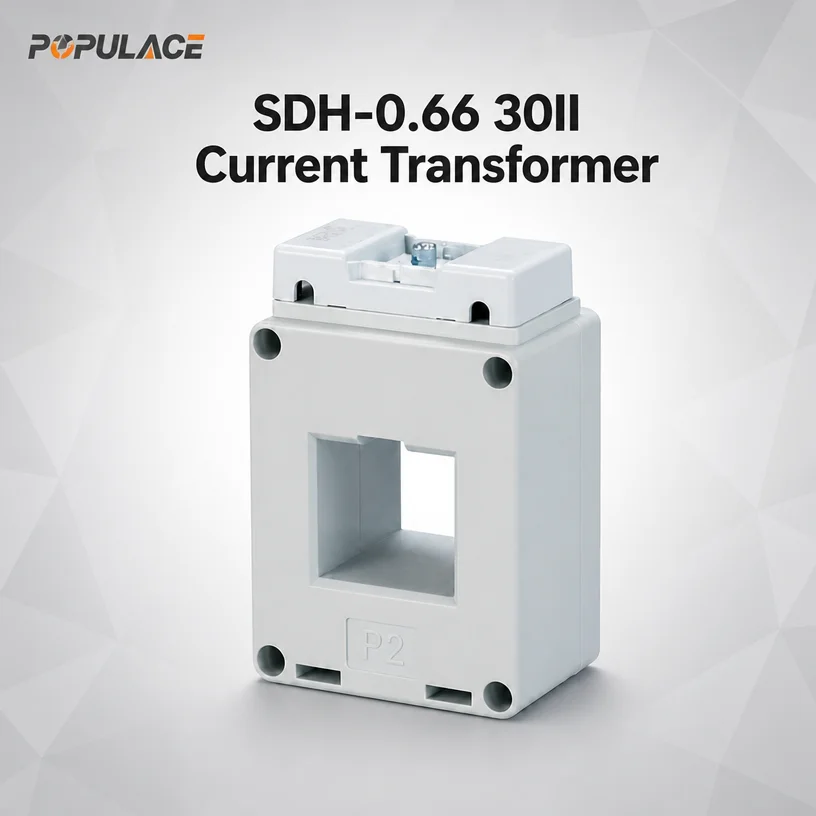
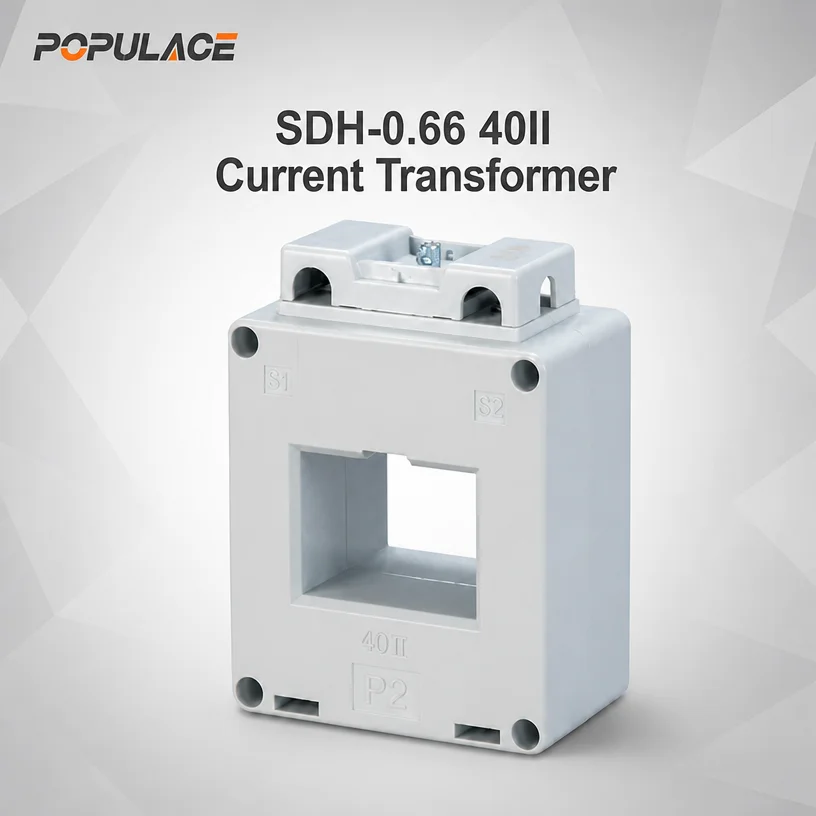
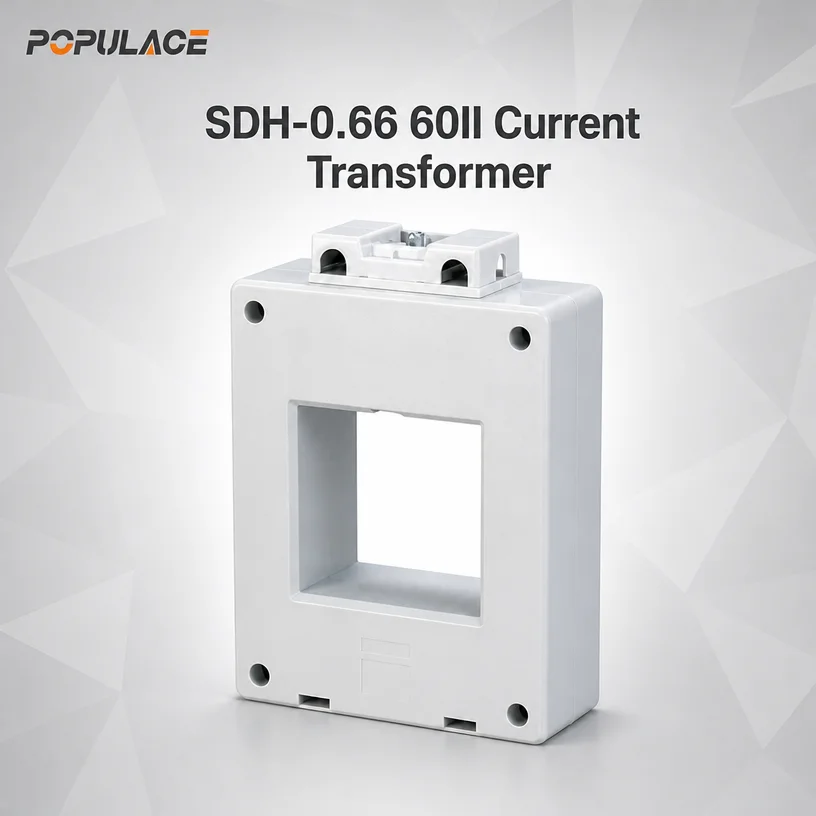
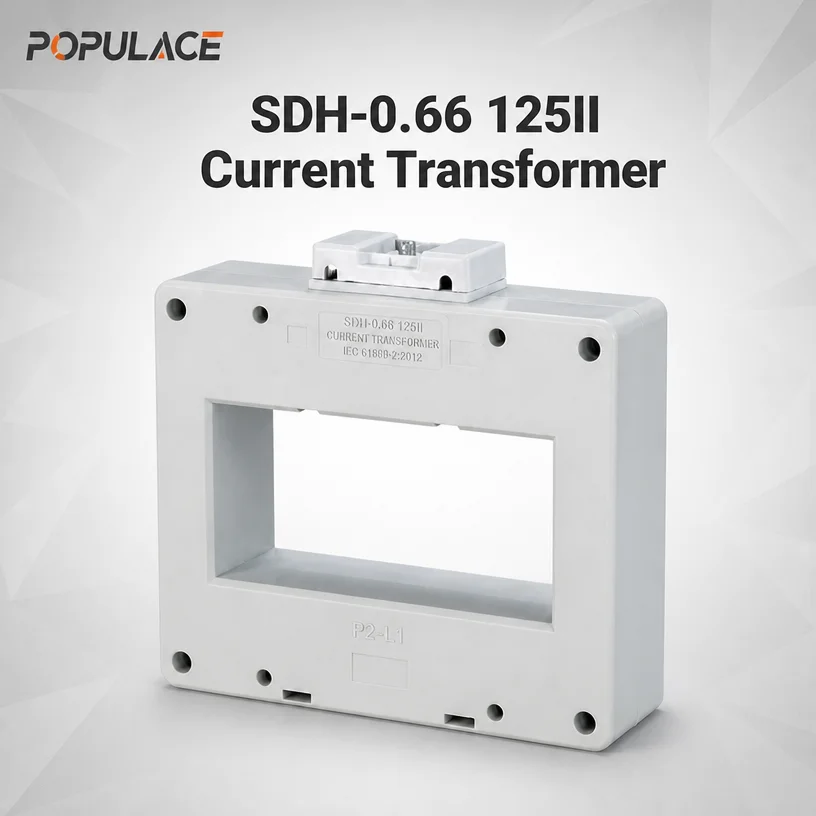
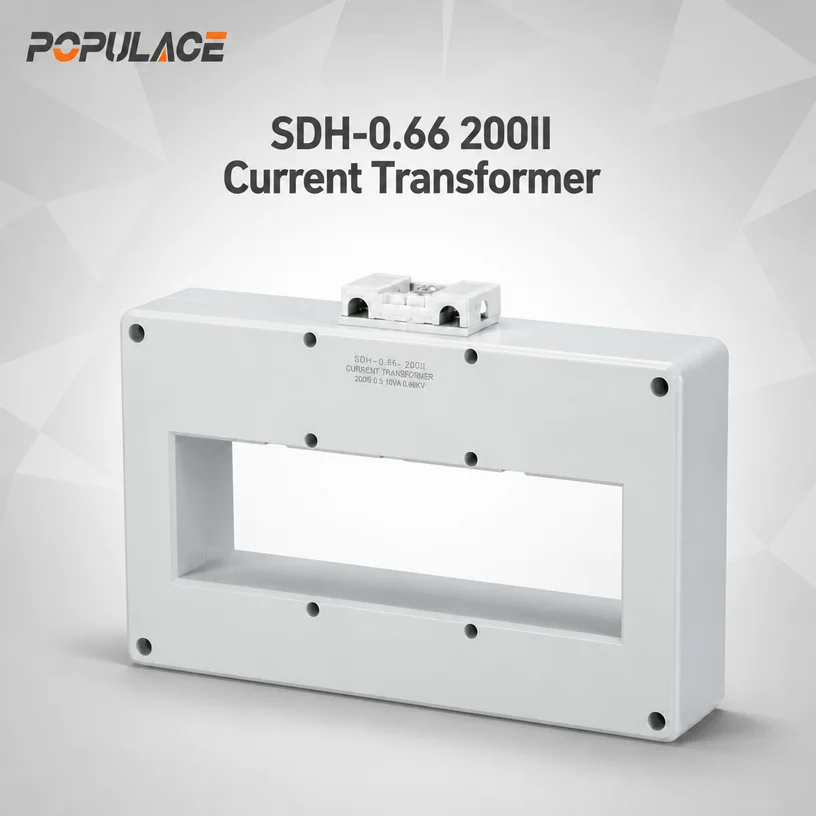
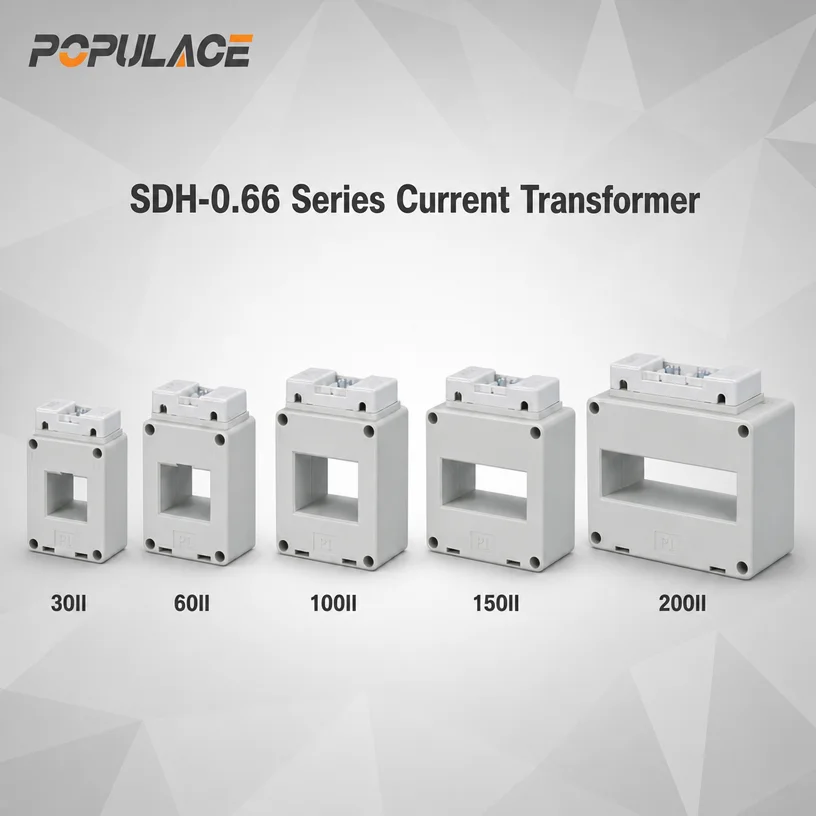
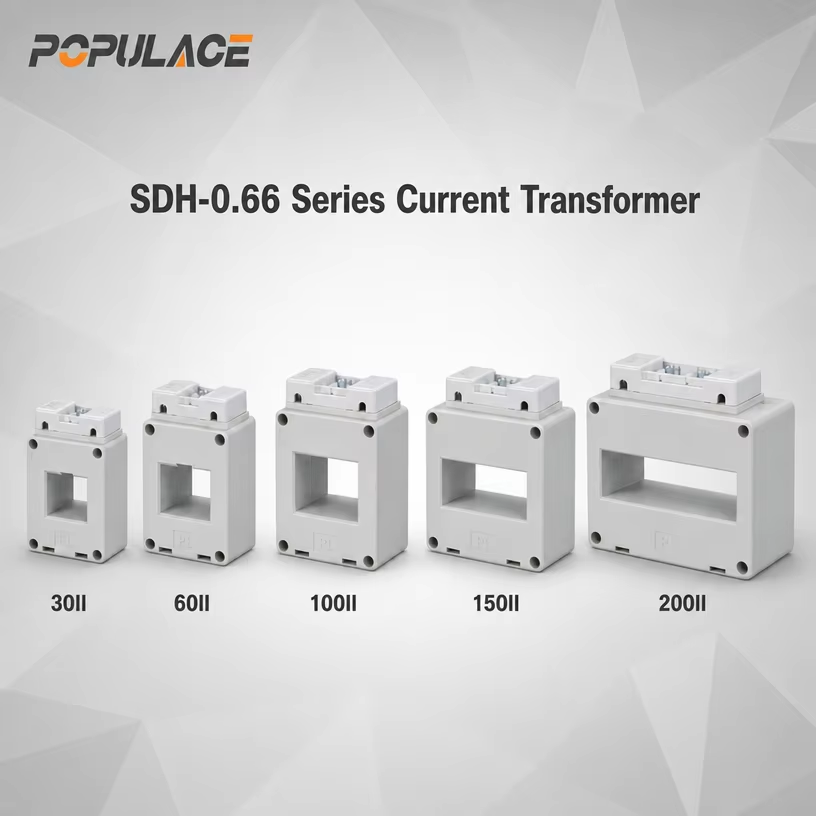
The model designation itself carries useful information for specifiers. “LMK” identifies the plastic-insulated busbar type; “BH” and “SDH” are interchangeable designations used by different manufacturers for the same physical configuration . The “0.66” indicates the rated voltage class—0.66kV, which corresponds to the maximum system voltage for which the insulation is designed. The suffix numerals (30II, 40II, 60II, 100II, 150II, 200II) denote the window dimensions in millimeters, which determine the maximum busbar or cable bundle that can pass through the core .
The “II” variant in this series refers to the horizontal square-window configuration. Compared to the single-turn “I” type, the II type is designed to accept multiple busbars or cable passes through a wider aperture, making it suitable for panels where the primary conductor arrangement requires additional clearance . This is particularly relevant in generator control panels, where the output busbars from the alternator may be configured in parallel runs or where cable lacing occupies additional space within the window.
The 100 kVA reference in the product title deserves clarification. A 100 kVA generator at 400V delivers approximately 144A per phase; at 220V single-phase equivalent, the current would be substantially higher. The CT ratio selected for a 100 kVA genset would typically fall in the 200/5A to 300/5A range, depending on the system voltage and whether the CT serves metering or protection functions. The 30II and 40II frame sizes cover this range comfortably, while the larger 60II through 200II frames extend coverage to generators well beyond 100 kVA—up to several hundred kVA in three-phase configurations .
The plastic case material is typically ABS or polycarbonate with flame-retardant properties meeting UL-94V0, providing both dielectric strength and mechanical durability in panel environments . The through-window design allows the primary conductor to be a busbar, a cable, or multiple passes of either, with the number of primary turns determined by how many times the conductor passes through the core. This flexibility is why the same CT frame can serve multiple current ratios: a 200/5A ratio may be achieved with one pass of a 200A conductor, or two passes of a 100A conductor, depending on the application requirements .
Technical Specifications
| Rated test voltage |
3Kv AC (1 min) |
| Rated short-time thermal current (Ith) |
60In |
| 60In Rated dynamic current (Idyn) |
2.5Ith |
| Rated voltage (Um) |
0.72Kv AC |
| Continuous overload (Id) |
1.2In |
| Operating temperature |
-10℃ to 50℃ |
| Housing self-extinguishing class |
VO |
| Safety factor |
FS 5 |
| Secondary current |
5A/1A |
Technical Advantages
Ratio Flexibility Through Core-Through Turns. The through-window design allows the same CT frame to serve multiple current ratios by adjusting the number of primary conductor passes. A 100/5A ratio can be achieved with one pass of a 100A conductor, while a 50/5A ratio uses two passes of the same conductor. This reduces the number of distinct CT models a panel builder must stock for different generator ratings .
Metering-Grade Accuracy at Low Voltage. Class 0.5 accuracy provides a phase and ratio error envelope suitable for kWh metering and billing applications. In generator paralleling systems, accurate current measurement supports load sharing and power factor calculations that depend on reliable secondary signals .
Compact Footprint for Dense Panel Layouts. The plastic case busbar CT occupies minimal depth behind the panel front, allowing high-density mounting in generator control cabinets where DIN rail space and wiring gutters compete for room. The 30II frame, for example, has a compact window suitable for a single busbar run in a small genset panel .
Insulation Coordination for 0.66kV Systems. The 0.66kV rating aligns with the low-voltage distribution systems common in generator applications, where the alternator output is typically 400/230V or 220V. The 0.66kV insulation class provides margin above nominal operating voltage for transient conditions .
Secondary Terminal Accessibility. The secondary terminals are positioned for accessible wiring during panel assembly and maintenance. Terminal covers, where specified, provide additional protection against accidental contact with live secondary circuits during testing.
Applications
Diesel Generator Control Panels. The primary application for this 0.66kV current transformer is current measurement in genset control and metering circuits. Generator controllers use CT inputs for load monitoring, overcurrent protection, and kW/kVA calculations. The plastic case CT fits the busbar layouts typical of genset output sections .
Low-Voltage Switchgear and Distribution Boards. Panel builders integrating generator feeds into main distribution boards use these CTs for feeder metering and protection coordination. The multiple frame sizes accommodate the range of feeder ratings found in a typical LV switchroom .
100 kVA Generator Metering. For a 100 kVA genset, a 200/5A or 300/5A CT in the 30II or 40II frame provides appropriate metering resolution. The 5A secondary output interfaces with standard analog meters, digital power meters, and generator controller CT inputs .
Power Factor Correction and Load Management. CTs in generator panels provide the current signal for power factor controllers and load shedding logic. Accurate Class 0.5 measurement supports reliable decision-making in automated load management systems .
Retrofit and Replacement Projects. The standard LMK BH/SDH form factor allows direct replacement of aging CTs in existing panels without modifying busbar arrangements. Distributors serving maintenance markets can stock common frame sizes for replacement demand .
FAQ
Q: What does the “II” designation mean in SDH-0.66 30II?
A: The “II” refers to the horizontal square-window configuration of the CT. Compared to the “I” type, the II variant is designed for applications where multiple busbars or cable passes occupy the window, with a wider aperture to accommodate the primary conductor arrangement .
Q: Can this CT be used for both metering and protection?
A: The standard Class 0.5 and Class 1.0 accuracy ratings are primarily intended for metering and indication. Protection applications typically require different accuracy limits and safety factor specifications. Consult KYGENPOWER for protection-class CT options if the application requires overcurrent relay coordination.
Q: How do I determine the correct CT ratio for my 100 kVA generator?
A: For a three-phase 100 kVA generator at 400V, the line current is approximately 144A. A 200/5A ratio provides adequate headroom for overload conditions while maintaining metering resolution. For 220V systems, the current is higher and a larger ratio may be required. The final selection should account for the generator’s rated current, overload capacity, and the input range of the connected meter or controller.
Q: What is the difference between LMK, BH, and SDH?
A: These are interchangeable designations for the same plastic case busbar current transformer type. Different manufacturers and regional standards use different prefixes, but the physical form factor and application are equivalent .
Q: Does the CT require a specific mounting orientation?
A: No. The baseplate fixing method allows installation in any orientation—horizontal, vertical, or inclined. The primary conductor should pass through the window without touching the core insulation, and the secondary wiring should be routed away from high-current conductors to minimize interference .
Q: What maintenance does a plastic case CT require?
A: The CT has no moving parts and requires minimal maintenance. Periodic visual inspection for case damage, terminal tightness, and cleanliness is sufficient. Secondary circuits should never be opened under load, as this can generate dangerous voltages across the CT terminals.

 EN