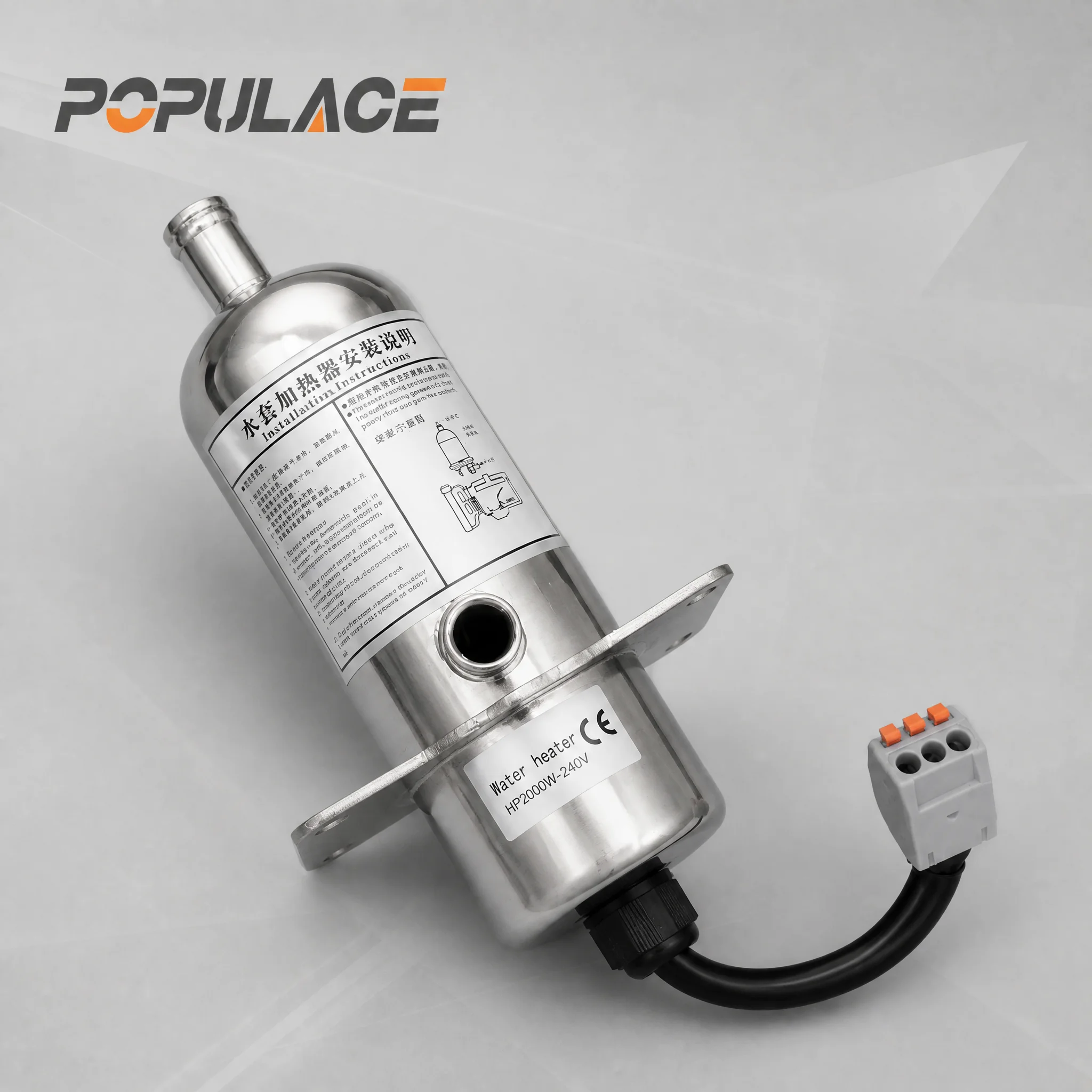
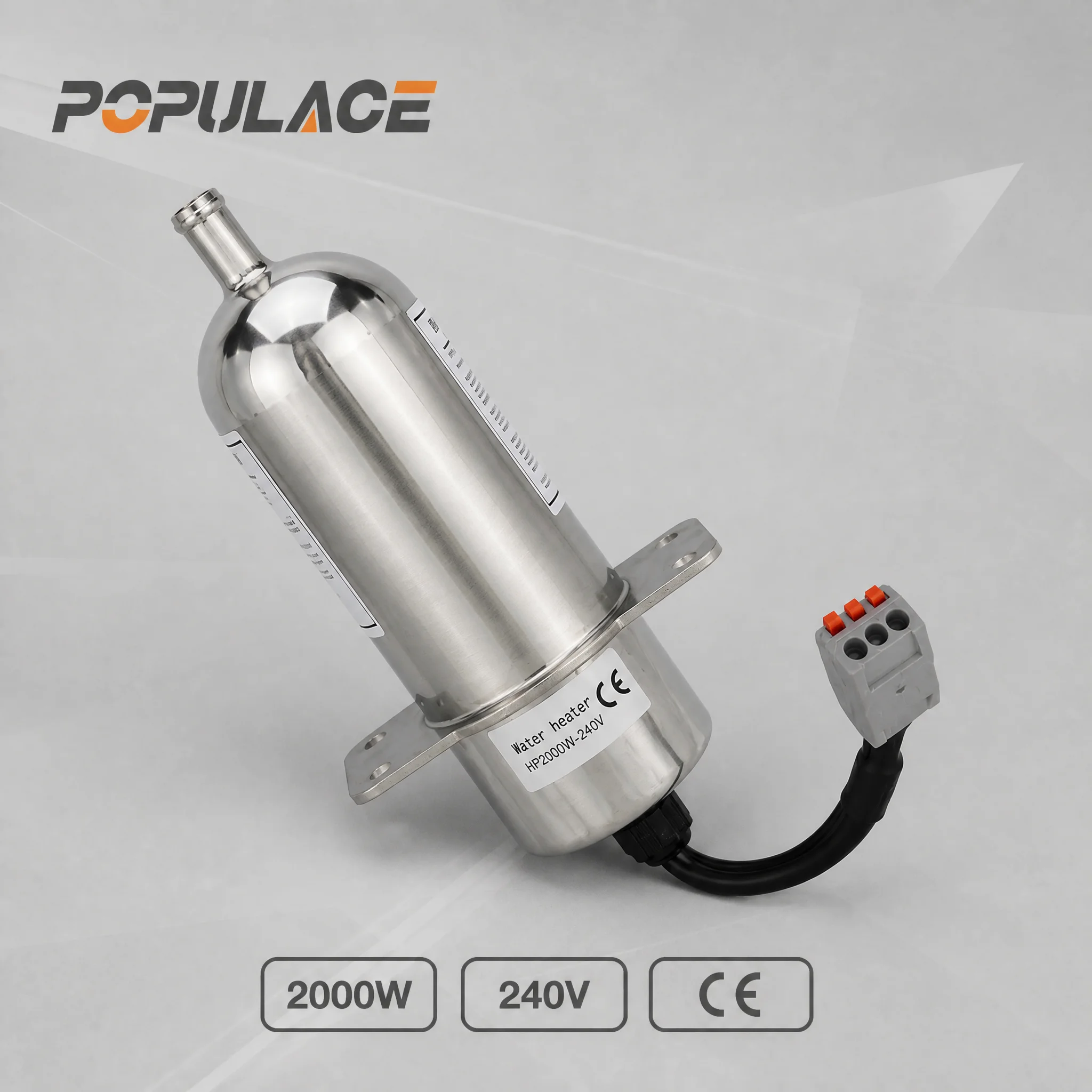
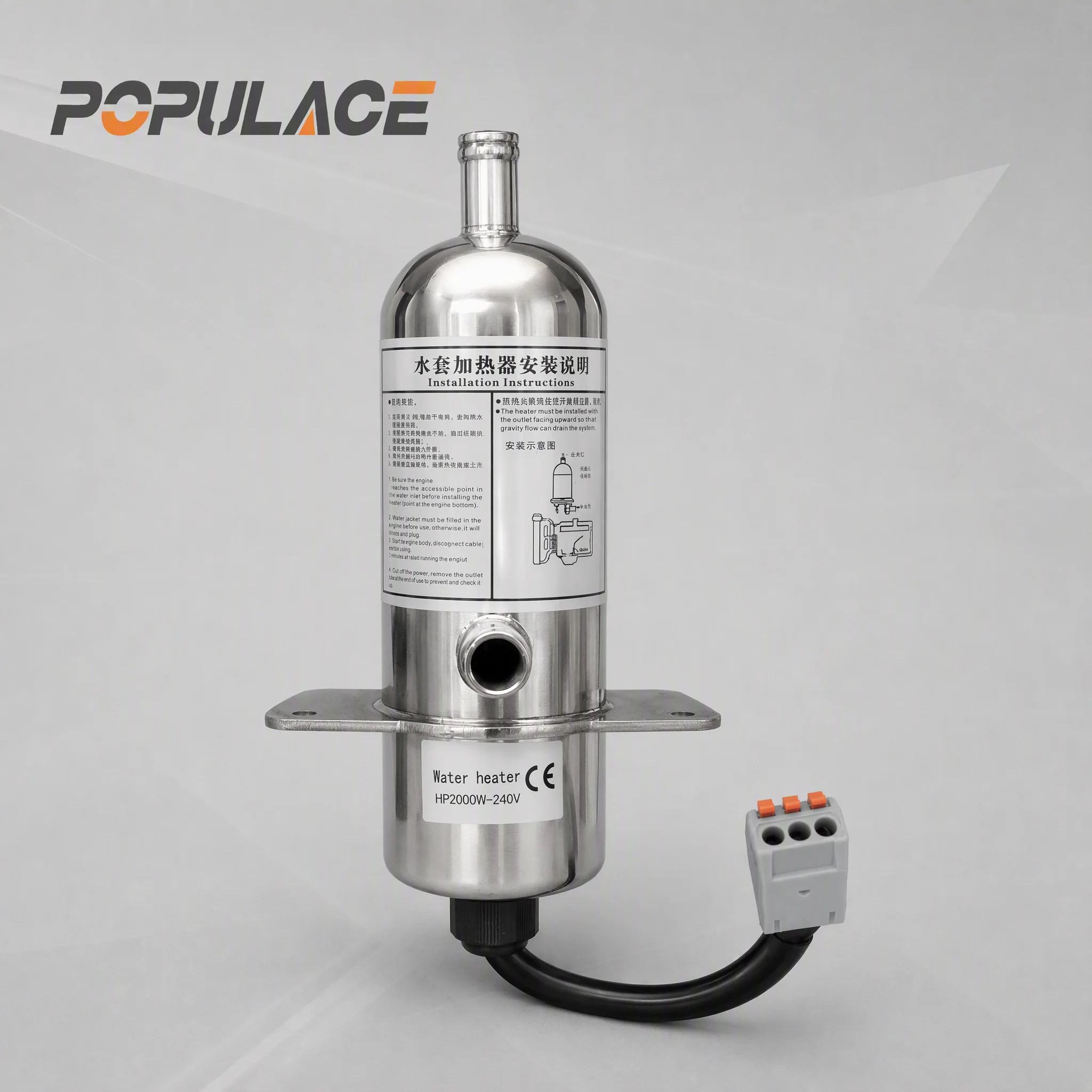
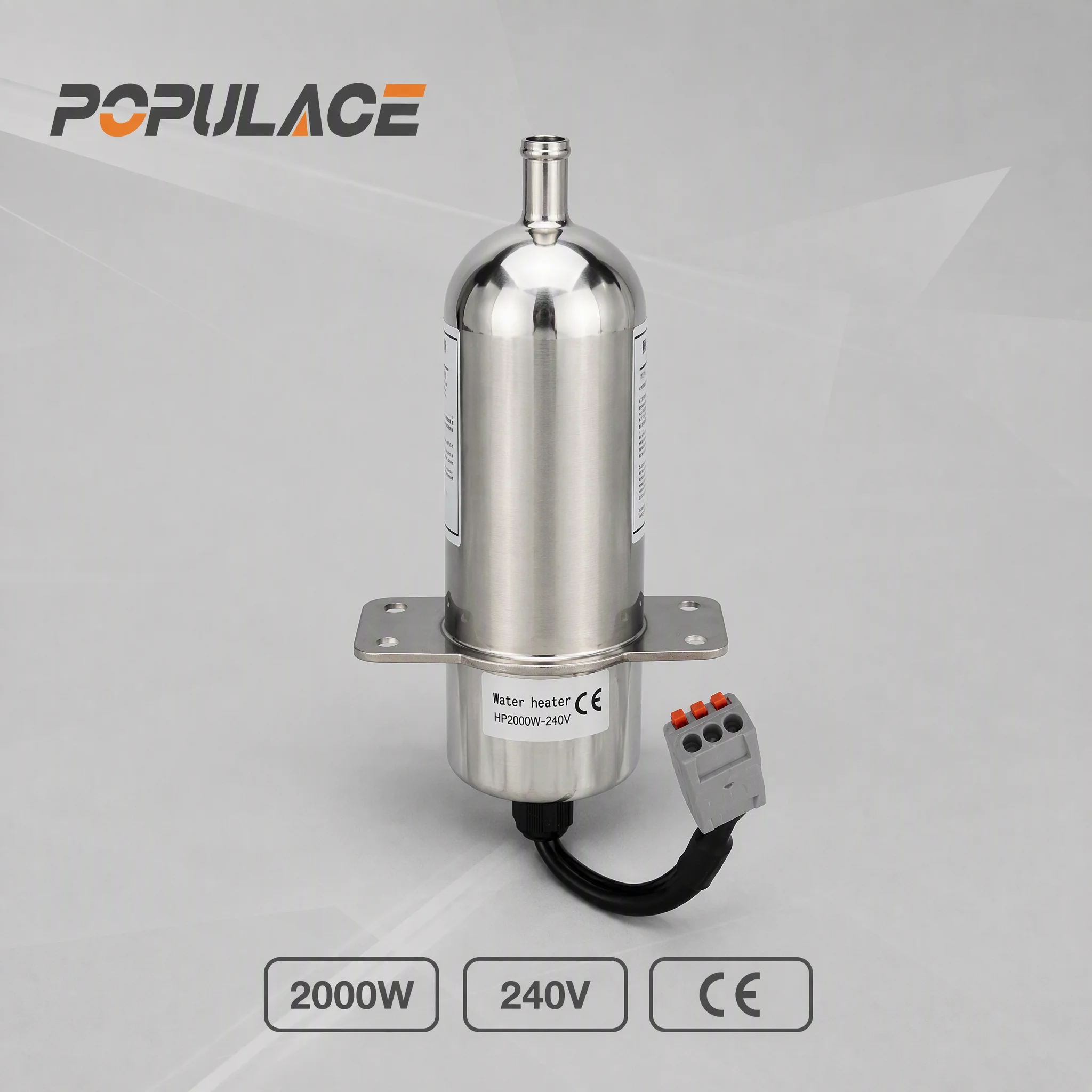
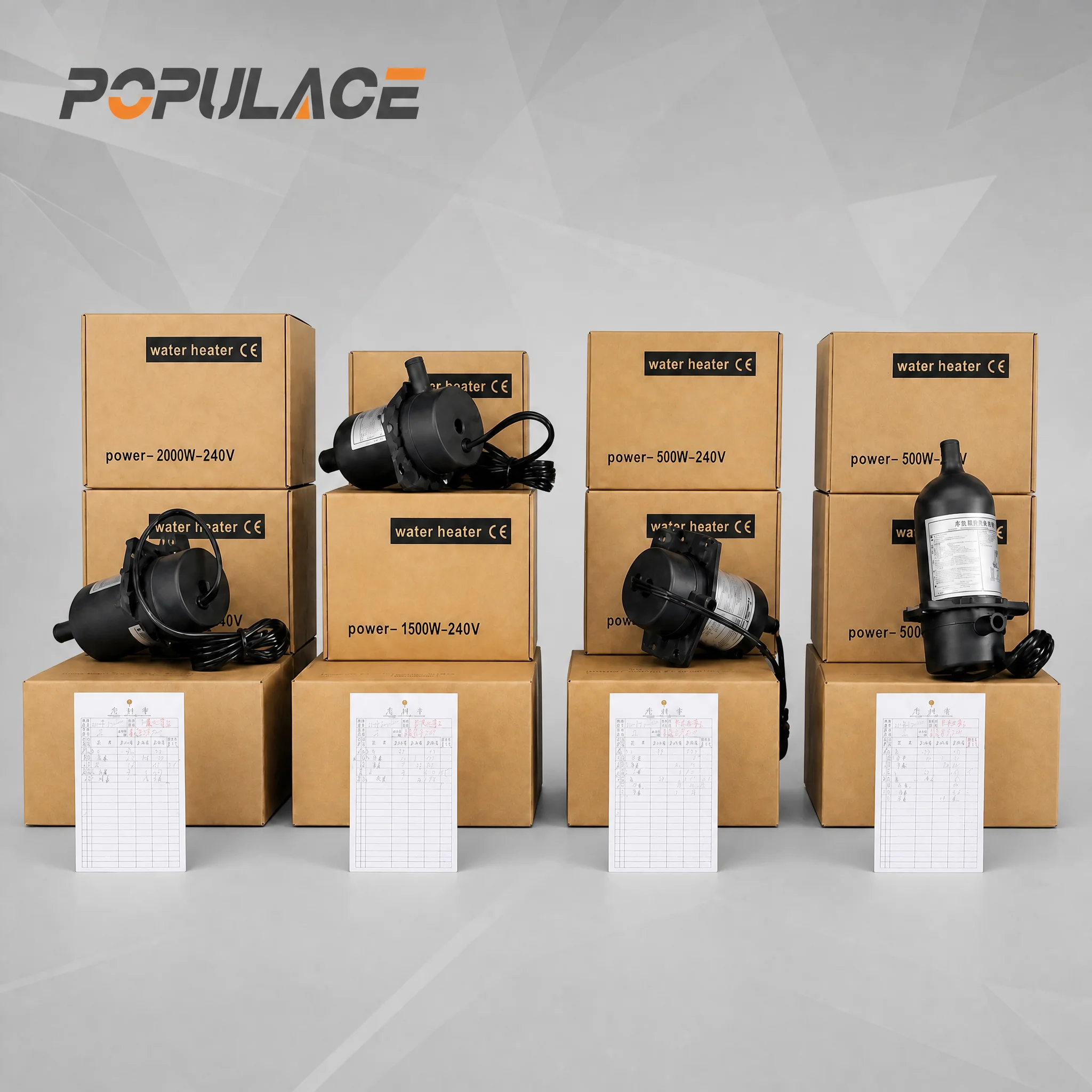
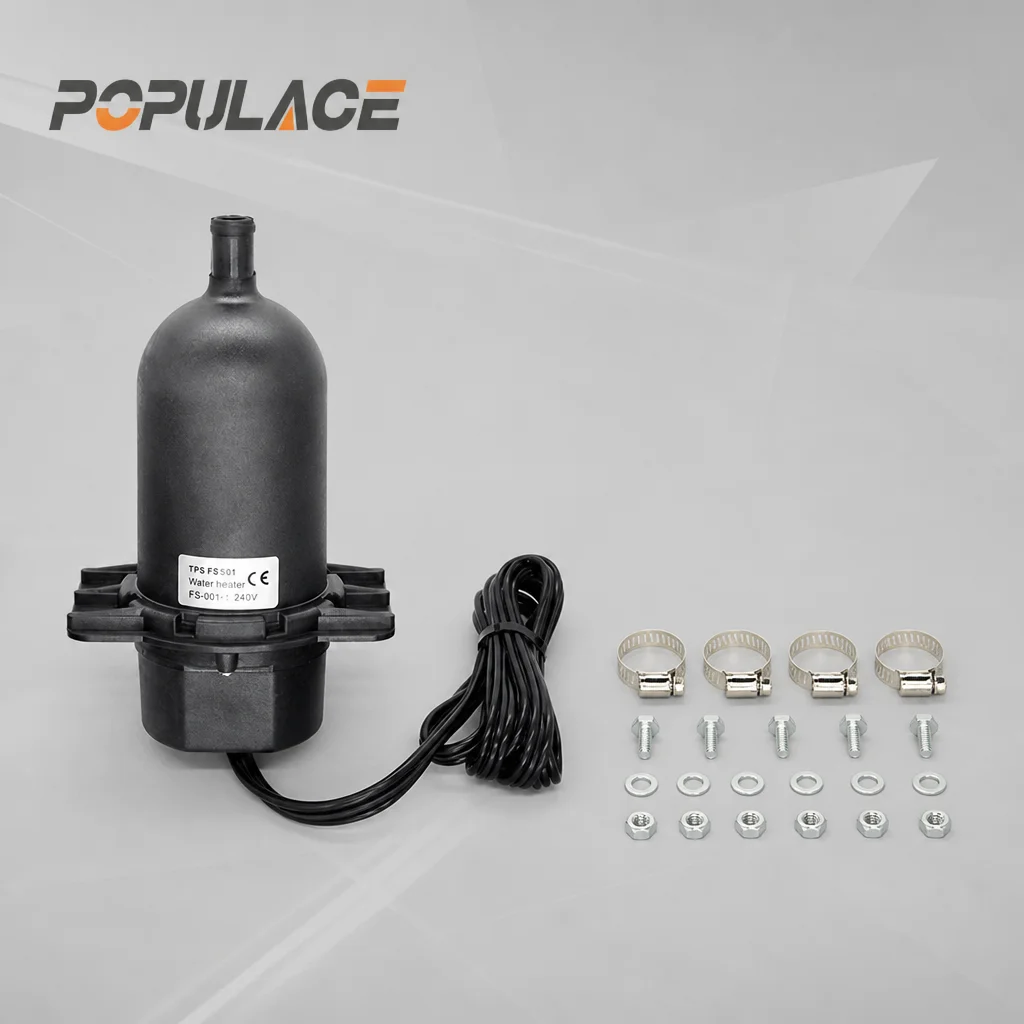
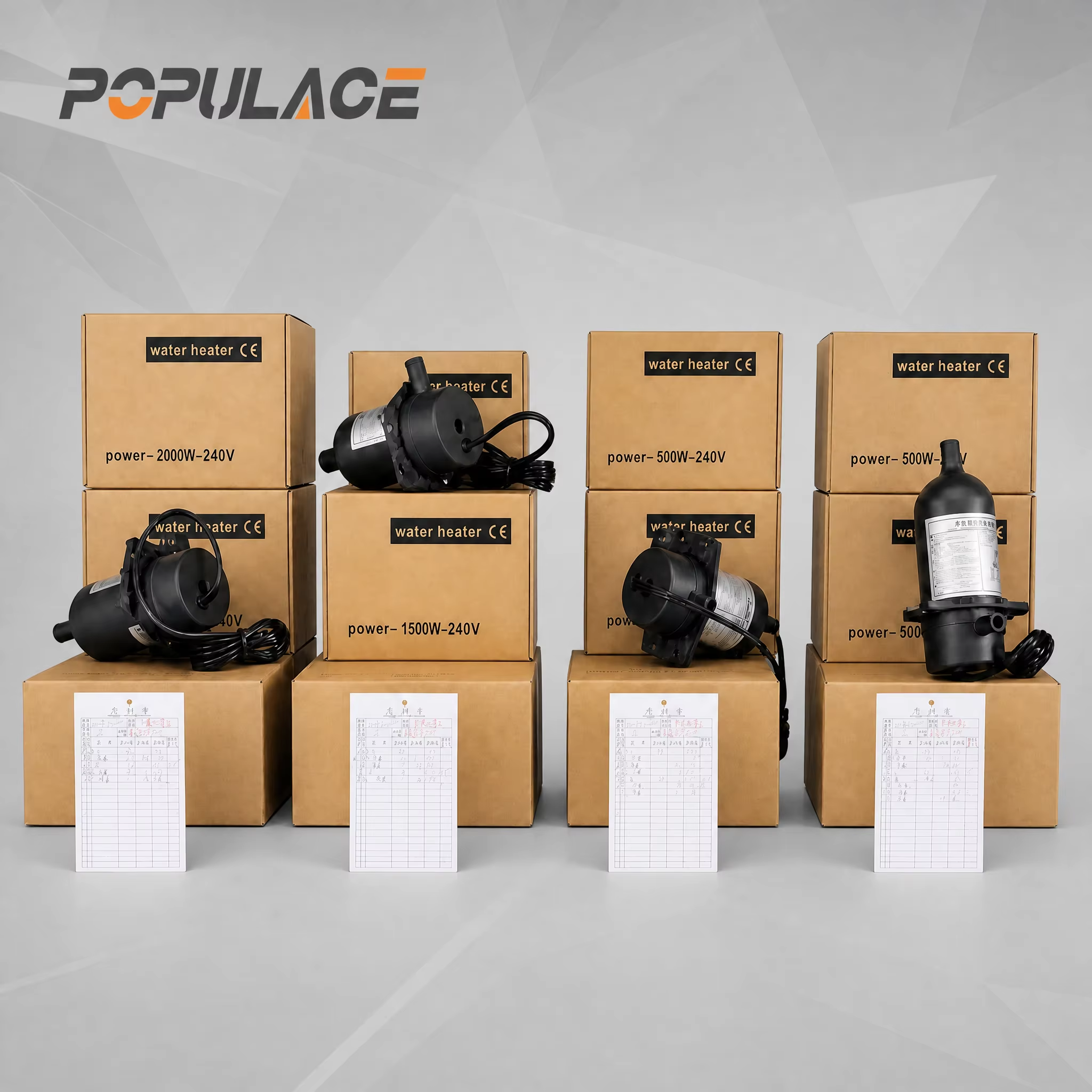
Detailed Product Description
A diesel generator that sits idle in cold conditions presents a predictable set of startup challenges. Engine oil thickens, battery cranking capacity declines, and the coolant temperature may fall well below the threshold at which reliable ignition occurs. The water jacket heater addresses these conditions at their source by maintaining engine coolant temperature during standby periods, so the generator is closer to operating temperature when a start command arrives.
The self-circulating design is the defining characteristic of this heater. Unlike forced-flow preheaters that require an electric pump to move coolant through the engine, a thermosiphon heater relies on the physics of heat rising. Cold coolant is drawn from the lowest point of the engine block into the heater, where it is warmed by the heating element. The heated coolant becomes less dense and rises through the outlet hose back into the upper engine block, while cooler coolant replaces it at the inlet. This cycle continues as long as the heater is energized, distributing warmth through the water jacket without moving parts . For generator applications where reliability and simplicity are priorities, the absence of a circulation pump removes a potential failure point.
The wattage range—1000W, 1500W, 2000W, and 3000W—covers a practical spread of diesel engine displacements. Published sizing guidance for engine heaters suggests a general relationship between displacement and required wattage. For small diesels in the 2.4–5.7L range, a 750W immersion or 1500W tank heater is often recommended. Medium-duty engines up to approximately 9.0L may call for 1500W immersion or 2000W tank configurations, while heavy-duty diesels approaching 18.8L can require 2000W immersion or 2500W tank units . The four wattage options in this series allow matching to the specific engine rather than over- or under-sizing the heater. An undersized heater will struggle to maintain temperature in severe cold, while an oversized unit may cycle excessively or cause localized boiling in the heater tank.
Installation position is critical for thermosiphon performance. The heater should be mounted below the lowest level of the coolant jacket to maximize the upward flow path for heated coolant. The outlet port must point upward, and the return hose should have a continuous rise from the heater to the engine connection. Any dips or low points in the hose routing can trap air or restrict flow, compromising the thermosiphon effect . Mounting the heater directly to the engine block is not recommended, as engine vibration can damage internal components and lead to premature thermostat or element failure .
Technical Specifications
| MODEL |
FS-001G-1KW |
FS-001G-1.5KW |
FS-001G-2KW |
FS-001G-3KW |
FS-001G-4KW |
|
|
| RATED POWER |
1000W |
1500W |
2000W |
3000W |
4000W |
|
|
| RATED VOLTAGE |
AC240/120V |
|
|
AC240V |
| RATED CURRENT |
4.2A |
6.3A |
8.3A |
12.5A |
16.6A |
|
|
| ENGINE DISPLACEMENT |
0-5.7L |
5.7-8.2L |
8.2-13L |
13-18L |
18-25L |
|
|
| INSULATING |
>=50MO |
|
|
| MAX.WATER PRESSURE |
0.5MPA |
|
|
| PROTECTION CLASS |
IP54 |
|
|
Technical Advantages
No Circulation Pump to Fail. The thermosiphon principle eliminates the electric pump found in forced-flow heaters. For standby generators that may sit idle for weeks or months, a pump that is not exercised regularly can seize or degrade. The self-circulating design has no moving parts beyond the thermostat, reducing the maintenance burden and the risk of a preheater failure that leaves the engine cold when needed .
Natural Heat Distribution Through the Jacket. Thermosiphon circulation moves heated coolant from the heater into the upper engine block while drawing cooler coolant from the lower block. This flow pattern distributes warmth through the water jacket in a manner that follows the engine’s natural thermal layout, supporting even temperature rise rather than localized hot spots .
Wattage Matching for Engine Displacement. The availability of four power ratings allows specifiers to follow established sizing guidance rather than accepting a one-size-fits-all heater. A 1000W unit suits a compact generator engine in mild cold, while a 3000W heater provides the thermal input required for larger displacement units in severe ambient conditions .
Simple Installation and Commissioning. The heater requires only coolant hose connections and an electrical supply. There are no pump wiring circuits, flow sensors, or control interfaces to integrate. For maintenance technicians, this simplicity translates to faster installation and easier troubleshooting.
Compatibility with Standard Coolant Circuits. The heater connects to the engine’s existing drain port or lower coolant hose for the inlet, and to an upper block port or heater hose for the outlet. This integration does not require modification to the engine’s cooling system architecture beyond the hose connections .
Applications
Standby Diesel Generator Sets. Emergency and backup generators in hospitals, data centers, and telecom facilities must start reliably after extended idle periods. The self-circulating preheater maintains block temperature during standby, supporting prompt startup and load acceptance when utility power fails.
Prime Power Generators in Cold Climates. Generators operating in remote or off-grid locations face ambient temperatures that can challenge cold-start capability. The water jacket heater provides localized thermal management without requiring a heated enclosure or engine room.
Fleet Maintenance Operations. Service fleets managing multiple generator brands and sizes can stock the appropriate wattage variants to cover their engine range. The universal thermosiphon design simplifies installation across different engine configurations.
Marine Auxiliary Generators. Water-cooled diesel engines in marine auxiliary systems face cold-start challenges similar to land-based gensets. The corrosion-resistant construction and compact form factor suit engine room installations where space and salt exposure are considerations.
Agricultural and Construction Equipment. Seasonal equipment that sits idle for months is particularly vulnerable to cold-start wear. Preheating the coolant before startup reduces the period during which oil pressure has not yet reached critical surfaces.
FAQ
Q: What is the difference between a self-circulating heater and a forced-flow heater?
A: A self-circulating (thermosiphon) heater relies on natural convection—heated coolant rises and draws cooler coolant in behind it—to circulate through the engine. A forced-flow heater uses an electric pump to push coolant through the circuit. Thermosiphon heaters have no moving parts beyond the thermostat, while forced-flow units require pump maintenance and have an additional failure point .
Q: How do I choose between the 1000W, 1500W, 2000W, and 3000W options?
A: Wattage selection depends primarily on engine displacement and expected ambient conditions. Published guidance suggests 750–1500W for small diesels (2.4–5.7L), 1500–2000W for medium-duty engines up to approximately 9.0L, and 2000–2500W for heavy-duty diesels approaching 18.8L . For severe cold or wind-exposed installations, select the higher wattage within the recommended range.
Q: Does the heater require a pump to circulate coolant?
A: No. The self-circulating design uses thermosiphon action, which relies on the natural tendency of heated coolant to rise. Proper installation is essential for this to work: the heater must be mounted below the coolant jacket level, with the outlet pointing upward and a continuous rise in the return hose .
Q: What maintenance does the preheater require?
A: The heater has no pump and no routine lubrication requirements. Periodic inspection should verify that the thermostat cycles correctly, the heating element is intact, hose connections are secure, and the exterior is free of corrosion or debris. The thermostat is a wear component with a finite cycle life and may require replacement after extended service .
Q: Can this heater be installed on an engine that is already in service?
A: Yes. The heater connects to existing coolant ports—typically the engine drain port for the inlet and an upper block or heater hose port for the outlet. The cooling system should be drained, flushed if contaminated, and refilled with the correct coolant mixture after installation. Follow the engine manufacturer’s recommendations for coolant type and concentration .
Q: What happens if the heater is mounted incorrectly?
A: Poor installation is a common cause of thermosiphon heater underperformance. Mounting the heater too high, routing the outlet hose with dips or low points, or using undersized hoses can restrict or stop circulation. This may cause the heater to short-cycle, overheat internally, or fail to warm the engine. The heater should be mounted below the coolant level with the outlet pointing upward and hose routing that rises continuously toward the engine .

 EN